Monthly Article Index

What It Really Takes to Live with Violence, and Forgive it Part I – Heidi MacDonald

What do you do when your worst fears are realized? When a scenario that you work on in your self defense training, actually comes to life? If you survive it, how do you process, get over it?

I wish that I could give you a simple, easy answer that could be of immediate benefit. I wish that somebody had been able to guide me, give me those answers…But it was kind of one of those things where you had to discover the answers for yourself, without anyone’s assistance.

Learn the Hard Way, 101.

I am the daughter of two insufferably, messed up human beings. My father had run-ins with the law and drugs, that resulted in a felony conviction with hard time to serve. My mother was a physically abusive person who also had issues with alcohol and drugs, that were never concealed very well. Long story short, I bore the brunt of her wicked short fuse for a good part of my life.

The end result was that I grew up and made choices in my romantic relationships, that were not always healthy or positive.

I chose one person who was emotionally unavailable with a heavy drinking problem, to boot. I stayed long past this particular relationship’s expiration date, because I thought I should prove myself worthy enough to love. I put this person on an incredibly high pedestal, and myself at the base, basically.

After exiting that, I then chose another person who caused a spectacular level of damage to my life, that I never thought was possible. He was charming and charismatic, but exhibited dangerous traits of narcissism and psychopathy. I didn’t quite understand until it was too late. Instead, I ignored it, and made excuses for his behavior, even as I was self-destructing under the weight of his demands. The end of the relationship was sexually violent and left me suicidal, cut off from friends and family.

 Why? Well, for one simple reason: I did not believe in my own worth as a person, as a woman, and in the face of doubt, I put myself through an endless cycle trying to please everyone.

See me, look at me. Tell me that I deserve to be loved

I hadn’t yet learned that I should not have to grovel for love and acceptance, and most certainly not from darkly flawed human beings who had nothing to offer but psychological mind screws and violence.

Do you find me weak so far reading this?

I am not a weak, simpering female. Once upon a time, I may have thought that of myself. But now? Far from it. Don’t fool yourself if you’re a male self-defense/martial arts instructor reading this, and think that what I discuss here, does not apply to you your teaching, or your life.

Quite the opposite. I am one of you.

I am a black belt, and a women’s self defense instructor. I’ve been on the path exploring how to prevent physical violence to myself and others for about 15 years.

I am roughly 120 pounds, and pride myself on being a scrappy groundfighter, despite my five feet, 4 inch height & size. The problem in my case, was that despite all of my training learning preventive techniques against violent action, I simply did not learn or understand how to defend myself against psychological games. How to spot predators of the intimate kind. And equally as important, if not more so – how to have confidence and value in who I am, as a person.

Do me a favor, and try not to immediately scoff & think,

“Pfff, this crap would never happen to me. I can spot psychos from a mile away. How stupid is she, an MA practitioner of all things, to get involved with someone like that?”

Because..he was one of us. A member of our world of Self Defense, Martial Arts practitioners.

The details of what happened, I don’t think are really important anymore. I’ve lived it, and re-lived it a million times in my head, spent time on both the shrink’s couch and did the pop psychology reading. Going back and recounting it, can sometimes put me in a dark place, that I’d rather not go back to.

What is important, is the process that came after.

Two years ago, I found myself at a very personal Ground Zero. I was pretty much broken in every way you can think of: emotionally, psychologically, physically, financially. And yes, there was a dance around the edge of suicide, too. Believe me when I tell you, that is a damn scary place to find yourself on.

Nobody ever thinks they could go that low, that dark, that far, until it actually happens.

At a point that is that void of hope, that desolate, one of two things can happen: You will either die, or you will rebuild. I like to think that the foundation of all my years of dojo training kept the will to live in me burning, because I chose the latter, to rebuild.

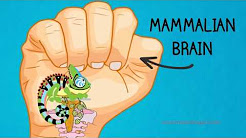
The Three Main Parts Of Your Brain – Dr. Russ Harris

Back To Life, Back To Reality Part II – Dave Wignall

Recap from Part I, Well, the reality is that you have been negligent in your considerations. You have not realised the stark differences between the environment in which you train and the environment outside. You finish training, pleased that you have just learnt a certain technique, strike, weapons defence, lock, choke, takedown, whatever it is, but then open the door and walk back onto the street to make your way home. Back to life and back to reality. Your Dojo is a cocoon of like-minded people who don’t want to hurt you (well, not too much) and will aid you, unknowingly most of the time, in helping you succeed. That is a great and wonderful thing of course, and something to be welcomed. I am proud of all of my students, the mutual respect they show for each other, the understanding, the stories, the insights, the questioning, the laughs, the fun – mostly the fun – but we never lose sight of the fact of why we train like we do and why we train at all.

So how can we identify flaws? Well here is something I work to that follows a basic scientific process of analysis and test.

1. Ask questions
2. Do your background research
3. Construct a hypothesis
4. Test (slow then fast under pressure, preferably not with someone who just yields because you are the Chief Instructor) and analyse your data
5. Draw your conclusions
6. Present your results

During my classes I am already at point 6. It is then open for my students to ask questions, do their own research and so on. If the defence technique works when performed slowly, then falls apart when practised fast, then you have identified a weakness and have something to work on.

I’ve found that much of what is taught, across the many disciplines I have either been involved in or studied and analysed, is not based on or even remotely looks like reality, rarely takes into account how people actually react, and is generally far too assumptive. Real fighting is messy, ugly, unrehearsed, aggressive, violent, usually bloody and let’s face it, quite abominable. Real fighting is all this and more. The flaw in all of our training is that none of it is real, but we can at least introduce some semblance of reality. Even in MMA, Boxing or Muay Thai, where an opponent can be struck with full force, there are still huge issues with those disciplines. For example, there are rules, a referee, time limits, people sitting at your corner waiting to help you recover each round, a towel can be thrown in the ring to stop the fight, doctors are on hand, plus as you enter the ring, you should already have an idea of what you are letting yourself in for. In addition, there is only one opponent not multiple, no weapons are carried nor are any laying around to be used. Biting, gouging, strikes to the throat or groin are not allowed. No hair pulling, no scratching, no kicks to the head are allowed when your opponent is on the floor etc etc. The list is quite long. Even during the 1920’s in the days of bare knuckle Vale Tudo (Portuguese for ‘anything goes’), you could kick and stomp to the head while standing above your opponent, but there was still the absence of weapons and multiple attackers. As harsh, hard, aggressive and violent as it was, it still had flaws in that it wasn’t ‘real’ in the context of this article. The thing is, it didn’t profess to be something it wasn’t and there is, of course, nothing wrong with that.

You can see, however, that the more you take steps to train without rules, the more effective your defence can become. Why do we not have kicks to the head on a grounded opponent in UFC? Why doesn’t MMA contain strikes like ploughing a knee square into the face of an opponent kneeling on the canvas? The answers are obvious, I would hope, but you can do that in real life if the threat is such that the level of force is proportionate and justified. I have personally trained with some very proficient Brazilian Ju-Jitsu and Mixed Martial Arts fighters and although they were more experienced in their field than me, I stopped my partners in their tracks when I applied an eye gouge, struck to the groin or applied some pressure on the windpipe with my elbow. This of course did not make me any better than them – far from it; these guys were very able in their art. It’s just that I was responding without the consideration of rules. I did what my survival default told me to do. If you apply rules, it isn’t reality training because there are no rules in a real fight. If your responses require fine motor skill applications, it isn’t reality training because things happen too fast for you to apply them; if you only ever train against one person, it isn’t reality training; if your training does not involve any form of pressure testing that is unscripted and non-choreographed, it isn’t reality training. There are many other aspects but you get the idea.

During my 18 years training and teaching Shotokan Karate, whenever I taught anything that remotely resembled a real attack, the defence fell apart. Students were lost when their practised defence failed. There was no contingency and no real mention of what happens if your first line of defence or counter strike fails. I understand that of course because again, it is a traditional Martial Art that is structured, generally follows a strict syllabus and is full of techniques that don’t work. It’s too scripted, too ‘clean’, too convoluted, and far too assumptive. Real fighting is none of those.

In 2006 I was invited to Japan to attend a Ju-Jitsu World Congress. Over 200 Students from around the world and a good number of very qualified instructors were all teaching their thing. What was noticeably constant was that for all demonstrations, opponents were compliant and it was all pretty much choreographed. Again I understand that. What was being taught was a traditional Martial Art. Yes, there were techniques that were applied with a certain level of force and yes, there were indeed some responses that could work. However, not once did I see anything that resembled a real attack. Students moved and responded in a certain way that would aid the defence response.

I’m aware that you are unable to attack 100% with full force. There are a finite number of students and your club would not last too long, but with padding and body protection the pressure could’ve been increased to get close to something a little more realistic. Fighting is far too dynamic and contains far too many variables to have the time to apply fine motor skills, flamboyant and over-technical responses, and, against a committed attacker, even a padded up one, it should highlight just how impractical a lot of these traditional defences are.

Hick’s law, named after British psychologist William Edmund Hick, describes the time it takes for a person to make a decision as a result of the possible choices he or she has: increasing the number of choices will increase the decision time logarithmically. So from a Self Protection angle, the more complicated the technique, the more choice we have in the syllabus, the longer it will take to process, and therefore the longer it will take to apply. During an attack, time is not on our side.

So, as I mentioned earlier, we have to understand and be clear on what we are learning. If we are being taught something that we are told is Self Protection and yet when put under pressure, the defence falls at the first hurdle, then it must be addressed. A student should be made aware from the outset if what they are learning, for example, is based on a traditional system. By that I mean they need to be aware if it has been handed down through the years and as a result would very likely have been changed and adapted, would usually contain certain techniques that may well have worked in feudal Japan, but is neither practical or workable for your average non-warrior in the street arena of today. It is important that the student is under no illusion.

Another way to identify flaws is to introduce elements of reality. It’s a simple task to get a well-trained student to perform a series of set techniques against an opponent who is attacking in a particular way. It will work fine. Transfer that same scenario to the street, mix it with a cocktail of adrenaline, non-adrenaline and endorphins, include a level of fear which you have never experienced or comprehended before that makes your legs turn to jelly, makes you want to vomit and empty your bowels and renders you incapable to talk or think straight, and you will discover that they are worlds apart. All of that without yet being hit, without seeing your own blood in your hands, without trying to make sense of what is going on, all without a real knife at your throat, or a firearm pointed at your head. A bit different, huh?

It would of course be ridiculous for me to suggest that I could even try to mirror this full-on street scenario during my classes, for obvious reasons, but what I can do is educate, analyse and develop. We can make our training honest and open to the fact that we can fail and mess up. If we don’t understand or even acknowledge where the weaknesses are in what we do, how can we possibly grow and progress in the right way? Nothing is set in stone and nor should it be.

I teach Krav Maga (Hebrew for Contact Combat), an Israeli system that, before its military links were established, was developed to help civilians defend themselves, irrespective of size or gender. By maintaining that ideal, it enables me to stress tactical and strategical implementation over technique. Whatever the defence is, it has to be able to work for anyone, and if what is being taught is based purely on technique alone, the result will be that it will work for some and not for others or may even fail completely. This is a major consideration when students are supposed to be learning something that should be protecting themselves, yet find they are one of the students the technique doesn’t work for!

So what can we do to overcome a technique only based system? I teach a three part strategy: disrupt the thought process of your attacker; unbalance your attacker; inflict damage/cause pain to your attacker. How you implement this strategy however, is not that important, but success in application will increase your chances of survival. The individual has to adapt to what he/she is presented with and, with so little time available to respond, the response should undoubtedly be quick, efficient, and take little thought process. When a technique fails, where do you go from there? If you have a plan and that fails, do you have a plan B or C? Do you have a contingency? If the strategy fails at any point, you can pick it up, overlap, and begin the strategy again, and again, and again. Implement an applicable strategical process and you will be able to continuously adapt to the stimulus.

It is important to remember that if something is principally sound and taught to students in their thousands, it does not by any means make it flawless, honest or real. Indeed the automatic acceptance of something that is taught that way because “just look at the pedigree, it must be correct” is rarely if at all questioned. It is also important to be aware that there are many that look to feed the money machine, fill the pockets of those at the top, exploit the naive and uneducated, and serve to set the pedestal of the untouchable instructor even higher.

Whatever it is we are learning or teaching, we must operate within the realms of reality and seek the truth. With something that is as important as surviving a life threatening attack, the analytical breakdown and defence responses should be commensurate. What we should be left with is something that is honest, practical and workable. Reality and life should not be different because they are one and the same. Life is our reality, and if what we are learning does not reflect this, then we need to question ourselves and what we do before it’s too late.

Training realistically? Are you thorough? – Ashtad Rustomji

When most people, especially instructors are asked whether they train realistically, their answer is usually ‘yes’. But when you see them do their “realistic” “stuff”, it seems pretty far and out of touch from reality. It seems that their concept of reality is different from the actuality of it.

Recently, I asked an individual a simple question, “How, would you say, a real violence training should look?”  The individual replied in a very cliched way and went on about how the opponent should come at you aggressively, yelling and stuff, etc. I asked him in return, “Would you see it coming?” He didn’t have a proper answer, but yet tried to say something and ended up saying just “Yes”.

Now, here’s the first problem of things with this. Most tend to see these things from a purely physical perspective. Not many seem to focus on the pre-violence situation. No verbal cues, no physiological changes, etc. etc. In fact, most don’t even acknowledge it even exists. Which kinda poses a problem when we are “training for violence”, doesn’t it? I mean if you don’t train to see it coming, what are you preparing for? To get out barely alive and half dead?

So, realistic training? What does that entail? Well, if you ask me, the drills should focus more on the pre-violence cues than anything really, physical aspect of it should not be choreographed, no matter how “aggressive” the other guy is, (let’s be honest here, he‘s really not truly angry or aggressive in most cases). Superficial aggression is utterly useless, you don‘t have to kill them, but all of the pseudo aggressive and “hard” movements are nothing but taps in actuality, are you really gonna learn how it feels to get hit by being tapped on your chest?. For real? No. No no… Just no.

Let’s take a situation here, if I am in a big fancy Martial Arts studio, and I’ve been told to rush and charge this guy in order to demonstrate “the harsh reality of violence”, and I charge at him, but the guy knows I‘m coming, ‘cause, you know, He Told Me To! He‘s READY for his “moves”, there is no sudden jolt to his nervous system, no emotional stress, and I didn’t try to get a rise out of him by calling his mom an individual who asks money for pleasure, not to mention, I‘m not gonna actually make contact here, it‘s gonna be an acting show, a choreography with taps that look “hard”.

So my questions are, “Is that really reality?” and “Are we really showing the actuality of it or are we just showing what we think and we want people to think is reality?” I mean in a real assault or an attack, very rarely people do see it coming, and even when they do, they’re still overwhelmed by the sheer aggression, it’s sudden, our hands are shaking, our legs feel weak, our stomachs are churning and we’re basically too busy crying and asking ourselves questions like, “What the hell is happening?” and “Why the fuck is this happening to me?”

I’m pretty sure, that most who just train for their kind of “reality”, where the guy they know is coming, charging at them without any purpose, without thinking about any of the events leading up to the escalation of the situation and violence, that kind of individual will not only, not see the threat coming, but they will crumble under pressure due to the aggressive nature of the actuality and suddenness of violence, as they won‘t see it coming like they did in their fancy studio. Not to mention, fail miserably to deescalate the violence in the first place due to lack of verbal skills necessary to not provoke the guy even further by challenging or insulting him.

So, my opinion here is that, the best training is something that encompasses every subject related to violence, which includes not only physical, but verbal, psychological, emotional, biological, societal, moral, consequential, tactical and a very important aspect; Legal.

As far as the physical training goes, scenario training is great, but without purpose, it loses it’s purpose, which is to mold your brain to handle and resolve or combat threats if/when you come across them by utilizing our brain’s neuroplasticity. Blindly creating aggressive scenarios without any situational context and escalation, is just inviting more trouble and is not training for the actual thing, it’s just training for more senseless violence. So please, Train smarts and common sense, rather than senseless violence.

Finally, my question to you, the reader; What are you gonna train for? ‘The reality of violence?’ or ‘The actuality of it?’.

Poll #4: Did the man in the brown sweatshirt act in self-defense?


Watch the video here.

[poll id=”8″]

The Hand of Self-defense – Marc MacYoung

In this 5 minute interview. Marc MacYoung summerizes the Hand of Self-defense. The password is “hand”.

Conflict Management and Practical Karate Part IV – John Titchen

PERSONAL PSYCHOLOGY

This element of de-escalation tactics is perhaps the most important and most neglected area of personal discipline.

To successfully de-escalate a situation you usually

  1. want to achieve a peaceful resolution,
  2. need to have the self confidence to believe that avoiding an unnecessary violent or aggressive event is indicative of mental strength not weakness.

For many people the ego is the Achilles heel of successful conflict avoidance. It is not unusual to find individuals who have either set false standards of behaviour for themselves, inappropriate goals, or believe (often incorrectly) that others expect certain types of behaviour from them. Many have a needless value that they put on the (temporary) perception of themselves by others.

Conflict de-escalation is still a form of conflict. In simple terms to prevent force or greater aggression from being used the other party needs to feel that they have either won, or at the very least that they have not lost. In many instances this is about saving face (in front of their peers) and to do this you may need to be seen by them (and perhaps by some bystanders) as having given in. The paradigm shift that a lot of people need to get their heads round is that this does not mean that you have lost, rather you need to understand and appreciate that your victory is in achieving a different aim (lack of violence, criminal damage, injury or prosecution) and one that may not be immediately apparent to the other person.

Do not think that you have to win, think rather that you do not have to lose.

Gichin Funakoshi

If you have good trouble avoidance protocols then the likelihood or frequency of your being involved in a de-escalation event with potentially serious consequences while surrounded or observed by people that know you well should be low. In such instances, acquaintances whose judgement you value should not view you harshly for taking action that avoided any escalation in aggression or violence, even if that means ‘giving way’ or apologising for something that was not your fault.

If a similar instance occurs when you are surrounded by strangers who you are unlikely to ever see again, should you care what they think? If you are in a venue where even saving face for the other person carries a high risk of being attacked for being weak then you are in the wrong place. A location where a level of aggression that risks or inevitably results in physical conflict is the only acceptable response is not one any sensible person should frequent.

Whether strangers or acquaintances, people whose judgement you value should recognise the value of taking steps that avoid risking injury (and property damage) and further repercussions to both yourself or another person.

Pride in your combative skill-set can be a dangerous side effect of martial arts training, one that brings for some a subconscious fantasy promoted by films where the subject uses their skills to beat or humble another person. It doesn’t help that this is the mental picture and expectation that most non-martial artists have of their martial art practicing friends.

You do not need to let your pride go, you just need to change its focus.

For to win one hundred victories in one hundred battles is not the acme of skill. To subdue the enemy without fighting is the acme of skill.

Sun Tzu

 Afterword

This four part series has been described as a brief introduction to de-escalation. That is all it is, no more than a starting point. Each of the four umbrella headings that I’ve chosen are arbitrary, and represent summations and generalisations of a vast topic. Since I have generalised while writing this not everything that I have said will be right or applicable all the time.

I do encourage you all to do your own research and training on this topic, but caveat emptor. There are a number of writers and training providers out there who may make you mistakenly feel ignorant or inexperienced because they use ‘specialist’ terminology to refer to most elements of what they are teaching. In my experience this is marketing dross rather than a useful educational tool and it simply creates a false divide between those ‘in the club’ and those outside. In the majority of cases the specialist terminology employed has no basis in the fields of psychology, psychiatry, criminology, medicine or policing – it’s simply an in-house teaching tool.

Historical Warrior Alertness Training – Mark Hatmaker

THE Primary Factor in self-protection/self-defense is situational awareness. Keeping in mind that crime is, more often than not, a product of opportunity, if we take steps to reduce opportunity to as close to nil as we can manage we have gone a long way to rendering our physical tactical training needless [that’s a good thing.]

Yes, having defensive tactical skills in the back-pocket is a great ace to carry day-to-day but all the more useful to saving your life or the lives of loved ones is a honed awareness, a ready alertness to what is occurring around you every single day.

Here’s the problem, maintaining such awareness is a Tough job with a capital T as most of our daily lives are safe and mundane [also a good thing] and this very safety allows us to backslide in good awareness practices. Without daily danger-stressors we easily fall into default comfort mode.

A useful practice to return awareness/alertness to the fore is to gamify your awareness, use a series of specific awareness/alertness drills on a revolving basis that allow you to keep your mind in the day-to-day routine while also making a bit of a game out of what may save your life.

In aid of that I use an extensive series of gamified awareness drills culled from historical warrior traditions across the globe. Where appropriate I have updated the drill to fit the 21st century environment.

Below you will find just three of these many drills that you can take into your day to day life starting NOW.

The 1st Awareness Exercise for Warriors is from “Puewatsi Nemito” (The Wild Walker or Walk of the Wild) a Comanche warrior tradition.

“Tuhoit’u” [The Hunted One]

Today: You are on the Menu.

  • Whether in an urban or a natural setting live as if you are a hunted man, a targeted woman, a person on someone’s Kill List.
  • Know who or what is behind you.
  • Look into the faces of the people around you, are they the one who hunts you?
  • Look at the hands of all around you—is the method of your demise in any hand?
  • Keep to the edges of trails or sidewalks-only confident or foolhardy animals cross open ground.
  • Treat all security cameras as tools to locate you. Avert your face when passing by or beneath them.
  • Treat all birds as possible drones.
  • In short, live with eyes wide open, mind alert. Live as if you are being stalked.
  • At the end of the exercise ask yourself what you learned from this bit of role play.

Warriors must be aware. Aware of what? Everything. A Warrior must be Awake. All detail is interesting, all detail may be important. We do not know what detail will change our lives. We do not know what detail will save our lives.

Here’s another Drill adapted from “Puewatsi Nemito” (The Wild Walker or Walk of the Wild)

This is an inverse exercise of Hukhiap’u Puniti [Shadow Watcher} Drill.

Today: Look for Reflections

  • Today find all the reflective surfaces that you can. See what those reflections hold.
  • Find the trees in the windows of your home.
  • See the glint of the semi-truck in the window of a passing car.
  • See the rippled reflection of the sky or yourself in a puddle of water.
  • See the surroundings of the restaurant in the beverage glass before you.
  • See the reflections of the road in the heat haze on the highway in front of you
  • See the distorted you in the corneas of the person you are speaking to.
  • The only reflection to pay no attention to—that of any mirror.
  • Find any and all reflections-and mark how many surfaces provide mirror images.

I repeat:  Warriors must be aware. Aware of what? Everything. A Warrior must be Awake. All detail is interesting, all detail may be important. We do not know what detail will change our lives. We do not know what detail will save our lives.

The next drill is an adaptation of a similar drill found in both Northeast Indian Warrior Traditions and the Viking tradition.

“If you are wise, be wise

Keep what goods the gods gave you

Don’t ignore five good senses

Seeking an unknown sixth.”-The Viking Havamal

Don’t get caught looking for leaves in the trees in Autumn. Those leaves are on the ground.”-Comanche teaching

Or this short Puha [Medicine Man/Coach/Mentor] to a Ekasahpana [young warrior] exchange.

“Look.”

“At what?”

“Everything then you’ll never have to ask.”

WARRIOR AWARENESS DRILL: Take 3/Find 5

  • Select a 15-minute period in your day to execute this drill.
  • Take three steps, stop and list [verbally if possible] 5 distinct things in your environment that you can physically sense, These can be things you see, sounds you hear, scents, tastes on the wind, a breeze on the skin.
  • Take three more steps, stop and repeat cataloguing 5 more things. Do not repeat anything in any of your prior inventory.
  • Continue until the ¼ hour is completed with no repetition of what you noticed.

If you take the time to honestly commit to this exercise you will find there is far more to sense than we normally take in. We gloss over and glide through so much of life that what we miss can be astounding.

I repeat the above exchange:

“Look.”

“At what?”

“Everything then you’ll never have to ask.”

T’zare Tubunit’u Ekasapana! [Be Awake Warriors!]

www.extremeselfprotection.com


You Are Not Alone – Raquel Lopez

The more I talk about my personal relationships and my experiences the more I realise that harassment, abuse and violence towards women is lamentably more common than I thought!

Speaking from my own experience, physical pain has not been the most difficult thing to get over but reclaiming my own identity. At the age of  14 I used to help out at my friend’s pet shop. The shop was located less than a minute from my parent’s flat so on my spare time I used to visit the shop and hang around with my friend’s parents who run the shop. At the time I truly enjoyed coming in and helping out with the chores. Hours went by watching snakes devore little rodents, cleaning, assisting with customer queries and learning about how to keep little creatures. All creatures fascinated me but reptiles were my obsession.

My friend’s mum was a very gentle, caring and meticulous woman whom I enjoyed being around, learning from and helping when she needed it. My friend’s dad on the contrary spoke to his wife and daughters in a very degrading manner. Unlike his wife, my friend and her siblings had other commitments hence didn’t help around the shop regularly. I had a suspicion that they tolerated his behaviour because they were afraid of him but I was in no position to get involved. My friend’s dad was always nice to me, he was charming, always joked about things and explained the chores with a smile on his face.

They owned a cottage house in the suburbs of my hometown and my friend’s dad suggested to go with him to check out a litter of puppies they were keeping at the cottage.

Naive of me I decided it was ‘safe’ to get in the car with him even though deep down I never really liked the way he treated his wife and his daughters. He drove me to the cottage with his mini van and once we got there he showed me the puppies and around the dwelling.

The way he behaved and talked made me feel very uncomfortable and my ‘gut feeling’ was telling me something was not right. When he offered to get inside the house I politely refused by explaining I was fine hanging around the outside terrace. I sat down at the entrance of the dwelling and I vividly remember his presence standing behind me. With a smile on his face he went on and on requesting I should come inside the house with him, he wanted to ‘show me around’ I kept refusing because my intuition was telling me not to!

What it may have been five minutes (I don’t recall how long) appeared to be hours of back and forth persuasion, propositioning and bragging that I was ‘going to like it’. I can vividly recall how I ‘froze’ not knowing what to do and how he was giggling and propositioning whilst standing behind me.

Luckily his eldest daughter turned up at the cottage, she drove to the dwelling to collect something she had forgotten!

I never shared what happened with anyone because of fear they may not believe me and I may consequently ruin the relationship they had with the man. I never knew how my dad would have reacted to the incident if he had found out!

Unlike many women out there, my case didn’t end up in disaster but three years later I met a man who became my partner and despite enduring a toxic, violent and degrading relationship, I decided to have a child with him. The relationship lasted 10 years and due to the fact that we have a child I still have to deal with the tactics he uses to get what he wants. The characteristics of my friend’s dad and my former partner were very similar, they both appeared charming, sociable and caring to the rest but were manipulative, authoritative and controlling individuals when it came to their partner!

Years later I learned that the ‘gut feeling’ I felt the day I went to the cottage was my intuition communicating and protecting me! I honestly believe that if we could just learn how to listen to our intuition and act upon it many incidences could be prevented.

Talking about how you feel, listening and not ignoring your gut feeling might prevent lots of incidences from happening. Sometimes talking to a professional is better than talking to someone you know and the reason why I believe this to be the case is because sometimes the person you trust might be the person who is trying to manipulate you hence sharing how you feel can even make you more vulnerable!

Living in silence doesn’t sort out the problem and makes it difficult to get support and help.

You are not alone so never forget that!

Of course no one wants to go through such demeaning events and the best remedy is preventing these from happening however, we have to acknowledge we are not always in control of what happens to us. Talking about things can help create awareness, can make the person feel better and communicating can encourage others to feel they are not alone. The most important thing is to get the support you need in order to overcome and deal with such situations.