General James Mattis (Ret.) served in the United States Marine Corps from 1969 to 2013. During this time he was the 11th Commander of United States Central Command. We sat down with him and asked him your questions.
General James Mattis (Ret.) served in the United States Marine Corps from 1969 to 2013. During this time he was the 11th Commander of United States Central Command. We sat down with him and asked him your questions.
The Monkey Dance is a term coined by Rory Miller in his model of violence dynamics. Rory describes a Monkey Dance as a type of social violence where two people, usually men, engage in a ritual confrontation to establish dominance and social status. One of hallmarks of the Monkey Dance is the influence of the Monkey Brain. Both Rory Miller and Marc MacYoung have written extensively about the workings of Monkey Brain as part of their work on Conflict Communications.
The vocal portion of the Monkey Dance is a subset of this behavior. Whereas, the Monkey Dance many times climaxes in a fight, a purely vocal Monkey Dance does not. It has the majority of the elements of the full Monkey Dance. It is inherently social in nature. The behaviors are driven by the Monkey Brain. An audience is usually involved. But there is one significant difference. The participants don’t intend to cross the line from verbal into physical.
A vocal Monkey Dance between two or more parties can be viewed as a Monkey Dance that didn’t quite make it to the fighting Monkey Dance stage. In many cases, the parties involved don’t really have any intention of actually fighting. They are posturing and pretending to be preparing to fight. But the Verbal Monkey Dancer is something else. This person has no intention of fighting in the first place. He or she isn’t posturing for a fight. He or she is certain that he/she will not be physically responded to regardless of his or her abusive behavior.
Unlike Monkey Dancers that are in the vocalizing stage, the Verbal Monkey Dancer, doesn’t expect a physical response to his/her actions regardless of his/her outrageous behavior.
The reason that this person can get away with these actions is that he or she is a member of some type of protected class where the use of physical force against him/her would be considered unacceptable by society. Some examples of protected classes are: women, the young, the elderly, and people with disabilities. High status individuals can also be Verbal Monkey Dancers. It is as if the person has an invisible protective societal shield. The Verbal Monkey Dancer knows that it is unlikely that the subject of his/her violent behavior will respond physically. Therefore, he/she feels free to unleash both verbal and physical abuse.
It is important to note that while people in some protected classes are frequently targeted and victimized by Predators because they are considered easy victims, not all members of these classes are only prey. The Verbal Monkey Dancer has recognized how to use his or her social status to prey upon other people through his/her bad behavior. This person is able to identify people who are unlikely to physically attack him or her regardless of what he/she does. In some ways, some Verbal Monkey Dancers chose their physically stronger victims in the same way that a Predator chooses physically weaker victims.
The Verbal Monkey Dancer knows that in certain situations, the greater the perceived physical advantage of his/her victims, the less likely they will respond with violence. Other Verbal Monkey Dancers will choose victims that are inherently passive in nature and thus unlikely to respond violently. High Status Verbal Monkey Dancers uses the power of their social status to intimidate their victims. In either case, the Verbal Monkey Dancer is selective in his/her victim selection. Neither the Predator nor the Verbal Monkey Dancer wants to encounter a target that physically fights back.
There is also a type of Verbal Monkey Dancer that doesn’t depend upon the shield of society for protection. This person feels protected by some type of barrier that they feel keeps them safe. Imagine a person, yelling at others while standing safely behind a fence. Or a car driver spewing abuse at someone on the sidewalk knowing that he can easily speed away.
Frequently, the Verbal Monkey Dancer will act alone. But there are instances where Verbal Monkey Dancers get together an act in groups. The group behavior follows the same pattern as previously described.
In the case of a Verbal Monkey Dancer, his or her Monkey Brain is fully engaged. He or she may be outraged by some event or belief that aroused his/her limbic system to seek revenge or venting. Regardless of his/her specific motivation it is important to recognize the behavior pattern of a Verbal Monkey Dancer. A skilled Verbal Monkey Dancer must be handled with care. He or she knows how to work the system to his/her advantage. He or she knows how much she/he can get away with and not provoke a physical response. And if he or she does provoke a physical response, he/she knows how to use her social status to punish her victim further.
In the age of the weaponization of mobile phones and social media, sometimes the safest defense against Verbal Monkey Dancers is to record their bad behavior as evidence of their abuse.
Beware of the Verbal Monkey Dancer!
The subject of women and self defence has been a popular topic in recent months following a small number of incidents in the city where I live. In response the Academy of Self Defence, where I am a senior instructor, have provided free seminars followed by the offer of structured classes, after which I am always left asking myself the same question with increasing frustration.
What the hell is it that woman want from self defence training, do they even want to train?
My father was keen for his children to learn martial arts but it was actually his first grandson who eventually showed an interest. I didn’t feel the need until I reached my mid-thirties. That stemmed from an altercation whist driving with my then nine month old son asleep in the back of the car. Now whilst I was quick to hit the hijack locks it made me realise I needed something more to protect my valuable cargo on a daily basis no matter what, when or where.
My first attempt was to accompany a work colleague to a kick boxing class where the instructor simply allowed his teenage pupils to freely kick us in the head. Thankfully that knocked some sense in to me and I sought the wisdom of my father who directed me to the very same club he had taken my nephew to all those years ago. I was greeted by a shaven headed chap dressed head to toe in a bright red Gi (ringing any bells Garry?). The class was a good mix of male & female students (tick). There were separate male/female changing areas (tick). There was even another new starter, albeit a man, who is still one of my regular training partners today and my dogs vet! I won’t lie it was a daunting experience and I’ll let you into a secret, I did take my father with me like the typical daddy’s girl that I am.
Not everyone is as fortunate to find a legit dojo like me, filled with the fantastic people who after all these years I can honestly call my friends…you all know who you are. I am now a third dan black belt and senior instructor, my son is a junior black belt and junior instructor. The club I joined has transformed over the years for the better.
So you might be thinking I know what women want, but I don’t. I was lucky, determined (I bought a Gi on my second lesson) and that way minded…I have two older brothers who I used to play fight with which explains a lot in my book. Garry and I receive numerous queries from women who want self defence training. We take part in radio shows, provide free seminars in response to actual attacks on local women and organise mini courses to suit.
These efforts generate a lot of interest, but the promises of attendance soon turn to excuses and cancellations as the day draws near. That passion and drive I felt attending my first lesson isn’t there. Does this mean it takes a particular type of woman or mind set? I wonder if they would only give it a go they could see the physical and mental benefits this type of training has to offer. It could realistically save a life where else can you get that kind of experience?
Many women sit for hours in a gym in spinning classes, but you can’t spin an attacker though I suppose you could throw the bike at him were it not bolted down. Are women so preoccupied with high energy routines they think will result in a quick weight loss they don’t consider the long term benefits of a martial art or self defence training?
Or is it that they simply want the silver bullet of self defence delivered in a single one hour session (could you make it half an hour) at a convenient time of day, for free, oh and I don’t want to do anything too physical. I’m being sarcastic but it’s how I feel sometimes when faced with this dilemma. So in my quest for some kind of understanding into the minds of women I am going to reach out to a random group of women on the interweb and I’ll get back to you.
Oh and in case you were wondering whether I would have changed anything about the day that brought me to training in the first place, my answer is no, not a thing. I only wish I’d turned up twenty years earlier but at least my father got his wish, he now has three black belts in the family.
Jayne is a director of CRGI, a 3rd dan black belt in Ju Jitsu and a Senior Instructor teaching Ju Jitsu and self defence classes at the Academy of Self Defence.
www.academyofselfdefence.co.uk

Complex ideas and situations can be simplified into manageable chunks with the aid of models, and violent crime is no different. One such model, known as the Crime Triangle, has gone through various iterations in criminology circles and filtered down in its various versions through law enforcement as well.
In a more mature form of the model, we see that crime is a positive interplay of three core components combined with a negative, or lack, of three corresponding components:
A violent crime happens when a (1) motivated offender and (2) attractive target converge within a (3) suitable location, in the absence of corresponding capable controllers.1
If any one of these components does not form part of the core structure of the Triangle, then the crime does not happen. This seems almost tautological at first, as though it doesn’t say anything that isn’t self-evident. “A bad guy and a good guy meet in a place with nobody to intervene. How revolutionary.” And yet I would argue that it is deceptively simple, and understanding these core components of the model can be very helpful in organizing your own self defense training, as well as guiding further research.
The world is a complex adaptive system, as is the violence that takes place within it, and one aspect of these more chaotic systems is that small changes in initial conditions can have drastic effects later on. Jeff Goldblum’s character discussed this phenomenon in Jurassic Park, for anyone that remembers that stellar scene of nerd knowledge being dropped. Small changes in these core components of the Crime Triangle can result in radically different understandings of a violent event and how it occurs.
Simple, Not Simplistic
Originally, the Crime Triangle only referred to third parties that could intervene specifically on behalf of the victim and stop the crime as “capable guardians.” Eventually, all third parties during a violent event were referred to collectively as “controllers,” that were then subdivided based on what they controlled. The controller that can intervene on behalf of the victim, for instance, is referred to as a “guardian.” The seemingly innocuous addition of the word “capable” to the concept of controllers has very large implications on the ground.2
This is because whether a guardian is present is not enough, since a guardian may not be “capable” in the sense of being able or willing to intervene. Your loved one such as your wife or grandmother is a potential guardian, but are they capable? Any lack in presence or capability is something that must be compensated for with any number of means, whether communication methods such as a phone and a predetermined plan of action, or possibly a legally possessed weapon.
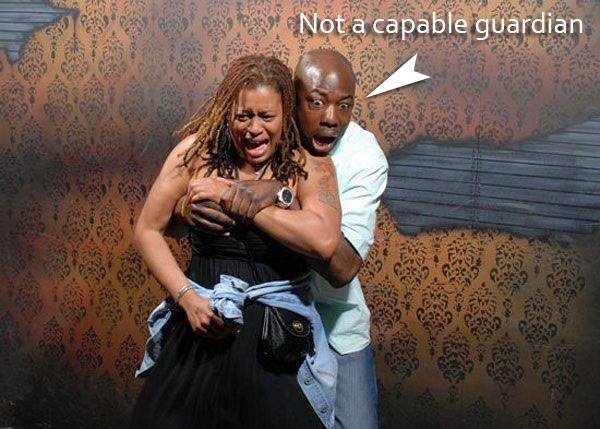
A handler, or the controller with a connection to the offender, may only be as capable as he or she is willing to stop the violence; some may actually encourage it. There is a large amount of research on how the presence of third parties connected to the attacker can affect a violent act, but how many instructors have seriously looked into it? The Triangle can help identify this deficiency.
Going further, territoriality and the sense of ownership or personal investment that a controller has in getting involved to stop the altercation can depend on whether the property is public or privately owned, the ability of the neighborhood to assert their territoriality over criminals, etc. A place manager such as a cashier in a large chain store is often less likely to risk her neck personally by intervening in an attempted assault in front of the store. The place manager in this large store has no personal investment, and this isn’t even her neighborhood, so why get involved? Why not call the cops instead? This delay can have lethal consequences for you.
The idea of a “motivated offender” was developed as opposed to a likely offender in the original triangle, since it was recognized that the mere presence of a criminal wasn’t enough for a crime to happen, even if the offender was a career criminal. One could hypothetically place a couple people next to each other and wait for the magic to happen, but that wouldn’t ensure that violence emerges.
There needed to be a triggering template involving how attractive the victim was from a vulnerability standpoint as well as other factors such as external “precipitators.” This is a list of up to 16 types of triggers ranging from arousal-stimulating sensory situations such as that found in the club with loud noises and crowding, to more personal ones in the form of a provocation or insult.3
When one considers how such a small change in the wording used by a model can have such large effects on how we look at the way violence happens, hopefully it is easier to appreciate how a precise yet simple model does not automatically mean simplistic. If your own model of examining violence can be haphazardly changed without any noticeable effect, than you haven’t identified the most fundamental elements for your model.
Applying the Model
To give a practical example of approaching your own self defense training in light of the Triangle, consider body language. Many instructors are rightfully starting to incorporate nonverbal aspects such as anxiety cues to detect potentially violent behavior prior to an attack. This fits the mantra of “awareness” that many self defense systems preach.
This is all well and good, but if we take the simple concepts of the Crime Triangle, it becomes clear that simple “awareness” is insufficient. Awareness of what? Many approaches are heavily threat-focused, and yet this misses a large chunk of the necessary components. You may find yourself in the position of recognizing a threat, and yet what if you are in a neighborhood where not only will nobody intervene, but some may actively join in the attack? Looking into the crystal ball only to see your own inevitable ass-kicking isn’t exactly going to inspire confidence in your method.
A more structured approach to nonverbal cues would look at reading the crowd through expanded eyes. Who are the controllers of a situation? Is their posture dominant or submissive? If they do get involved are they physically capable of altering the outcome or would it be better to verbally instruct them to get help? Is the potential threat’s handler actively engaged or is his body language disengaged from the offender’s attempted action toward you?
Who are the players on the chessboard, and what are their roles?
This is just one example of using the Triangle to assess your training in the area of body language, but there are many more. What I would suggest is to take this simple model, perhaps even develop one of your own, and start brainstorming and critiquing your own approach to self defense. Have you thought of all the angles? You may be surprised by what you discover.
1 Marie Tillyer and John Eck, “ Getting a handle on crime: A further extension of routine activities theory,” Security Journal 24, no. 2, (June 2010): 179–193, accessed July 2, 2017, doi: 10.1057/sj.2010.2.
2 For an in-depth discussion of how different variations in wording affected research, see Marcus Felson, “Routine Activity Approach,” in Environmental Criminology and Crime Analysis, ed. Richard Wortley and Lorraine Mazerolle (Portland: Willan Publishing, 2008), 70-77.
3 Richard Wortley, “Situational Precipitators of Crime,” ibid., 48-69.
Nathan Wagar is the founder of Borderland Strategic Performance Institute. He served two combat deployments to northern Iraq with the U.S. Army’s 101st Airborne, as part of a task force formed for kill or capture raids of high value targets.
He currently coaches boxing and personal protection to civilians in New Mexico, as well as closed course CQB and active shooter programs to the US Secret Service assigned to the Albuquerque field department.
www.borderlandstrategic.com
The Different Mindset between Social Work and Self-Defense.
Clinicians and self-defense practitioners have a very different mind frame and changing between the two can be difficult without training and real world experience. Most individuals in the helping professions have a mind frame of providing assistance in different forms. Whether it is therapy, substance use, case management, or meeting basic needs, the idea is that people are inherently good and we can help and because of that, we are safe. This leads to two false beliefs: the person served will respect and reflect the work that the clinician is trying to do and that the clinician will most likely not be assaulted. They may be “difficult” or “resistant to treatment” but engaging nonetheless. An example of this is the clinician working in an area known to have gang activity engaging on their own terms (i.e. in gang neighborhoods). The assumption is that the clinician is safe because they are trying to help. This can be a big mistake.
The self-defense practitioner has a different frame of mind. He, or she, understands and knows, sometimes too well, of the issues facing us today and is training to face it. It may not be the best training, or the most realistic, but it is something. In an assault, some individuals freeze, the best advice is to do something, anything. If you’ve been training, hopefully it will come out when you need it most.
I’m not saying that clinicians or substance abuse counselors are not aware, it’s quite the contrary with multiple systems in place. When doing outreach they go out in pairs, when doing home visits, they are available via phone, and when in clinics they have methods for addressing emergencies. Clinicians know to be aware of their surroundings and assess for safety. But many times, clinicians do not trust their gut or are told to continue working with an individual even after voicing their concerns. Recently, I expressed concern when working with an ex-convict with PTSD who was sweating and becoming increasingly agitated mid-session. When discussing his anger and my safety concerns, I was told that they could be “intimidating” and to continue my work. My work did not continue as he was arrested less than a week later.
At this point I want to address therapeutic counseling and the inherent potential danger and why I, and others, do what we do. We are here to help in any way, shape, or form. We believe that humans, by nature, are good, and that sometimes people express emotions in different ways and sometimes in violent ways. However, these instances are slim, but very real. According to mentalhealth.gov, most people with mental health issues are more likely to be victims than aggressors and that is why we need to do what we do.
This brings us to the crux of the topic. What is the difference and what are the concerns? Why does clinical work not mix with self-defense? One reasons can be illustrated in a training of skills to use when physical aggression occurs. The instructor says, “How many of you have taken self-defense or martial arts classes?” A few people raise their hands. “Okay, that’s good, but this is different. We don’t fight back.” What I am about to write is going to anger many, but to write it simply: fight back! I do not care how good you are at blocking, or getting out of the way or trying to remove yourself from the situation. Something is going to fail and your life is now at risk. I would rather be alive and lose my job than to lose my life or end up in the hospital. These situations are made even worse when you have no training or have training that provides a false sense of security.
My last point comes from a situation I had a few years ago. I was working as a street outreach worker. I came back to our hub/program to do documentation and any other tasks. A young adult present asked me about studying psychology at a local community college. Naturally, I engaged her in conversation. While talking, a homeless youth runs out the door, stating that he is late for work. He comes back in the building, gets a drink of water, and pulls a knife. Why he did this, I do not know. Was he trying to prove something? Intimidation? Maybe he was happy that he had a knife? Or needed it for protection in a shelter? We will never know, mainly because I don’t remember what happened next. All I know is that I got that knife in my hands. I may have blacked out.
My point is this: all of your trainings and understanding on why people hurt or why they express themselves through violence goes out the window when facing a life or death situation. Compassion or empathy will not save you. Your primate and mammalian brain is likely to shut down. Your survival drive takes over, and hopefully what training you have kicks in. Even if I had a knife, a gun or any tactical gear, it would not have helped. I was at the mercy of this individual. Sometimes weapons do not help (a subject for another article), but your training does. My brain went from clinical work to self-preservation in an instant. Can other clinicians do the same? Can they shut off the need to help others and protect themselves? Can the clinician who brushed my arm at a training and profusely apologized for “assaulting” me do the same? I know that when I train, I have to shut off that caring aspect, such that some people either do not know or do not see how I could be a clinician.
We need to be able to make that switch from helping others to protecting ourselves. This means a shift in paradigms. We will continue to help, regardless of the situation, we will be there to celebrate when things are good and to help you when you fall. We will support you in your choices, even if we do not agree with them. But, also that we are realistic and ready for when things become unsafe.
I hope that I have not increased the stigma of mental illness in this article. I am painting with a small brush, capturing specific instances of aggression in my ten plus years. We need to address mental illness and substance abuse as we do with any physical illness. Mental illness and substance abuse is a serious concern with suicide being the 10th leading cause of death in the US.
Alan Jensen, MSW, LICSW
Take AIM at those love handles by giving this new KILLER workout your best SHOT! Tacticalisthenics helps TARGET body fat while improving a wide RANGE of skills! Forget those fitness MAGAZINES and set your SIGHTS on the ultimate in TACTICAL cardio training!
Learn more about Master Ken here: ameridote.com
“You can map out a fight plan or a life plan, but when the action starts, it may not go the way you’ve planned, and you’re down to your reflexes-that means your [preparation]. That’s where your roadwork shows. If you’ve cheated on that in the dark of the morning, well, you’re going to find that out now, under the bright lights.”-Joe Frazier
The great champion Joe Frazier is referring both to boxing and life in general, and his lesson is mighty powerful. Perhaps more powerful than he ever realized. I’m going to drive home just how powerful his advice is with an example from some horrifically evil people, but first, let’s take a sojourn through some Paleolithic anthropology and then a 16th-century observation on warfare before we bring it back to the 21-st century.
You are the weakest human being that has ever walked the planet since this species inception.
Don’t take that personally, I’m weak, too, and so is your neighbor, and your CrossFit coach down the road. The 21st century human is a pale copy of better versions of ourselves that colonized this planet up till about 10,000 years ago.
This weak estimation I have just rendered is not me talking-that’s the science.
“There is some evidence that the size of the average Sapiens brain has actually decreased since the age of foraging. Survival in that era required superb mental abilities from everyone. When agriculture and industry came along people could increasingly rely on the skills of others for survival, and new ‘niches for imbeciles’ were opened up. You could survive and pass your unremarkable genes to the next generation by working as a water carrier or an assembly-line worker.
“Foragers mastered not only the surrounding world of animals, plants and objects, but also the internal world of their own bodies and senses. They listened to the slightest movement in the grass to learn whether a snake might be lurking there. They carefully observed the foliage of trees in order to discover fruits, beehives and bird nests. They moved with a minimum of effort and noise, and knew how to sit, walk and run in the most agile and efficient manner. Varied and constant use of their bodies made them as fit as marathon runners. They had the physical dexterity that people today are unable to achieve even after years of practicing yoga or t’ai chi.”-Yuval Noah Harari Sapien: A Brief History of Humankind.
A little depressing, huh? Before we get too down on our weaker and dumber selves let’s not forget that we win when it comes to technological luxuries. But then again…
“Don’t talk about ‘progress’ in terms of longevity, safety, or comfort before comparing zoo animals to those in the wilderness.”-Nassim Nicholas Taleb
Your call if you dig the idea of being a domesticated animal.
You can strive to be either more like the wolf, or more like the golden retriever. Both fine animals, but…
The next stop on our journey, the16th-century Frenchman Michel Montaigne. Rather than quote from the lengthy section I have excised this idea, I will paraphrase in prose far less elegant than his.
Montaigne, while musing on warfare of the past up to his present-day remarks that each succeeding general or army would fare well or better than preceding champions.
For example, Alexander would easily dominate opposition that preceded him by a century, whereas Caesar coming after Alexander would handle Alexander and his armies easily, and that a French militia of Montaigne’s period would handle a legion of Caesar’s handily.
Nice, huh? Puts we gradually weaker humans back in the driver’s seat.
Not so fast.
Montaigne points out that these successive victories would only be possible because each succeeding army enjoys greater technology (i.e., better forged steel for Caesar vs. Alexander, early firearms for the French dragoons vs. Caesar). He then goes on to say that if we level the playing field by making each fighting force compete mano y mano, or with the preceding generations technology then the victory goes hands down to the earlier version of ourselves. Montaigne makes this assertion by observing that each generation of man seems to do less and less, and to be capable of less and less. Keep in mind he was making this observation in the 1500’s-I wonder what he would conclude after observing today’s texters, and tweeters, and gamers.
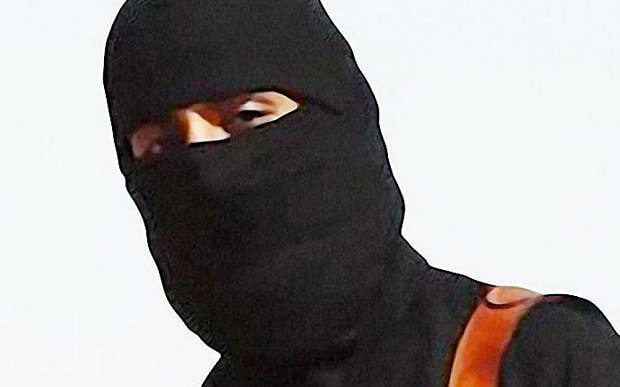
And now back to the 21st-century. I will quote from an exercise video available online. I will not provide a source for the video, I will not offer the name of the “instructor” as, well, because the video producers and instructors are scum.
The video is an outreach for potential ISIS converts on how to stay fit for battle.
I quote from the video: “This video is dedicated to the mujahedeen in Syria, and to others who plan on coming here.”
Our quite fit “instructor” then offers tips on how to get fit and stay fit for battle with no gym equipment. And, I will say, having been in this business for some time, his advice, unfortunately, is quite sound.
This video reminds us of the fact that the scum who perpetrated the atrocities in the offices of Charlie Hebdo and what followed, also met regularly for fitness sessions.
Which brings me to the point of this journey, what are we doing right now to be
Are we content to assume that our “protectors” somewhere out there in Washington, or wherever are the only preparation we need to make?
If we make this assumption how do we resolve this with the fact that most such attacks are not battlefield attacks, they are civilized world attacks-this puts us into Montaigne’s example where we have to ask ourselves how would we do against an enemy when we lack our technology which we use to bolster our weakness?
Would we be ready if we had to be ready?
Are we preparing to any degree whatsoever as Joe Frazier suggests versus a foe that takes such advice to heart?
We either makes ourselves weak, or we make ourselves strong. The amount of time dedicated to either is the same.
What are you going to do while some villain out there is doing what needs to be done?
Garry here, now please visit Mark’s website
http://www.extremeselfprotection.com
On my birthday recently my wife and I decided to do something a little different, careful, it is not that kind of an article although it does involve me and another bird with two lovely breasts.
We decided, a few months in advance, to visit the Northern Shooting Show that was being held for the second year in Harrogate (the posh part of Yorkshire). So an a reasonable if chilly birthday Sunday morning we folded back the roof of the car and sped off on our jolly.
I had watched a few promotional videos on Youtube and had a fair idea what to expect, remember guns are not as much part of British culture as they are in the USA. The last time I had regularly fired weapons was a long time ago as an infantry soldier in the Territorial Army, the Yorkshire Volunteers, well apart from shooting the odd rat or beer can in the back garden with my air rifle that is, I was in the regimental shooting team back then.
Anyway the first thing I did was have a go with an AR15 .22 on a portable range and my wife had a go with a Beretta and we both got good groupings. We then had a saunter round the outdoor stalls, watched a bit of the air rifle shooting competition, watched the retrievers being put through their paces in a competition that looked a lot of fun, the we went into the big exhibition halls as the sun was refusing to come out and it was pretty cool. Here we found masses of interesting things to look at and to play with, I even bought 3 really neat little knives for a mere £5.
At the back of one of the halls was a bushcraft area and this was on my list of key things to visit. We really enjoyed the ferreting display with Mark Davies, this was really entertaining and educational in equal measure and my wife got to hold a cute baby ferret…….
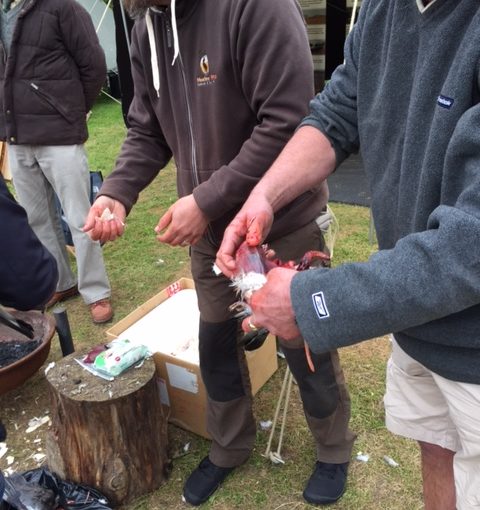
The next stall was a guy who was showing people how to field dress game for the pot, we got their when he was dressing a pigeon, by hand. So we watched as showed us how to assess if the bird was healthy, he removed the wings, then the head, cleaned out the crop, then he inserted his thumbs, one at a time down into the body, the first along the back bone, then the second along thr breast bone, then with both thumbs slid back in place he spilt the bird open.
This exposed the breasts and he then showed us how to remove the breasts using the thumbs. Hey presto two lovely pigeon breasts ready to cook. I had never seen this done before, virtually everything we eat comes from a shop, the meat from a local butcher or preprerared from the supermarket.
I had prepared pigeon years ago with a knife but it was messy, this was easier and less mess, I was impressed. He then asked for volunteers to try this on two more pigeons, step forward one willing volunteer and I was joined a minute later, after some persuasion, by a woman who had been watching too. So I paunched my first wood pigeon, yes there was blood and giblets but I successfully retrieved the breasts, no tools needed, not even my nice sharp little knives.
So after washing the blood off my hands I was quite pleased with myself. I had tried something new and got it right, nothing life changing but it told me a little more about myself. I have a great love of the outdoors, I never fail to be please when surrounded by flaura and fauna, I have no wish to kill or harm anything unless I am going to eat it and like most people hat is done for me virtually all the time. The moral of this tale, and a major part of my upcoming book, Exit the Dojo, (teaser), is that we are increasingly, and to our cost, detached from nature and the natural world.
I do grow some food, vegetables and fruit and my grandchildren learn where food comes from. I have one daughter who is vegan and another who is vegetarian, the latter ones children eat meat. We need to see where our meat comes from. Toby Cowern is the CRGI survival expert, mine is an interest that grows out of my use of the countryside, its mountains, lakes and woodlands, the wild moors in all the weathers our temperate climate provides. Would I kill and eat a rabbit, a sheep, a cow? Yes I would and I would want to know that every bit of that animal that could be used would. In my predominantly white western consumer orientated society, living in a country of shopkeepers as Napolean, once said, we are alienated from nature, we need to return to older ways occasionally to get in touch with our species being, the experience of the last 50 generations has not wiped out what was learned from the previous 5,000 generations, we are tool users, but before we had tools the opposable thumb set us apart for our hominid cousins, and incorporating meat into our diet fuelled the massive growth of the brain.
Paunching a pigeon is a primal act, we need to recognise and learn to love the primal in us.
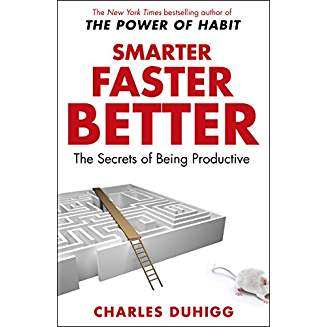
Having previously read Duhigg’s book on Habits I must admit this one is not as good a read, Habits was exceptionally well written and packed with incredibly interesting material. However, smarter faster better is still full of some very interesting information and very well presented, I think some of my slight disappointment is tainted by having previously read quite a bit of what Duhigg covers, so maybe that tainted my experience.
There are some really interesting anecdotes that certainly help us to see how we can become more productive but the stories dominate the narrative. I enjoyed the book overall but was left wondering how this moved me forward in terms of business skills, that is why I bought it after all. If you are new to business management then this is a good starting point in your education, for those with some experience there are some very interesting ideas presented and Duhigg does tell a good story.
The book, which is divided into a series of chapters (Motivation, Team, Focus, Goal Setting, Managing Others, Decision Making, Innovation, Absorbing Data, Appendix and Notes), is well laid out and organised but I got to the end feeling something was missing if much better informed, a strange feeling. Would I recommend it? Well that would depend on what you want from it, will it make you, me, smarter faster better? Who knows, for me nothing really jumped out and said I must do this…… Who knows it may for you, as I said earlier it depends where you are starting from.
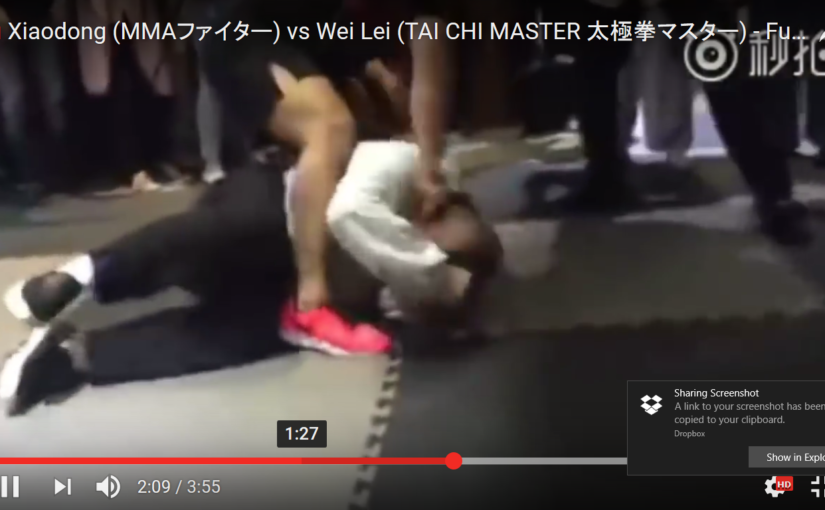
Many CM readers will have seen the media coverage of a recent incident in China, in which MMA fighter Xu Xiaodong soundly defeated “Thunder style” Tai Chi master Wei Lei in a challenge match arranged by Xu to show that “traditional” Chinese martial arts styles are ineffective. The New York Times’ article covering the match can be seen here: https://goo.gl/mGT56B [1].
The fight itself has already been the subject of much analysis and comment. What I would like to talk about is the aftermath of the fight, particularly its reported consequences for Xu Xiaodong, and the lessons which can be learned from Xu’s experience which are relevant to self-protection.
As the NY Times reports, Xu may have proved his point by winning the fight, but he has faced a powerful backlash from the Chinese media, public and martial arts community, including a statement from the Chinese Wushu Association saying that the fight “violates the morals of martial arts”. The backlash has been so severe that Xu has been forced into hiding, and has reportedly posted statements online saying that his career is in ruins and he has “lost everything”, seemingly baffled as to how things could have worked out so badly for him.
The moral outrage surrounding Xu’s actions can be understood by reference to the “Moral Foundations Theory” put forward by Jonathan Haidt and Craig Joseph. This theory is explored in detail in Haidt’s book “The Righteous Mind” [2], and a summary can be found at http://www.moralfoundations.org. In brief, Moral Foundations Theory proposes that there are five “foundations” to our instinctive sense of what is morally right or wrong:
Care/Harm;
Fairness/Cheating;
Loyalty/Betrayal;
Authority/Subversion;
and Sanctity/Degradation.
A sixth foundation, Liberty/Oppression, was added to the model later. Caring actions are likely to be viewed as moral, harmful actions as immoral, and so on. Haidt also proposes that in society, there are two distinct groups of people: those whose moral sense is dominated by the Care/Harm and Fairness/Cheating foundations, and those for whom all six foundations count more equally.
It seems clear that Xu is in the former category. He has publicly stated that the purpose of his challenge to the traditional martial arts community was to “fight fraudulence”, or to expose the ineffectiveness of traditional systems. This shows clear Care and Fairness motivations – in his mind, the traditional schools are cheating people by taking their money but teaching them ineffective systems, so by exposing their ineffectiveness he is protecting the public from being harmed in this way, which is a good and righteous thing to do. It also seems plausible to suggest that Xu may have been motivated by concerns of Liberty, perhaps in “freeing” would-be martial artists from a perceived oppression by the traditional schools. However, Xu has failed to realise how his actions would be perceived by people in the latter category. The depth with which the traditional martial arts are ingrained in Chinese culture means that his challenge appears disloyal to his heritage, subversive of the authority of the traditional schools in society, and degrading of traditions which are viewed by many as sacred. It is this interpretation of his actions which triggered the outrage that has made him a virtual outcast.
The relevance of this to conflict management and self-protection can be understood by assessing Xu’s actions against another model, this time the model of “winning” put forward by Martin Cooper [3]. In Cooper’s model, to achieve complete victory a person must “win” on four levels:
overcome adrenaline and fear to be able to perform;
overcome your opponent;
overcome criminal charges to preserve your liberty;
and overcome civil charges to preserve your resources.
Marc MacYoung has proposed a fifth level: survive retribution from the person you defeated [4]. If we examine Xu’s actions against this model, we can see that he won at the first level, since he was clearly able to perform in the fight; he won at the second level, easily overcoming his opponent; since the fight was consensual, criminal and civil legal consequences were not an issue, so the third and fourth levels are irrelevant; and as far as we know, the repercussions that Xu has experienced have not come directly from his defeated opponent. Therefore Cooper’s model, with MacYoung’s extension, can’t explain why Xu “lost everything” in the way that he did.
To explain the repercussions, we need to add a sixth level to the model: Protect your reputation and good name. Xu “lost” by failing to appreciate the effects that his actions would have on his reputation.
Reputation is key to all our social relationships. Our professional reputation affects our ability to find work. Our personal reputation affects our ability to form and maintain friendships and relationships. Reputation can constitute upwards of 40% of the value of corporations, who invest billions in developing and protecting it [5]. A person with a bad reputation can quickly find themselves isolated and penniless, which even if you’ve prevailed in a confrontation, been exonerated of criminal charges, escaped civil litigation and protected yourself against direct repercussions, is not a good place to be. Xu’s example illustrates that preserving our reputation and good name must form part of a comprehensive self-protection strategy.
The first step in developing a reputational protection strategy is to consider how our actions could give rise to a moral backlash. We can do this using the framework offered by Moral Foundations Theory: how might our actions be considered harmful, unfair, disloyal, subversive of authority, degrading of something sacred, or oppressive? The second step is to consider from whom the moral backlash may come. In Xu’s case, this should have been obvious – he openly challenged a highly respected institution of society, so of course the institution in question and its many supporters would rally to its defence. In self-protection, or protection of others, it will depend very much on the individual’s particular situation. For a law enforcement or security professional, the backlash may come from community groups, for example, and may have a political as well as moral motivation. For a private individual not employed in a profession where the use of force is routine, the backlash is more likely to come from friends and colleagues who can’t cope with the reality of an act of violence, however lawful, by someone they know. Thirdly, we need to consider the form that the backlash may take, and what its adverse effects might be on a social, professional and personal level. For law enforcement & security professionals, a backlash may be overt and very public, possibly in the media; for individuals, it may be more subtle, perhaps a quiet withdrawal of social contact as people seek to distance themselves. Particular consideration should be given to our online reputation via the internet and social media. A good introductory guide to online reputation management can be found at https://goo.gl/XZ4eUJ [6] – it’s aimed at corporate executives but its principles apply equally to individuals. Finally, we need to consider how we can take pre-emptive action to strengthen our reputation and good name within our professional and social circles so as to be more resilient to any future risk to our reputation, and what reactive actions we could take to repair any damage which our reputation may suffer.
Everyone’s individual situation is different, so the purpose of this article is not to prescribe solutions, but rather to raise the issue and get the thought process started. Including reputation management in our planning and strategies should help to ensure that if the worst happens, we can come out of it still able to function in society – not ostracised, baffled and broke with no idea of how we got there.
References
[1] Tatlow, Didi Kirsten (2017, May 10). MMA fighter’s pummelling of Tai Chi master rattles China. The New York Times. Retrieved from https://www.nytimes.com/2017/05/10/world/asia/mma-martial-arts-china-tai-chi.html
[2] Haidt, Jonathan (2013). The Righteous Mind: Why good people are divided by politics and religion. Penguin Books, London.
[3] Cooper, Martin. Quoted in MacYoung, Marc “Animal” & MacYoung, Dianna Gordon. Training goals, assumptions and screwups. No Nonsense Self Defense. Retrieved from http://www.nononsenseselfdefense.com/traininggoals.htm
[4] MacYoung, Marc “Animal” & MacYoung, Dianna Gordon. The cost of winning. No Nonsense Self Defense. Retrieved from http://www.nononsenseselfdefense.com/repercussions.htm
[5] Brigham, Alexander F. & Linssen, Stefan (2010, Feb 01). Your brand reputational value is irreplaceable. Protect it! Forbes. Retrieved from https://www.forbes.com/2010/02/01/brand-reputation-value-leadership-managing-ethisphere.html
[6] Protecting company & executive reputation (2016, March 23). Ignyte. Retrieved from https://www.igniyte.com/en/resources/guides/protecting-company-executive-reputation/
Contact
hall.jp@gmail.com
https://www.facebook.com/james.hall.902819