
How To Make A Functional Training Bag – Part I
How To Make A Functional Training Bag – Part 2
40 Functional Training Bag Exercises – Part III
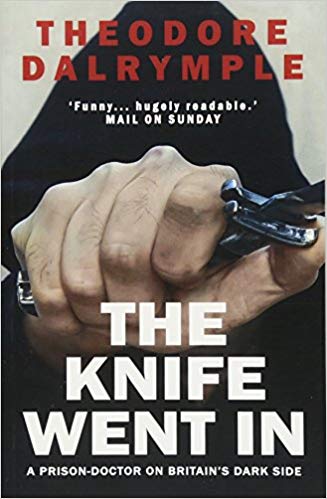
Review by Garry Smith.
The Safety Concepts team has over 65 years of combined experience in fields related to crime, violence, and conflict… from both sides of the law. Our research and instruction are firmly rooted in decades of high-level training and real-world problem-solving.
Jenna Meek is anything but. A homeschool mom, self-defense author, and certified firearms instructor, she brings an impressive resume of formal training with the who’s-who of the shooting world. She runs publishing and defensive firearms businesses with her husband, Jeff. She has authored and published three books.
Marc MacYoung is a proudly reformed bad guy, ex-violence professional, and Safety Concepts’ resident grumpy old man. Marc is grumpy because he has “been there and done that.” He hates seeing bad information hurt good people. That’s why he became a pioneer in the self-defense industry, authoring over 30 books and videos about crime, violence, and conflict.
Dan LoGrasso is the owner and operator of Silent Partner Productions. He brings a decade of intense media and communications experience to the Safety Concepts team. An Iraq veteran with his own resume of impressive training, Dan works behind the curtain herding a variety of cats and doing his life’s work: getting expert information to the people who need it most.
After 6 years informal collaboration, Marc, Jenna, and Dan have surrendered to the inevitable: despite all efforts, they are a team.
Welcome to Safety Concepts. We have cookies.
What makes Safety Concepts different?
There is a lot of training out there. We’re here to educate.
Our focus is on the skills and information most people need in most places, most of the time. Most people don’t need to be action heroes. Most people need to deal with everyday intimidation, boundary violations, and navigating unfamiliar circumstances.
Do we have specialized training for extraordinary circumstances? Yes, but we build a foundation of fundamental understanding first. Before learning to handle dangerous situations, we teach people how to recognize them and avoid them altogether when they can.
That said, we are in the business of building capable, confident people. When a conflict can’t be avoided, we will arm you with the best information about what to do before, during, and after to make sure you go home to your loved ones.
Why is Safety Concepts worth supporting?
Safety Concepts is our passion, but it is not a hobby.
In this field, what you don’t know can kill you. Literally. We take that so seriously that we wrote a whole book on it. Our promise to you is that we will never reduce the quality of our information for financial gain.
We bring you the realities of these subjects, comfortable or not. Because there are real hazards, we’re not afraid to call out bad information and training to keep people safe. Going against popular narratives means some risk-taking on the business side of things. Financial independence helps us keep the lights on because we will always put your safety first.
Finally, we believe in giving back. We are already rebuilding No Nonsense Self-Defense, our huge, free database of self-defense information that has been available and completely free for over 20 years. Your support will help us actively reach those most at-risk and give them the tools they need to get to better circumstances.
My stepdaughter manages a women’s refuge, she is currently taking a course as part of her cpd and already has a degree in counselling. It was our family Christmas party last weekend and she told me she had to write a short essay on social impact and added value on the service they provide. In a former life I was a research officer for a college of further education here in the UK, I was the first person employed to examine and evaluate the work of the college, principally the social impact and the added value.
Armed with my honours degree in sociology I set about my task assiduously, I was driven to produce the research and within a fewyears had amassed a huge vault of statistics and reports full of qualitative and quantitative evidence of the massive social impact studying at the college, part time and full time, had for the individual students, their families and community organisations and employment. My methodologies and tools included in the reports so that it could be seen that the research was sound and not biased, I liaised with external organisations, national bodies and some universities and the added to the evidence base too.
Added value wasmeasured in terms of progression onto further and higher education programmes, career progression and my research made for impressive reading, so I was told. It was used when the college was inspected by the Further Education Funding Council and played its part in helping the college to be graded as an outstanding institution, at the time the third highest rated college in the country. I loved the job, it was very rewarding, especially as this college is where I found a route into education that profoundly changed my life, I was a truebeliever. That is why it was extremely important that my methodological approach was documented and openly available for scrutiny.
It all sounds very rosy does it not? The college shone like a beacon in a misty sea, we were a very expensive institution to run, we were not a conventional college but the results as evidenced by my, and a few others research showed that we had an excellent, enviable social impact and added tremendous amounts of value beyond the individuals who studied with us. The thing is my research allowed me to dig and to burrow into how we worked, how we functioned and I began to find problems and weaknesses in lots of places.
For clarification I was the research officer for the principals unit and worked very closely with the principal and vice principal, both of whom had introduced me to sociology and research studies in the first place. It was a privileged position to be in and well rewarded financially and in status. As the problems, inefficiencies and weaknesses were identified then ways of tackling them were applied, it was not easy as there were political and cultural practices, individuals and departments working to their own agendas, people in positions they were not suited to, all sorts of complicating factors.
The great challenge was managing change. It was not easy, it took massive amounts of time and energy, physical and emotional, but we got there eventually as evidenced by the glowing FEFC inspection report. The nuts and bolts of how we did this would bore you and are unimportant. The point is that in the task of researching the social impact and added value of our service, education, there were 2 outcomes.
1, the happy one we showed to the world, the qualitative and quantitative evidence of social impact and added value.
2, the unhappy one we kept locked in the attic, the problems, inefficiencies and weaknesses that the research exposed.
Make no mistake that if you attempt to measure the social impact of any service that you provide you will almost certainly discover both yourself. Is this a reason to steer well clear of the task, my response is a firm no. Any attempt must be seriously undertaken and academically rigorous. As martial artists and or self defence training providers, writers we ought to try and learn what the social impact of our training offer is.
Is there any should be the 1st question and what is it the 2nd. Do we add value to the lives of our students?
We can go on listing questions but need to maintain focus.
What must be avoided is to seek to produce ‘evidence’ that our service is the best, outstanding whilst covering up and problems, inefficiencies and weaknesses we find, that is the research of the sick.
Unfortunately in a world where many organisations are funding dependent in an age of austerity, a way of describing what some of us call responsibility, the temptation to see only what we would like to see, or what our superiors want to see is far too tempting and power, like money, talks.
Understanding whether and how our service has a social impact and adds value, is in my opinion, an important task. The search to assess just what it is should, if conducted properly, show the evidence as it actually is and help to improve the service provided so staff who are asked to conduct the research must be properly trained and empowered or expert outside help should be employed.
If you think yourservice is outstanding, or you want it to be so, then the research is well worth it, but beware, the will most likely be pleasure but it will most likely be accompanied by a little pain.
If you are interested in attempting this please feel free to contact me as I have a service you might just be interested in and the 1st 10 customers get a massive 50% discount.
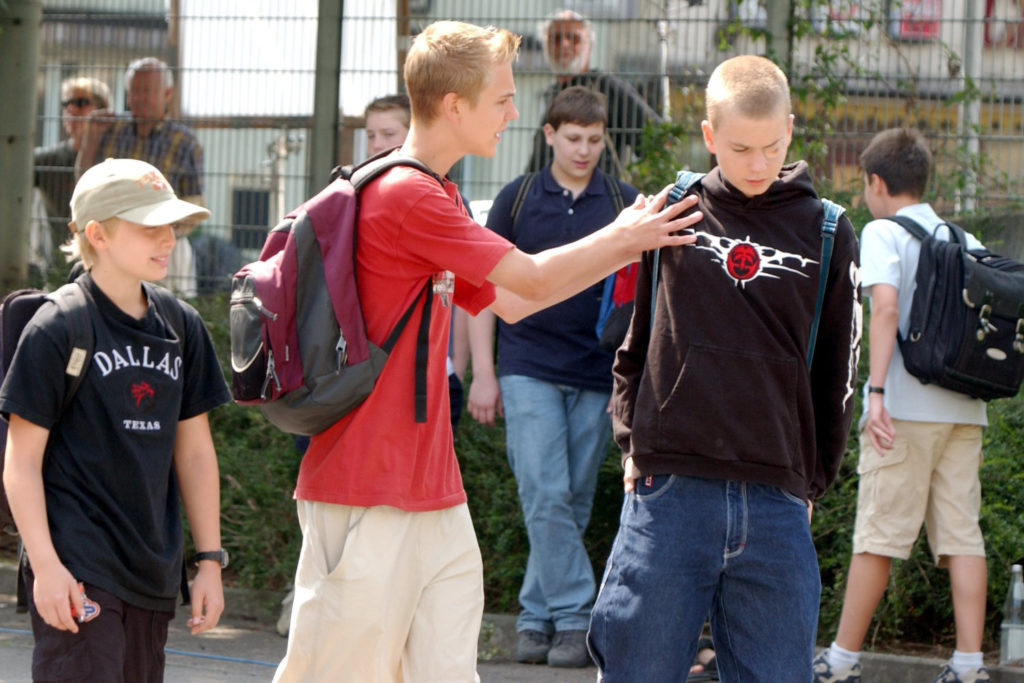
The modern approach, the one my German friend is struggling with, simply doesn’t work. Further, the system is resistant to anything that actually might work.
I may have to expand this later, but there is an ethos in certain professions in the US and a lot of countries. Germany right now. Teaching is one of those professions. The ethos has a lot of tenets. One of those is that violence is wrong. That any use of force is a moral failure. This tenet is clearly wrong, as I’ll try to show later. The only way to understand this ethos is to see the entire thing as a religion, a state religion, with sins, original sin, heretics, dogma, missionaries, prophets… the whole bit. That’s the only explanation for rejecting things known to work and insisting on processes that we know fail.
As parents, we see the travesty that the victim is punished for an act of violence. We often don’t see that the teacher will also be punished for any effective intervention. Not only will any active intervention, or even direct, personal communication likely violate policy, but it would be an act of heresy, with all the guilt and punishment inherent in that.
So the teacher does nothing.
The kid, the bully, is not stupid. He learns the teacher does nothing and he doesn’t attribute it to any kind of moral superiority on the part of the teacher. He rightly understands it as cowardice, fear.
Remember the teacher is bigger, stronger and, theoretically, has the authority of the institution or even the entire state behind him or her. The bully learns quickly that it doesn’t matter how much power someone has if they are afraid to use it. The bully can bully the teachers as well.
I should say something here about helicopter parents and how any intervention can be punished. Absolutely true, but it only works because of the cowardice of the target, whether that cowardice is personal or, more often, institutional.
Because kids are never protected and they are forbidden to work things out for themselves, all kids—bullies, victims and bystanders alike, never learn a mature understanding of violence. When bad words and fistfighting and assault are all equally forbidden, what’s the distinction when it comes to shooting up a school? When you don’t know the difference between a “friendly” fight, an “attitude adjustment” and murder, why not bring a knife to a minor disagreement?
Get this— under this system, there is no incentive for the bully to mature out of bullying or to develop a healthy relationship with power. The bully becomes a permanent bully.
*And that, thepunishing of the victim either through victim-blaming or the gruelling cross-examination** are a primary reason for the under-reporting of sex crimes.
** (Is this the equivalent of a fourth wall break within a fourth wall break?) As unpleasant as this is, proof beyond a reasonable doubt, due process, and the rights of the accused cannot be thrown out the window just because an assault was sexual in nature.
*** To be fair, if your parents found out you were being a bully and picking fights, you would get in trouble, but unless you came home with black eyes, they’d never know, hence no punishment.
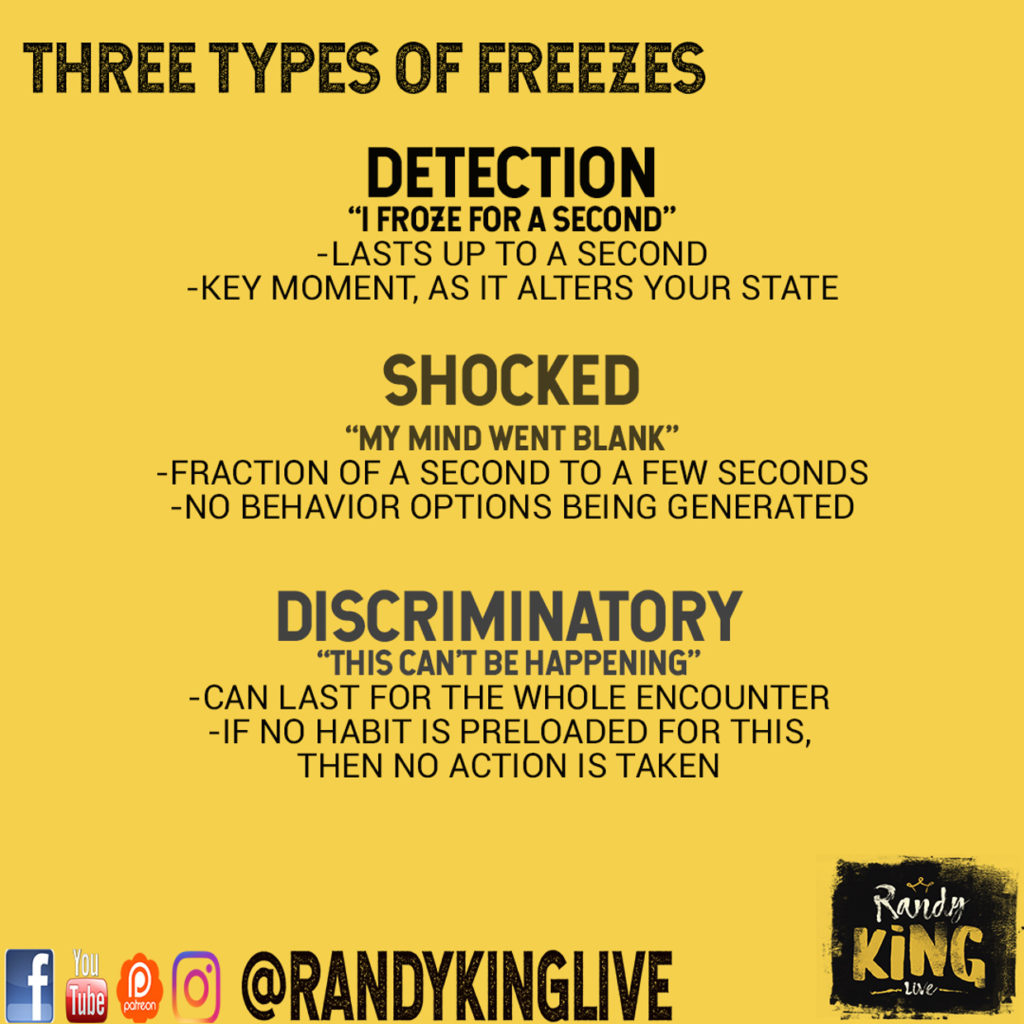
I am here to walk out my info-graphic on the “Three Types of Freezes”, which describes the model that I’ve been currently using to explain the freeze.
Now as we all know, “fight, flight, or freeze” seems to be the industry standard term right now. (There’s two other things that happen when it comes to inter-human communication; we won’t get into that here). When we’re talking about “the freeze”, this is something that happens to every human being when they run into a situation that they have zero response for.
As you can see on the info-graphic above, we’ve been running a three-freeze model. Level 1 of the freeze is what we call the detection freeze; level 2 of the freeze is what we call the shocked freeze; and level 3 of the freeze is what we call the discriminatory freeze. Most of the work we have been doing here has been with the discriminatory freeze – the third level of the freeze – because that’s the thing that has not been discussed in a lot of current literature. All the literature up to this point has involved a two-freeze model.
As most of know, I have a book that’s coming out based on my talks and all the stuff that I do on Randy King Live. I’m going to walk the info-graphic out even further in the book, but understanding that the reason why a lot of people don’t talk about the discriminatory freeze (AKA the “no good options” freeze) is because most of thepeople in the industry that are writing the books on this have an extremely high level of training. So, at no point would a discriminatory freeze even occur to them; with it being the deepest level, the “no good options” freeze – their training already superseded that. The craziest thing you need to understand about this is, we’ll go into it a little bit deeper, but the only thing that comes out in a fight or a high stress situation is habit and ritual. So if you don’t have a preloaded habit or ritual for what is happening to you, you are going to encounter one of the various levels of the freeze … and if there’s absolutely no response you’re going to hit that deepest level.
Lets break this down. The stimulus happens, your body doesn’t know what’s going on … if it’s a counter-ambush situation, your operant conditioning might take over first. (If you don’t understand the seven aspects of self defense, read Rory Miller’s book Facing Violence; it goes through all of them). If you don’t have any operant conditioning, then your body is going to go into a freeze, because that is what switches your body into being able to fight. It is your brain switching over from regular talking mode into battle mode. We talk about this a lot – my favorite saying is “the best time to hit a man is when he is talking”, because people, when they are talking, are not concentrating on what you are doing, they are concentrating on what they are going to say next. This is a great breakdown for the freeze. Another great breakdown from my friend Kasey Keckeisen is that “the brain cannot go where the body has never been”.
Lets start at the top – the detection freeze.
The detection freeze very simply is, something happened, your brain needs a minute to figure it out. There is not ongoing stimulus, it is just something quick, like a car backfired and you freeze, and then you have the ability to go forward. I talk about this all the time in my seminars – my daughter went through a detection freeze once when she dropped a cookie jar in our house, she got freaked out that I was gonna get mad and she froze. That is a detection freeze – did the big animal see me (I am the big animal in this story), did he see me? Am I OK? These happen all the time, they are very very quick. When a situation goes weird, say, somebody tells an off-color joke – all that stuff is basically a freeze cycle. For a detection freeze it is very small, some people do not even register this type as a freeze at all.
The second level of freeze that most literature is covering – again because of the people writing the literature in the self-defense world – is what we deem the shocked freeze.
Now the shocked freeze very simply is, something happened, and it was bigger or badder than you thought it was going to be. If you have ever been in a street fight, the first time you were punched for real, it probably surpassed any punch you had in training, so it is going to take your brain a minute to figure out what is going on and then try to get back into the game. If there are multiple stimuli coming in and you have no response, you might stay in the shocked freeze for longer. There are ways to break out of it, training will obviously shorten that shocked freeze, and if you have seen similar things beforehand your freeze cycle becomes shorter. It never ever really goes away, from what we have seen, the brain always goes into it. In a shocked freeze, at that point in time, your body is coming up with no new options, so you have zero problem-solving ability in this. Your brain just has to get to it and cycle on through. This is why sucker punches are so valuable in an aggressive assault. A lot of people do not understand that when a sucker punch comes in, that is shooting your brain into an OODA loop, and you are going into a freeze. Your body freezes first before it goes into either fight or flight.
We have been saying that with the shocked freeze, actions that affect the world seem to break it. That is very anecdotal – we do not have any actual evidence on that except for the stories we have heard. This happened to me as well, as I tell during my knife story – two things happened, I screamed and threw the person when I went deep into the freeze. This caused me to research this stuff even more.
The last freeze on the model that we have is called the discriminatory freeze, AKA the “no good options”freeze.
Editors note: This will be part 2 in January giving you something really cool to read in the new year.