Month: October 2015


Fishing for Witnesses, Part II – Clint Overland
Ok so last month I told you about a situation that occurred and how I used the witness pool to help prevent me from going to jail. The plan was to write another article over the how and why of the matter to hopefully help you understand the science behind what you do to add this to your toolbox of violence. This is the fourth fucking rewrite and I am about ready to take this fucking keyboard out and blow this motherfucker up. SO fuck it this is what I got I am not a fucking scientist and I damn sure not college educated. What I am is a beat up old bouncer that survived 27 years in a business that eat souls and shits dreams.
What I also am is the most dirty and underhanded fucker to lace up a pair if steel toes. I will lie to drunks, use any information I can gather and basically play as dirty as I can to win, and by winning I mean I go home at night and hopefully no one dies. I left the business a little under a year ago for some health reasons and got talked into writing about this fucked up subject of self-defense.
Fuck it I went to the gym tonight banged out a set of widow-maker squats, came home drank some really good bourbon, sat down and here we go. Sit down shut up and hold the fuck on. We are going to talk reality in the US. I don’t know the laws where you live but I can tell you from talking to others in the business, things are as fucked up wherever you live as they are here. Used to you could swap skin, bust your knuckles on another guys head and no one called the law and no one got sued. Today with the pussification of mankind everyone wants to be a bad-ass but no one wants to shit teeth or spit blood. No they want to call the cops and twist everything up in court.
Here are two statements that can be made after an incident see if you can tell which of the two will get you taken straight to jail and which one will show reasonable doubt and show self-defense to the police.
Statement 1 “You’re goddamn right I kicked that pussies ass, I fucked his shit up! Told that mother fucker not to try his shit here or I was going to stomp his ass!”
Statement 2 “No officer I asked him to stop, I tried to walk away and he just kept coming at me trying to harm me. I didn’t want to hurt him but he wouldn’t stop. Is he ok? I just wanted to make him stop trying to hurt me.
If you picked statement 1 as your go to answer please do us all a favor and put a blindfold on then play catch in traffic. You are an idiot and should never get the chance to breed more of your stupidity into others.
If you picked statement 2 then we can work with that. You are the person I want to help with their fishing in the witness pool. Statement 1 is the one that will cost you a fortune in lawyer fees and possibly get your ass shanked in prison. Statement 2 give you the one thing that you are looking for when dealing with the police and with witnesses. Your narrative must make the individual feel sympathy for you.
If you read last month’s article you might remember that I said I went back to the people that followed the situation out to the parking lot. I also explained that I told them about the situation and how that this wasn’t the typical type of situation at the establishment. What I didn’t do was go into detail about what I said. Here is goes, imagine yourself as a witness to the occurence.
Guys I am so sorry that you saw that! This isn’t what goes on here, I tried to get him to just calm down and enjoy the night. I think he was going outside to use meth or something and he just wouldn’t stop acting up. I really am sorry you had to see this. Let me buy you a drink to apologize for you having to see this. Wow! Please we don’t normally have that kind of thing go on here. I can’t believe that he tried to head-butt the waitress and then tried to hit the manager and
me. I can’t believe that he acted that way! Here let me get the door for you. Y’all have a nice night and I will get you both that drink.”
Ok so what is your opinion now that the guy you saw use violence came up to you and apologized for you having to see it. Sympathy, if so good that is what I want you to feel. I want your sympathy. I want you to think Hey that isn’t a bad guy at all, he is just doing a hard job and that ass-hole he threw out deserved it. When you are fishing the witness pool this is exactly what you want to do. Notice how many time I apologized, how many times I reinforced my position to them that I
didn’t want to do this but his actions lead to the situation. Did you notice that I bought them a drink as a way of apology for them experiencing this. These are the type of thing that you need to think
about. How can I make my narrative more sympathetic to the ones that saw it. How can I make them see me as the good guy.
Funny thing about people is the way that they interpert what they see. Ask an experienced police detective how many people he or she has to interview to get a clear picture of what goes on, and also ask them why they separate the witnesses. What you are doing by talking to the person and making your case sympathetic, is explaining what they saw and why you were forced to do this. You must make yourself into the good guy. You must be able to articulate to the person in such a way as to make them want to help you out.
Come back next month for this ongoing clusterfuck of an article. Really should have tried to put this mother fucker in book form because there are a thousand things I want get across to you
Do me a favor guys I am looking for feedback good, bad or ugly about how I am doing. Like I said I am not a professional writer and this is all new for me.
Contact me at coverland1969@gmail.com and let me know what you think
Peace

The Self Defense Continuum Part III – Teja Van Wicklen
Disrupt His Position
“Never let the enemy pick the battle site.” ~ General Patton
In past issues of The Conflict Manager we covered the beginning concepts of The Self Defense Continuum. We discussed what it is to Decide to Spot Criminal Intent and how to Deter at the Interview Stage. The next phase of the Continuum is the Positioning Stage which is a particularly volatile point in a criminal transaction. Every step we take in the Continuum removes opportunities for us to detect criminal intent and extract ourselves from the situation.
In the Positioning Stage a criminal puts himself and/or you in place for a successful attack. I should say criminal or criminals, because, remember these guys sometimes work together. The idea that there is safety in numbers goes both ways.
To take a step back, the Interview can take place over the phone, by watching only or up close and personal. An Interview which takes place face-to-face or even in the same room may put a shady character in Position already, unless the room happens to be a police station or is in some other way unsuitable. A criminal with Intent who is in already in Position after a successful Interview will Attack unless something pretty significant changes that makes it unsafe for him to attack you. Because of this, somewhere between the Interview and Positioning Stages, will be the last available moment that allows you the space to avoid violence rather than extract yourself from it. Avoidance is to walk away, extrication is to have to exert more energy and undertake more risk. Positioning is the dividing point between Before and During on the Self Defense Continuum. This is why we need to carefully choose who we get into the car with and what the circumstances are. It may be the last choice we make in the Positioning stage. The next stage is quite a bit messier.
We are specifically discussing physical attacks, but this information translates to other types of crime as well. Online the Positioning stage might involve a predator asking progressively more personal questions or sharing something that makes you in turn more open to sharing. He is working you into a Position in which he can successfully ask you to share something extremely personal or even for a live meeting. Again, he or they will use whatever works. Marc MacYoung, who created the 5 Stages, says that a predator, doesn’t usually want to fight, he wants to confuse and overwhelm his victim. This goes for both online and in person situations. A criminal doesn’t want you to have the opportunity to fight back (or shut down communications) at all. He wants to overwhelm you with charm, force or whatever works best for his purposes, leaving you no time or inclination to reason.
A discussion of predatory positioning would not be complete without a mention of Fringe Areas. I am not implying that Fringe Areas are the only places Positioning happens but they do constitute a large portion of the places violence occurs.
A Fringe area is a place on the periphery or on the way to and from somewhere else, hallways, stairways, shortcuts, elevators, alleys, parking lots, garages, etc. Anyplace something can happen and no one can hear you or get to you in time is a Fringe Area. Home can be a fringe area for victims of Domestic Violence or during a home invasion. The inside of a house is secluded and private, the way we like it when we shower and sleep. Criminals like privacy too.
Fringe Areas can also be temporary or transient. An office building might only be on the fringe after hours. A bathroom at a club is a common Fringe Area when the music is too loud or everyone too stoned to hear you or do anything. The back of a bus is on the Fringe if everyone is up front or the driver is distracted by a car accident. The closed room of a house during a party is another common Fringe Area.
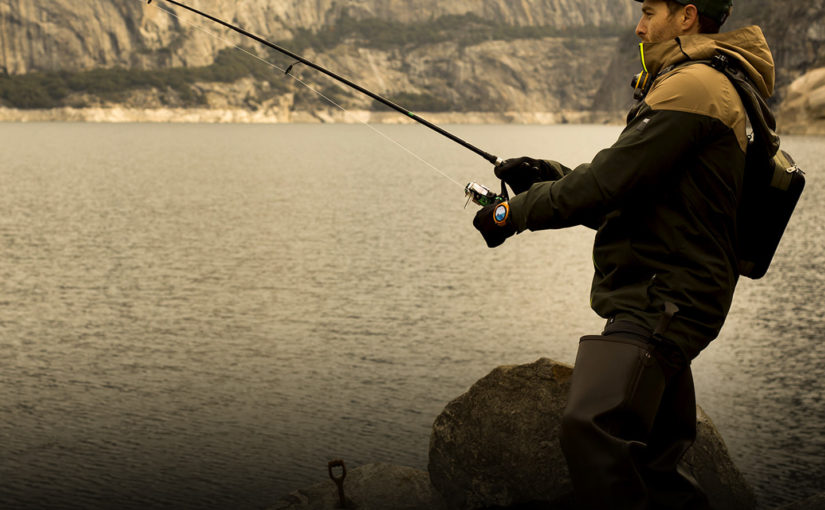
Criminals are intimately familiar with these places and we are not. They are like fish looking up at bugs on the surface of the water. You can see them there, but only if you practice noticing.
5 Positioning Strategies by Marc MacYoung
What does it look like when a person or group Positions for an Attack? Marc MacYoung came up with Five Positioning Strategies to watch for. These are the most common documented strategies criminals use to get close to you.
Closing
The first strategy, called Closing, as in closing distance, is virtually identical to the Regular Interview we discussed in the previous installment of the Self Defense Continuum. Again, you can see how closely related the Interview and Positioning stages can be. In Closing, as in the Regular Interview, a potential criminal approaches you in need of something like a light or directions.
Obviously, not everyone asking for directions is after you, but at the moment you feel your intuition whispering in your ear and a stranger happens to be either close or getting there, you can at the very least, choose not to be distracted. Your natural alerts should of course be augmented if you are alone, in a Fringe Area, pregnant, in charge of young or disabled people, lost, it is dark or any one of the other environmental or situational arrangements that causes a measure of vulnerability.
We have ways of reading body language and intent. A person who really needs directions does not “feel” the same as a person who doesn’t but who is approaching you on that pretext. There are subtleties of eye movement, peripheral attention, expression and determination that can be read if we are aware of our own and other people’s cues. This is why it is so crucial to the practice of self defense that we learn to articulate our instincts and apprehensions.
Cornering or Trapping
The next Positioning Strategy is called Cornering or Trapping. The potential criminal approaches you from a direction that traps you between him and a large object, like a wall. This usually means he is blocking an exit as well. He has thought this out while you were shopping.
For obvious reasons you want to be especially savvy about this strategy, which requires general awareness of where you are and where any and all exits are. An accomplice might be waiting behind one of the doors. Know where all the exits are, not just one.
Surprise
The Surprise strategy is that ‘holy crap!’ moment of the movie where the guy appears in the back seat of the car or the closet. You don’t see him until it’s too late.
Notice covered and concealment. Avoid the hiding spots or keep your distance, especially when you are alone. Don’t walk too close to parked cars or doorways, walk down the middle of the sidewalk.
Pincer
The next positioning strategy is known as Pincer. We know that criminals sometimes work in teams or gangs and Pincer is an effective strategy when they do.
Pincer takes several forms:
- Two or more people suddenly split up as they approach you. You may have see this when kids split up to harass or bully another kid. It is highly disconcerting to engage several people at once, one of whom is behind you.
- One thug engages you from the front using the first positioning strategy we called Closing, and the other blindsides you or grabs your bag.
- Two guys face each other across a narrow walkway so you have to walk in between them.
Surrounding
Finally there is Surrounding, which Marc tells us is most common with three or more thugs. You walk through or along a group of guys and suddenly you are in the middle. They may hang out in a sort of line, as in leaning against a wall, so the front guy can wait for you while the last follows behind as you pass. Sometimes they swarm quickly, but often they drift around you. They are hedging their bets in case they have chosen the wrong person. They may also be trying to look nonchalant, that is, not suspicious to anyone who might be watching.

Anger, Belief, Moral Framework and Conflict: Part II – Marc MacYoung
Last time we looked at how anger, preserving one’s sense of self-worth and core beliefs can get us into conflict. Now we’re going to look at:
A – How beliefs shape our morality.
B – How different moral emphasis’s can keep us from coming to resolution.
C- How certain people have weaponized their so-called morality to justify their attacks on you.
This concept is is bigger and deeper than many people realize. It’s also the source of what I call “anger based morality.” A beast that is, unfortunately, on the rise in our modern society. In another installment we’ll deal with nuts and bolts on how to handle belief based anger and anger based morality. But in this this one, let’s introduce you to the growing trend of sanctimonious rage
We’re going to start with all moral systems are belief systems — even secular ones. (Veganism makes more sense when you look at it as a religion, focused on moral conduct and purity.) If you read the last installment you’ll remember how anger and preservation of core beliefs are connected. Thing is they need protecting. Beliefs, and by extension, moral systems are largely based on unprovable assumptions, assertions and conclusions that a group of people have made and maintained over a long period of time.
But just because they are beliefs, do not dismiss them.
First off, remember belief is how we organize our thoughts against being overwhelmed by the universe. The human ego is ill equipped to handle infinity without the safety net of beliefs to keep us sane.
Second, beliefs are crucial to our self-identity, self-worth, and worldview. They are the basis of our behavior, choices and how we treat others.
Oh, for the record, when I say that moral systems are based on unprovable assumptions that does not mean that the systems arising from them don’t have a proven track record. They do, usually a very impressive one. (Like keeping millions of people living together and functioning with minimal bloodshed.) So while the core assumptions may not be solid, the results can be. Or they can become a disaster. But the nature of our beliefs are going to affect self-identity, self-worth worldview, our morality and ethics.
Third: Our beliefs are a filter that we run almost every decision through.
It’s not an exaggeration to say: Beliefs gets us through the day. Think of how many decisions you make every day. Once we’ve made up our mind (picked a belief) it turbo charges our decision making process. When we encounter an event or idea we run it through a belief filter to find where we stand on the issue. If it fits, then ‘yes.’ If it doesn’t then ‘no.’ Putting this in computer terms, beliefs speed up processor speeds by automatically deleting many other options.
In a small sense it can be as simple as ruling out two local restaurants because you don’t like _____ (fill in the blank) food when it comes to ‘where to have lunch.’ But look at that same process in the bigger picture. Once we’ve decided a subject is good or bad we go from there. But how we go is we reject anything that doesn’t conform with our beliefs. For example: Violence is bad. Once we’ve accepted that belief. Any violence is automatically bad, as is anyone who does it. That saves us from having to think.
This filter idea is important, because it really isn’t thinking about the subject. It’s “here’s the template, does this new data conform, yes or no?” That’s not really thinking, it’s judging. And judging saves us the skull sweat of having to actually think about the complexities of the issue. (This by the way why a child asking ‘why’ is so annoying — especially about social issues adults just take for granted. We really can’t come up with solid reasons for belief filtered decisions.)
But here’s the fly in the ointment. Many of us believe ‘belief’ is weak, if not bad. We’re smarter and better than that. We identify ourselves as ‘rational’ because we tell ourselves we’re rational. (Yes, it’s a self-eating watermelon.) But it can go further, it can lead to a form of fanaticism about how rational we are. Many people have transferred their zealotry from religion to secular causes and ideologies. It can bleed over from just being convinced we’re rational into telling ourselves because we are so smart we are right and good — no matter how judgmental, prejudiced, hostile and violent we’re being.
Oh and in case you’re wondering about the science behind this idea. MRIs of brain activity show a decision is made in the non-logical parts of the brain, before the logic and speech parts are activated. That means, when faced with a situation requiring a choice or interpretation, the decision is usually made (filtered) immediately and then we ‘think’ about how to communicate it. In other cases, the stimuli is received, the decision is made and we immediately act on it without conscious thought. (Don’t condemn this process, it’s what allows us to drive a car.)
Putting it another way, most people’s thinking is actually done after the judging. That’s when they communicate their decision. Often they also supply ‘reasons’ to justify the decision. If resistance is met, it upgrades to defending their filtered decision. This does require ‘thinking.’ But, even then, this is not rational thought, it’s usually rationalizing thought. (With just enough cherry picked ‘facts’ to convince ourselves we made an informed conclusion.) Realize many people not only don’t distinguish between filtering and thinking, but they honestly believe filtering is thinking. Not even close. But recognize all the skullsweat we put into communicating and defending our decision is central to our belief that we’re being rational and base our opinions on facts, not operating from belief.
The truth is our ‘reasons’ for filtered decisions are usually pretty weak. When we self-isolate ourselves among like minded people we never find this out. If pressed we’re likely to resort to “soundbites” that work in the echo chamber. If those don’t carry the day, we usually just respond by becoming angry and doing personal attacks about the other person. (Spend a week on social media and you’ll see all kinds of name calling and insults). This is anger preserving our core beliefs. But recognize how it protects us too. This anger keeps us from seeing exactly how weak our arguments in support of our beliefs really are. Also if we’re lucky, it distracts the other person from presenting information dangerous to what we believe.
Remember how tied into anger self-worth and core beliefs tie are? How anger is used in the preservation of those? Well we’ve now laid the groundwork for bumping it up a notch and it become chronic, self-righteous rage. Rage that is fueled by offended morality out looking for targets. In case you haven’t been outside lately, there are a lot of people for whom outrage has become not just a philosophy, but a way of life. Despite your best efforts to avoid them, you might have even run into one or two of them.
Stop and think about the last time you saw (or were involved in) a discussion over a hot button topic. How dare someone not agree with our filtered decision! In many cases if someone disagrees, that person isn’t just stupid and wrong, they are evil.
Wait… you’re evil for just disagreeing with someone?
That isn’t just illogical, it is so left-field and emotional it’s unnerving. This especially when we see that the person saying it is convinced he or she has made a rational and informed judgment about that other person. (Which is a contradiction in terms; it should be a rational and informed decision. But remember we’re talking belief based judgments here.) From as little as one sentence, the accuser has the ability to judge and condemn the whole person because he/she is a ____ist, ____ive, ____ican, ___ian, or some other label? This venomous rhetoric, anger, blind conviction, and condemnation don’t make sense until you look at this behavior from the perspective of moral outrage and zealotry. It may not religious, but it is zealotry.
Focus especially on the authority behind this behavior. This is no longer “God is the authority for our actions,” for many anger has become the unquestionable source and justification for behavior. It’s not just that their moral beliefs cause them anger (which it often does), it’s more their ethics and morality are anger based. First, they are morally justified in what they are doing because they are angry. Second, their anger becomes sanctified because it arises from their beliefs and morals.
Anger based morality, that’s an ugly concept. If we consider anger as an act of ego, we’re floating into some dangerous waters. Because now we’re dealing with an individual’s self-righteous anger being sanctified as righteous anger because of a bigger cause than just ego.
What could have been selfish or misguided (how many times have you gotten angry and discovered you were wrong) now becomes an absolute and unquestionable TRUTH!™ This truth becomes the authority upon which they act. In case you missed it, that just became an excuse for abuse. But it goes further than that. The greater the perceived wrong, the more uncompromising and dogmatic the anger. Fury becomes their ultimate moral authority. Stop and think about some of the many ways that could go bad.
So know they’re out there, but also know it takes time and mental gymnastics before you run across that extreme. As such it’s worth looking at how — in less extreme cases –morality influences conflict. We’re going to look at that and a few other things.
One of those others we’re going to look at is how different systems of morality can create an abyss between us and someone we’re in conflict with. An abyss that makes it nearly impossible to come to resolution if you don’t recognize it. When you recognize it you can come up with work arounds. The trick is to recognize it.
This chasm goes deeper than “I’m an A and you’re a B.” That’s a crack in the ground. Often these are variations within a system (e.g., the difference between a Southern Baptist and a Freewill Baptist). These differences often manifest as doctrinal points and/or interpretation. Although these doctrinal differences can grow into schisms, there’s more in common than not.
A ravine is “I’m an A and you’re a 3,527” That is trying to communicate across totally different systems (e.g., Muslim and Buddhist). While difficult, the fact that there are complete systems on either side makes it possible for communication. Here the commonalities are fewer and more general (e.g., both have a long standing moral codes that address the same issues). Still the chance of communication and finding a working solution exists.
But things can expand to an irreconcilable abyss when positions become entrenched. It is this entrenchment I want to take a quick look at. This is because it’s important for understanding the unrecognized problem I mentioned earlier. Just so you know, the ‘unrecognized problem’ is when two sides have a different number of moral foundations.
With both anger based morality and different numbers of moral foundations you can find yourself in an unpleasant situation. That is when someone isn’t interested in compromise — up to and including to the point of doing you harm. In some situations not only isn’t negotiation not going to work, there’s a good chance trying will make things worse. When compromise is truly impossible, that’s not only when you need to shift to other viable strategies, but recognize trying to negotiate is a waste of valuable time and resources.
So if you have to shift, do so knowing why it was necessary; that way you can explain yourself when called upon to do so.
A Conversation With Violence – Andrew Holland
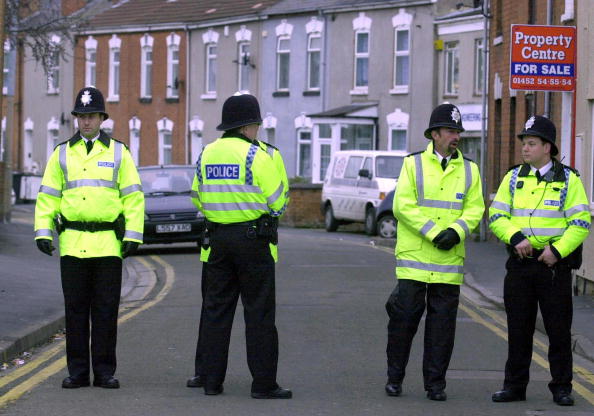
My personal experience of self defence has come from my work as a UK Police Officer. and today I will give you a huge tip from my experience.
So what did 17 years as a cop in the UK teach me? What insight did all those years of going hands on with people provide me? The answer is simple, words matter as much, if not more, than the physical.
In this article, I will be looking at the art of speaking in conflict situations.
I was at the Presidents Cup International Russian Sambo tournament a few weeks ago, and I bumped into Tony Preston. Tony is a Krav Maga expert, grappler and instructor under Geoff Thompson, both contributors to this magazine too. However, he also worked on the doors. Needless to say, he knows his stuff. So while watching some great action, we got talking about self-defence and Tony was discussing how he has avoided more conflict than he has been in and he used his verbal skills to get out of violent situations.
I couldn’t agree more with Tony, and this is the mark of a true expert. I never worry about the man who brags that he has 300 fights. Usually, this is so often made up. I worry about the man who says “I’ve avoided more than I have been in”, this for me is the mark of a true expert.
As a young police officer, I was fascinated with violence, almost all police work involves violent crime. From threats to assaults, violence is the common theme that runs throughout it all. Just as Tony stated, I too have found that it was my mouth that became my greatest asset and not my physical prowess.
The use of verbal skills has been essential for me in me returning home after every shift for 17 years. It was something that wasn’t taught; you picked up on it through experience. I recall in my early years on the job arriving at fights and very often being given small tasks by vastly more experienced officers. Looking back I was just learning my trade and I got to see masters at work. These older cops rarely went hands on because they controlled situations with their voice, their stature and body language. They were experts in the art of non-verbal communication, and these officers had no intention of letting an 18-year-old testosterone fuelled rookie cause them to fight and possibly injure themselves.
Over the years, I became the experienced officer and those with me were often rookies themselves and guess what, I gave them the simple tasks such as getting witness details. The main reason for this is simple; I wanted to be in charge of what was going on if I was going to have to fight it would be on my terms!
When I sat down and broke this subject and skill base down, I called it my Verbal Control System or VCS. The VCS allowed me to control every situation, and if I were going to go hands on I would have every tactical advantage possible.
The first step on the VCS is realising that the 80/20 rule applies to conflict too.
80% of people don’t want to fight, and the 20% that do have probably lost 80% of the encounters they have had. This is another reason they are so keen to fight; they are stuck in the perpetual ‘need to prove themselves zone’. You can almost be certain that men being arrested at domestic incidents would fight, push their chests out or be rude as they want to prove something to their partner who was usually beaten up in the corner.
Once you are pre-armed with the knowledge that most potential aggressors don’t want to fight, then, you can use this to your advantage and start giving people ways out of the situation. The managed exit as I like to call it is a way that you construct a pathway for the individual to exit safely. An example could be a drunk guy in the pub that bumps into you and spills his drink. He starts to get angry, as such you could say:”Sorry about that, let’s get you another drink.” Yes, spending £3.50 possible stopped you from having to knock this guy out and end up at the police station all night and day. Money well spent.
My favourite exit was always when I had to put the handcuffs on someone and they were saying “You aren’t putting them on me, I’ll kick off”. For these situations, I used to say “Those cuffs are to protect us from you, you are clearly a handy lad, I want to go home in one piece so I have to put them on.” This appeals to their ego and worked like a charm for years. I learned that from a very experienced officer, and I am guessing he learned it the same way.
Other exit strategies are simple as well, in a robbery just give them your wallet or anything else they ask for (assuming it is just money, etc.). Your verbal skills are simple here “yes I’ll give you the money.” Not rocket science. Once you stop thinking about self-defence as a physical thing and more of a chess match, then you can take your ego out of the occasion.
For me, I used to think about victory in terms of injuries. Having no injuries when I got home was a clear victory because that was what so many people wanted to do to me, cause me harm. My advice is simple, practise your verbal skills often and learn how to give the opponent every chance to avoid the situation
Andrew is a former police officer in the UK, Judo black belt and boxer. He also runs www.theselfdefenceexpert.com
Left and Right of Arc – Toby Cowern
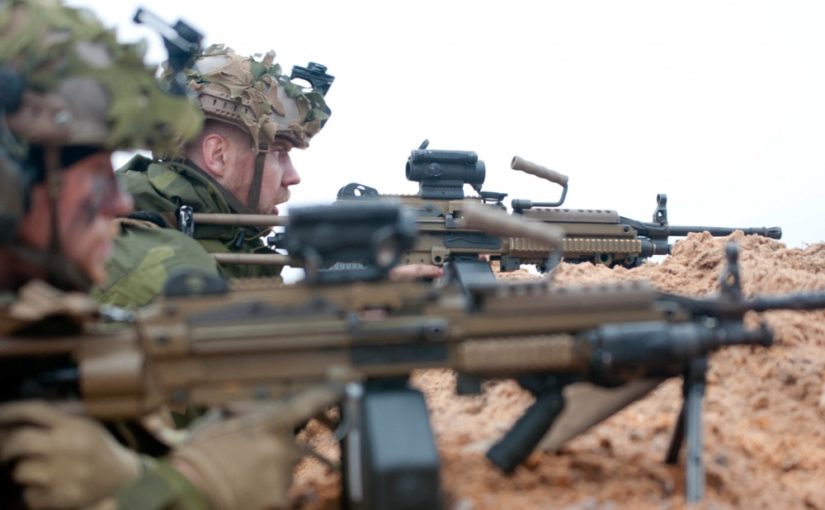
Left and Right of Arc is a military term. The main concept is that of when you establish a fighting position one of the key tasks is to establish a left and right of arc. This means for each person in the group they will identify their position and have designated the areas that they can shoot between. This also ensures that there is enough of an overlap in positions that there are no holes in the overall defense. The covering arcs of fire provide mutual defence allowing each member to protect their position while covering their team and being covered by them.
In terms of conflict management why do we want to think about Left and Right of Arcs?
These past few weeks have seen the latest round of extensive travel for me, not only for teaching but more importantly for learning and practicing. I’ve been to Croatia, Slovenia and Bosnia talking and training with survivors of the Balkans Conflict. Passed through the Middle East and am currently sat writing this in Cape Town, South Africa having spent the day in a ‘Township’ (Think Slum) looking and learning about the poverty cycle and desperate living conditions.
All of this has given me much food for thought and will be addressed in future, specific articles, but, you may ask, where does the ‘Left and Right of Arc’ fit in? Moving away from the military definition, left and right of arc can mean those things vital to, but either side of our main area of interest or effort. As I’ve been traveling I have seen many things that offer a vital contribution to ‘Self Defense’ and ‘Situational awareness’ that don’t necessarily make it into many peoples minds or priorities to address or train in.
A couple of examples: When you think about driving in defensive terms, what comes to mind? Here in Africa driving is a critical skill for keeping out of trouble, not only in the need to negotiate (vastly) ‘different approaches to road regulations’, but also identifying likely set ups (situations where you and your vehicle can be compromised or approached by criminals), trying to ‘blend’ in with other drivers and highly important, the ability to navigate quickly and efficiently, as a wrong turn can almost instantly put you in a VERY bad place. All this is on the ‘defensive’ side of driving, and yet there are also all the aspects of ‘offensive’ driving to consider as well. This ‘well rounded’ viewpoint builds the entire ‘Arc’ spectrum. Not only to focus on the ‘cool’ parts of driving, but also the other, just as important pieces.
When you are in an area of foreign country that has very little tourism and you have learnt the basic greetings, there can be a large assumption you are a national. Can you maintain a ‘greyman’ status if you don’t know the language? What aspects above and beyond mere dress and appearance are influential? Do you want to be a ‘greyman’ or is there sometimes more protection afforded by being a ‘foreigner’? Learning to be a ‘Greyman’ can be a key skill, successfully doing so in a foreign land is part of the essence of ‘Left and Right of Arc’ in the terms we are talking…
I often find that the Left and right of Arcs become most apparent when you actually start to genuinely apply skills or increase the realism in training. Its one of the reasons I travel as much as I do and put myself in these situations, as you learn so many lessons this way. This in my mind is one of the biggest advantages of this magazine. You are reading multiple articles every issue, from people that are out there really applying their skills and pushing their personal ‘envelope’ of skills and survivability, I know of no other publication with a contributor field so committed to ensuring what they teach is the most viable version of the knowledge they have.
You will see in Conflict Manager magazine over the coming months some key themes emerging, one of which will be that of ‘Resilience’. As we introduce, discuss and advance these topics, keep in mind the ‘Left and Right of Arc’; The other skills you need to consider, learn, understand and apply that are to the side of, but very important to your ‘main effort’. Take a moment now and think about your particular field of self defense or martial art and think, better still, write down, some of these ‘Left and Right of Arc’ aspects. By truly understanding the total ‘arc’ we are trying to cover in our training we can ensure we maintain focus on our ‘main effort’ but with balance on building contributory skills and develop better, more complete resilience.

End Violence Against Everyone – Erin Pizzey
Our family were captured by the Japanese in Shanghai in 1942 so I was born into international conflict and my parents were in conflict with each other.
I was a very violent and disturbed child but when I was nine years old my parents (my father was a diplomat), were posted to Tien Sien (now called Tianjin) and were arrested by the Communists for three years. For all that time I was in the care of Miss Williams who ran a holiday home and became my mentor. She took care of some 40 children whose parents were abroad and came from boarding schools across England.
Miss William was a colossus, she was six foot seven and probably weighed around eighteen stone. She drove ambulances during the war and was a golf champion as well as being a magistrate in the local town. She ran St. Mary’s, our holiday home, as a benevolent dictator. My usual violent and disruptive behaviour was met with a calm indifference and a gentle request, would I join the women serving in the kitchen where I would help with peeling to potatoes, or another quiet request that I help them wash up after forty children had eaten. I very quickly realised that my strategies for survival had to change and gradually I came to trust this woman and to want to please her.
When I was faced by our little community centre changing almost overnight, by a badly bruised woman asking for help, I had no experience at all of how we could be of any use except to take her in. Then as if a tsunami was suddenly loosed overnight a wave of women came to the door bringing their children. Of the first hundred women coming through the door sixty two were as violent as or more violent than the partners they left. Most of the women volunteering in the little house left unable to deal with the behaviour of some of the women and also because we were breaking the law as we had no permission to house people. My initial mothers along with myself very quickly created a simulation of a rumbustious family and we cared deeply for and about each other and our children.
Initially social workers often turned up on our doorstep with a mother and children in tow and said loudly ‘I have had enough this is the third time I have tried to rescue this woman and she keeps going back. ‘All that was available in 1971 and very rarely offered was a room in a homeless family hostel. I knew the terror of knowing that my violent mother might be outside my bedroom door bent on revenging some slight she perceived and I watched as the mothers bedded down for the night with their children. They slept with their backs against the walls and their heads on their knees if there was no room on the mattresses laid on the floor. For almost all of them they said it was the best sleep they had for years. They felt safe and secure surrounded by other women. They washed in the basin in the kitchen and used the outdoor lavatory. Bathing the children took place in a tin tub on the floor or in the tiny patio if the weather was warm. We were all busy all day long and the mothers went in pairs to get there welfare benefits, attended appointments with their solicitors and doctors or dentists.
We collected food left over at night from Marks & Spencer and we were given vegetables from the local green grocer and fish from the fishmongers. Very soon united in our absolute conviction that refuges must be provided for all victims, we fought a running battle with the local council who soon took out warrants for my arrest for overcrowding. There was no attempt at any time to put out a helping hand to mothers and children many of whom had lived in conflict as I had and need time and a therapeutic approach to help them learn other patterns of survival.
I used the same techniques as Miss William did in her care of the children in her holiday home. I knew from my own experiences that violent family life is lived in emotional and sometimes physical chaos. I knew very quickly that children born into intergenerational family violence were likely to adopt violence as their strategy to survive. There were other strategies for survival and one of them was to implode the anger and damage themselves.
From my growing experiences I created what I called therapeutic chaos. I believed that women and their children coming from violent families brought their internal chaotic life styles with them and what I needed to do (with a rapidly growing volunteer force of men and women) was to create an equally chaotic loving busy family. One where relationships were no longer a matter of survival but of learning to trust and finally to change the internal chaos into a peaceful acceptance of a world that was now safe. One of the biggest lessons was to teach violent people, who all their lives, automatically escalated from pain to rage how to learn to express sorrow and ask for comfort where comfort had always been denied.
My therapeutic community grew rapidly and I realised that for many of my families years of violence and abuse meant that they need years not months to heal. We started our second stage communities where some five mothers and children chose to live for several years until they were rehoused. The work we needed to do was to help all victims (I was aware that men were equally assaulted as women) to transcend their generational violence.
I was deeply disturbed and still am that when children born into violent families grow up, through no fault of their own, to be abused children and then because they exhibit their wounds as anti-social children and later adults society turns on them banning them from schools, warehousing them in prisons and mental hospitals. Alas my vision of the purpose of refuges fell afoul of prevailing feminist ideologies and my therapeutic communities were closed down. I have been silenced for many years but I feel some glimmering of hope that more and more agencies are beginning to see the failure of our punitive Western societies and I hope that we learn that we all have to ‘love the unlovable’ because how can you be expected to be a healthy happy member of society if you have never been loved or accepted?
www.whiteribbon.org is my web site and I have complete control of it. Because so much research into domestic violence is fraudulent for purposes of raising money my web site is a safe place for everyone to learn the truth and see properly evidence based research that they can trust.
Training for life – Dave Aiton
Throughout all of my years in training, whether in martial arts, reality based conflict training or throughout my time in the military I’ve experienced a wide range of various types of instruction, some good, some bad and a few excellent but all in some way or another have given me something that has lasted…. the ability to determine what works and what doesn’t.
After watching and learning hundreds or even thousands of different techniques as well as a multitude of combinations and variations I have become aware that keeping things simple enhances the chance of a successful outcome. This has been a principal I have applied throughout every aspect of my military career.
When I first started training (before I joined the Army) I would more often than not defer to what my instructors taught me without question. I had the general impression that given their experience and subject matter knowledge they met all of the prerequisite criteria to teach, even in the subject of self defence.
Sadly and much to my misfortune I discovered that although my instructors at the time taught skills for competition that encouraged a sports mentality they did not take the time to teach how to adapt sport techniques into skills that can be used on the street. That discovery came many moons ago when I was walking back home after a night out in Glasgow. I found myself on the receiving end of a serious assault by three guys which left me with 3 broken ribs, a broken nose, black eyes and a concussion which left me hospitalised for a couple of days.
The problem I had during the assault was the sudden realisation that for all of the training I had under my belt it did not prepare me for the reality of the violence that I was on the receiving end of. I couldn’t react to what was happening and none of my training at that time gave me the skills I needed to deal with real violence. Everything I had learnt in the Dojo failed me when I needed it most.
After my recovery I returned to training more determined than I had ever been in my life to make sure that what happened to me would never be repeated. I began to look further into the techniques that my instructors taught as self defence applications and realised that the experience I previously presumed they had was based purely on practice against compliant training partners and had absolutely no bearing on the reality of a violent assault.
My instructors at that time failed to understand that in real-life violent confrontation, defending ourselves is not a sport. There are no rules, no referee’s, no rounds and no bells. An attacker doesn’t think or act like your training partner or a competitor.
This Dojo mindset had no real concept of the fact that an attacker wants to cause you serious hurt or even kill you. The training I received did not provide any education on the combat indications that help to raise awareness during pre confrontation or any tactical options that help us to focus more during conflict. The wider picture just wasn’t understood by many martial arts instructors at the time and as a consequence more attention was paid towards obtaining status and grading rather than the importance of student self-preservation.
In the years that followed that unfortunate evening I have taken the opportunity to train with many excellent reality based self defence instructors within the civilian sector and a great many Military instructors with shared experiences during my 29 years of service with HMF Army.
The resounding principles that I have adopted as a result of my experience as a student and soldier is that in order to give ourselves a fighting chance of surviving an attack we need to cultivate a pre-emptive sense of situational awareness and a tactical mindset to prepare for that worst case scenario. It doesn’t matter, how we are built, or how experienced in martial arts we are. Physical strength or acrobatic skills, age, gender or condition are not deciding factors.
The outcome of my years of training has led to the development of Effective Self Protection training (ESP) which originates and has evolved from various self defence systems used by Military and Police Forces in the UK and throughout the rest of the world. ESP was developed to provide both an education and physical skills that were until recently only taught to Military and Police organisations.
Its effectiveness lies in its simplicity of use and its common sense application. It involves education and training in the psychological factors of confrontation, physical awareness and the appropriate reaction techniques that can be employed in times of necessity. Through continued training in ESP students grow and attain awareness and an understanding of the information that enhances their ability to deal with violent confrontation and greatly improves the chances of surviving dangerous and potentially life threatening situations.
The application of ESP provides the necessary skills to recognise the early signs of confrontation and the mental and physical skills required to respond and react to violent and aggressive behaviour whilst developing situational awareness, assertive confidence and common sense techniques. ESP creates a tactical mindset that promotes an individual’s confidence and ability in confrontational situations.
ESP is broken down into five components:
1. The Legislation of Common and Statute Law and the use of force.
2. Situational and threat awareness.
3. Conflict Resolution and response options.
4. Tactical Communications.
5. Technique Training.
Training is a straight forward process that is easy to learn and effective in both its content and practice. Through common sense application ESP is an easy way to learn and develop threat awareness and the response options necessary to resolve or conclude confrontational situations in any environment.
The ability to defend ourselves in real violence is not found within a Dojo. The benefits of martial arts training should never be confused with the expectation that they will help you survive real violence.
Keep in mind that getting home safe to your family and becoming tomorrows newspaper headline comes down to how well prepared you are to protect yourself in a confrontational situation. A fight is always between you and an attacker; Self Defence training is neither a sport nor a game. It must be realistic enough to protect your life!
Right Here Right Now – Garry Smith
Fatboy Slim aka Norman Cook aka Quentin Leo Cook is a solo electronic performer according to Wikipedia, I like a lot of his music, in particular I like a track called right here, right now. Its where we live, we think about the past and the future but we live right here right now.
Last month I used this picture in my article ‘Going Forward to the Past’ about Lifelong Learning.
It is one I use when I work with my students, it is something I am always encouraging others to do, to go to the place where the magic happens. A couple of days ago I caught the tail end of somebody a class in a local college as I waited to do my class, and the tutor used the exact same picture to encourage her students to think about their young entrepreneurs project. I thought she was excellent in how she used the material and talked for some time after he class about actually doing it, getting up off the sofa and stepping away from the comfort zone.
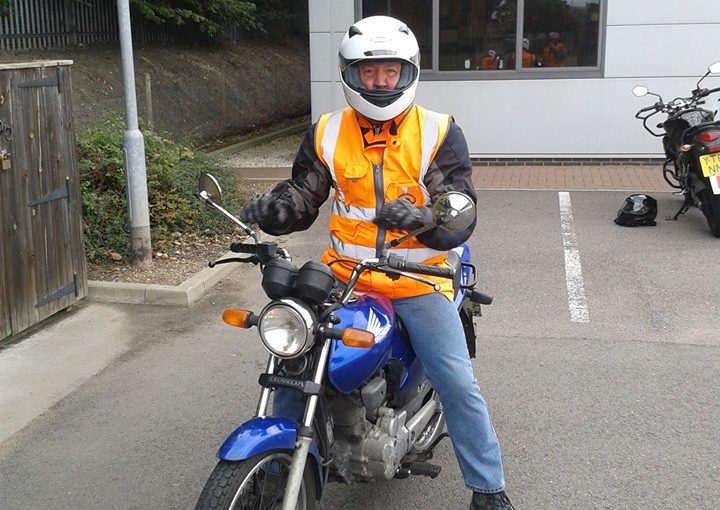
Well before I go on here is an update on the motorbike riding. I went out on the road on a 650cc Suzuki the other day, we did a lot of miles at some speed too, it is very early days but I an beginning to feel comfortable but still high on the magic of the new experiences and sensations. I have now bought all the gear short of an actual bike but have been spending quite a bit of time checking out different bikes and their features on the internet, my head turns now as I drive past bike shops and I have an urge to go in and look. I never thought I would do this until a few weeks ago, all my life people told me motorbikes = death, I lost good friends young who died on them, I visited good friends in hospital who had major accidents on them, motorbikes were for looney tunes, I once went pillion a few times with a mate and it scared the crap out of me. I am not sure what that says about me now, have I lost the plot or have I overcome my fear.
We its possibly a bit of both depending on your perspective. When you do this type of thing at 55, something out of character, without warning people first they look at you funny and the words mid life crisis are used, jokingly, but it has been said by a few. That’s cool I can live with that. To be fair I do not really know myself what makes me do these things, when I went to college then university and ended up lecturing in further and higher education it was the same, I really wanted to learn and had to overcome the fear of failure to be ready to do so.
So here I lay bare my biggest fear, it is the fear of failure. It is why we get nervous when we take tests and exams, we fear being the one who fails. When I stepped onto the mat to take my black belt in Ju Jitsu I had trained hard for years, training three times a week for many months and then some. The first this we have to complete are 25 throws and every aspect of each one must be correct, your uki’s are punching full of and there is no room for error, about 10 throws in and I was convinced I had already failed, I felt like shit, I could hardly breathe and had to fight myself mentally as well as my uki’s physically in order to carry on. I passed, its history now.
Last Friday I failed the first part of my MOD 1 riding test, I repeat I failed. I made one mistake right in the middle of the test, I knew I had failed at this point. I still had three difficult tasks to complete, I took a breath, focused and did them, including the one I was most scared of at the start of he training, the swerve manoeuvre at speed. In the debrief the examiner told me he knew I knew I had failed when I made my one mistake, he complimented me an told me he was really impressed that I completed the rest of the test, he told me it was excellent. My instructor had described my ride prior to the test as fantastic and that was because I had a clear passion for learning to ride, this applied also to my fellow student who did pass.
Later we talked about some other stuff and the subject turned to how we learn things that help us to ride better. I mentioned the above picture and we talked about comfort zones and leaving them. I had already booked a retest for next week, best to get straight back on etc, I know that I did 90% of the test spot on, I know I can do the thing I did wrong, I understand I can do it. I was disappointed but not upset that I had failed, I took the test after 5 days of training, before that I could not ride at all. I got 1 thing wrong and people the feedback was surprisingly good. Putting the failure in the context of how much I think I have achieved, especially venturing up to 60 miles an hour on something I never thought I would ride, something I previously feared I still classed the test as a success.
If you live your life in the comfort zone, you are not living your life.
Fear is horrible, fear prevents us doing things, fear is the most negative of emotions, this we all know. Few people are fearless. Fear can paralyse us and keep us from trying something new. Most peoples lives are controlled by fear and they do not even know it. When we see an opportunity to do something new, whether it is something we have always wanted to do or just something that crops up, there will appear that little policeman in your head that will tell you not to do it, the little policeman will tell you it is not for you, it might hurt, you cannot do it, people like you do not do it and if you ignore all this stuff you the inner policeman will remind you that if you try it you might fail.
The little policeman inside your head uses fear to control you. Fear is a form of social control. I do not subscribe to conspiracy theories, I am not sat here with my head wrapped in tinfoil to stop the CIA reading my thoughts. We are taught fear as we are socialised into society. Learning to fear certain things, poisonous snakes, tigers, sharks etc that are dangerous helps keep us safe. The thing is we also learn to fear failure and yes this has a name, Atychiphobia.
“Atychiphobia is the abormal, unwarranted, and persistent fear of failure a type of specific phobia. As with many phobias, atychiphobia often leads to a constricted lifestyle, and is particularly devastating for its effects on a person’s willingness to attempt certain activities. The term atychiphobia comes from the Greek Phobos meaning “fear” or “morbid fear” and atyches meaning “unfortunate”.
Persons afflicted with atychiphobia considers the possibility of failure so intense that they choose not to take the risk then these persons will subconsciously undermine their own efforts so that they no longer have to continue to try. Because effort is proportionate to the achievement of personal goals and fulfilment, this unwillingness to try, that arises from the perceived inequality between the possibilities of success and failure, holds the atychiphobic back from a life of meaning and the realization of potential.” https://en.wikipedia.org/wiki/Atychiphobia
The good new is that it is abnormal, most people do not suffer this correct? I think not, this is only my opinion, I think we all suffer from it when we face a challenge, a test an exam. It is not retarding us all the time but how many of us can say we have not felt nervous before or during a test or an exam especially where we really want or need to pass and where failure would lead to us being not good enough. Fear of failure is directly related to how we see ourselves and how we want others to see us.
Most Conflict Manager readers train and/or are trainers. We all know about exam nerves, now we can name the beast that is atychiphobia. Naming things is important part of learning how to deal with challenges and learning how to help others deal with them too. Different individuals will develop different strategies, there is no one cure. Even when you have trained and trained and passed mock test after mock test the real thing wakes up the little policeman inside your head and he starts to go to work. Does this mean I am anti testing? No, the pressure created by facing a test can really focus the learner so can be a good thing. It can also be important in keeping us safe, had I made my one little mistake on my riding test out on the road I could have placed myself in danger, could not would, but I can see why it was enough to fail me.
So life long learning is a wonderful thing, I embrace I, I send out the message to try new things as often as possible, I do it too. In a couple of hours Jayne and I are off to BBC Radio Sheffield to do a thirty minute live slot talking about Ju Jitsu and doing an on air demonstration. This will be Jayne’s 3rd time this year, she was really nervous the first time but did an incredible job, this time we are both looking forward to it and will have a lot of fun, well she will as she will be throwing me around. The request for us to do this is linked to the imminent release of the film Suffragettes and their training in Ju Jitsu. Hopefully this will bring in some new students to our classes, people who simply by turning up are facing one of their fears, of exposing themselves to the possibility of failure. Our job today on air is to show how both Jayne and I did just that, we are senior instructors now but we were complete novice white belts once.
My grandson Billy is five years old and has just done his first 2 Ju Jitsu classes, his mum sat watching is a 1st dan black belt, she climbed the UK’s 3 biggest mountains when she was 7, she is a fully qualified teacher, like her I want to teach Billy, and all my other students, not to fear failure, it happens, we fail, dream of successes and go out and create them.
I told all my students that I failed my test last week, I want them to learn that if they take a test it can happen, if everyone passes the test then it is not much of a test. Our local McDojo sells guaranteed black belt courses. One of their first dan black belts in karate MMA, (don’t start me off), was in one of my sessions recently doing self defence, he had a meltdown and could not complete the class, I said and did nothing about him or his training, I think the poor kid heard and saw things that exposed the dross he will have been filled up with, I felt really sorry for him. We have had their 13 year old second dan black belts come train with us before. They were not even green belts by our standards, their tests are not tests they are purchases.
So please let your students know its ok to fail, taking the test is an achievement in itself, if you do not pass then the work starts to pass next time. Not next week, not next month, but right here, right now. The antidotes to atychiphobia are confidence and passion, inculcate these qualities in your students and you will be doing a fine job, help them to overcome the negative control of fear and you will create winners.
Real Self-Defence – Geoff Thompson
Punch ups, muggings and even fatalities are frighteningly common in a society that is bulging at the waist with unsolicited assaults. Due to astonishing growth-rate of violent crime in Britain, skills in self-defense are almost a pre-requisite if you want to get from the pub to the Indian and home again in one piece.
In an attack situation, options – from avoiding a confrontation with guile right through to swapping some leather – are useful; the choices are varied and subjective but when your adrenaline is racing and your legs are doing an involuntary bossanova the choice (as they say) will be entirely yours.
I’m sure you have already seen – and are tired of – the wristlocks and shoulder throws that garnish just about every article and video on self-defence. They only work in Bruce Lee films and on police self-defence courses so I’ll spare you the embarrassment of a photo-shoot-re-run. If you don’t mind I’ll stick to the stuff that works when the pavement is your arena, and there are no referees with whistles and bells to stop a point scoring match turning into a blood and snot debacle.
My premise is basic but empirical, and at some point it might prove life saving.
Whilst some situations actually start at a physical response (in which case you either fight like a demon or you get battered), most are preceded by some kind of pre-fight ritual and introductory dialogue; even if it is only the uninspiring ‘are you looking at my missus?’ The Real art of self-defence is not in bringing the affray to a messy conclusion with a practised right cross, rather it is in spotting the attack ritual in its early stages so that a physical encounter can be avoided.
Hard Target
As a man with a varied and brutal background I can tell you with sincerity and emphasis that violence is not the answer. Reflecting this my opening advice is to avoid violence whenever and where ever possible. Make yourself a hard target by giving volatile environments a wide birth. James Coburn was succinct when he advised us to ‘avoid arseholes and big egos, avoid places where arseholes and big egos hang out’. He could have added ‘don’t be an arsehole and don’t have a big ego yourself’. It helps. The inevitable consequences of toe-to-toe encounters are rarely favourable to either party so around-the-table negotiation should always be exhausted before sending in the troops.
The interview
Pre-fight management is vital if you want to survive an altercation intact; the winner is usually the one who controls the seconds before an affray. Most situations start at conversation range and with some kind of dialogue. If this is mismanaged the situation normally – and quickly – degenerates into a scuffle and then a scrap on the floor amidst chip wrappers and dog-ends. The current crop of defence innovators recommends the floor as the place to be when a fight goes live. In the No-Holds-Barred (NHB) one-on-one sports arena they’d probably be right, but outside the chippy where the terrain is less predictable and the enemy nearly always has allies in tow, taking the fight to the cobbles is suicidal. It leaves you open to (often fatal) secondary attacks, especially if you’re facing more than one opponent.
The fence
If you are approached and the dialogue starts (this is known as the interview), take up a small inconspicuous 45° stance and put up your fence : place your lead hand in that all-important space between you and your antagonist to maintain a safe gap. The fence gives you a degree of control without your aggressor knowing. Placed correctly, your lead hand and reverse hand will block the thoroughfare (without touching) of the attacker’s right and left hand. If he moves forward to butt/kick/punch, be prepared to shove him back and/or attack. Try not to touch the assailant with your fence unless you are forced to, as it can trigger aggression and possibly a physical attack.
If you want to keep your face in place, don’t let a potential attacker touch you at any time, even if he appears to be friendly. An experienced fighter will feign friendliness, even submission, to make an opening for his attack (pic). Another common ploy is for an attacker to offer a handshake and then head-butt/knife you as soon as the grip is taken (pic). If you fall prey to the verbal opener you will quickly become work experience for a student nurse at the ER, so use your fence to maintain a safe gap until the threat has gone.
Fear
Expect to be scared because, no matter how experienced you are, you will be. Fear is the natural precursor to confrontation. I’ve worked with some premier league players and privately they all tell the same story; at the point of contact they’d rather be any where in the world than where they are. So don’t let self-doubt enter the equation if you feel like crapping your Calvin’s because you’re not on your own, we all feel fear even if some of us pretend that we don’t. Shaking legs, trembling voice and feelings of cowardice are all natural by-products of the adrenal release.
Verbal dissuasion
If you find your self facing pro-magnum man and he starts to growl, try and talk the situation down. Again, the battle will be more with your own ego than it will be with your antagonist. Don’t be afraid to admit that you don’t want trouble and beat a hasty retreat. Better to follow the Judo adage and walk away with confidence than to end up in an affray that might change the course of your life for the worst.
Posturing
If talking fails to make the grade (and you think it might work) you could try posturing (pic). I made it work for me as an 11 stone novice doorman so you don’t have to be big to be effective. Posturing entails making like a woolly mammoth in an attempt to psyche out your antagonist. Create a gap between you and your aggressor by shoving him hard on the chest. Once the gap has been secured go crazy; shout, salivate, spread your arms, bulge your eyes and drop into single syllables. This triggers the opponent’s flight response and often scares him into capitulation. As soon as he backs off beat a hasty retreat.
If escape, dissuasion and posturing crack at the spine and if you have honest belief that you are about to be attacked you are left with two choices; hit or be hit. As a self-defence adviser my duty is not to tell you which to choose, only to offer you the options, and allow you to select for your self.
The pre-emptive strike
If your choice is a physical response, my advice is to be pre-emptive and strike first – very hard – preferably on the jaw (it’s a direct link to the brain). The concept of defence at the point of contact is not only unsound it is dangerous and extremely naive. Waiting for someone to attack you is strategic madness because blocks don’t work! The Kwai-Chang-Cain theory of block and counter-attack is even more absurd, especially if you are facing more than one opponent. There is no finesse about fighting multiple opponents, they do not line up and attack you one at a time they strike like a swarm of bees and luck is the only thing that’ll keep a beat in your heart.
If you honestly believe that you are about to become target practice for the hard of thinking, hit them before they can hit you. Once you have landed the first strike, run. Many defence gurus advocate a second strike, a finisher. I advise not. Your first strike buys you vital getaway time. If you’re dealing with a determined attacker (many are very experienced in the art of maim) and you don’t leg it after the first strike, chances are he’ll grab you and snap you like a twiglette.
Self-defence is about doing the minimum a situation will allow to ensure your own survival. It’s not about defending a corpulent ego or misguided honour.
Having been involved in thousands of live encounters the pre-emptive attack was the only consistently effective technique I could find.
My advice is to hit as hard as you can, using your fists (or your head). These are (usually) the closest naturally available weapons to the target (your opponents jaw), and offer the safest and most direct route. At this point it would be a great advantage to have a background in a punching art – preferably western boxing. Most people think they can throw a good punch. From my experience – and certainly under pressure – few can. A great way to learn is to go to a boxing club or do a little focus pad work with a friend to develop the skills (pic).
If you do employ the pre-emptive attack make sure you know your legal rights (a little more on this later) or you might be in for a double jeopardy when you have to defend them against the second enemy – the law.
You dictate reasonable force; although you may have to defend your interpretation of reasonable in a court of law. If you are so frightened by an assailant that you have to hit him with everything but the girl on your arm, then that is reasonable force. If, however, you knock someone to the ground and then do the fifty-six-move kata on their head, you might well be stretching your luck.
I can’t guarantee that you won’t end up in the dock, but I feel that it’s better to be judged by twelve than carried by six.
Armed assailants.
Forget the films where the good guy – using empty hands – prevails over the knife-wielding psychopath without ruffling his own hair or popping a shirt button, because on celluloid is the only place it’s going to happen. Someone once asked me at a self-defence seminar ‘what could you do against a knife?’
‘About 50 miles an hour’, I replied.
I’ve faced a few blades and I’ve been stabbed some in my time (but enough about my ex-wife!) and on every occasion I filled my nappy. If your antagonist is carrying, take the advice of Forrest Gump and run like the wind blows. Even with 40 years of martial arts training under my belt, it was providence and not skill that kept me off the cold slab.
If you are facing a knife, the best-case scenario is that you don’t die. If a knife is pulled and running away is not on the option list, throw anything that isn’t nailed to the floor at the attacker, and then run. If projection range is lost your only other option is to blitz the attacker with head strikes until he is unable to continue his attack.
The rule of thumb here is that stabbers don’t usually show the blade, they just sneak up and insert it when you’re not aware. If they do show you the knife they are usually just posturing. Always check the hands of your antagonist – if you can’t see the palms, or a hand is concealed, you have to presume they are carrying (pic).
If the attacker does have a weapon and doesn’t respond to your verbal dissuasion, your options are two-fold: give them what they ask for (and just hope it’s not oral sex) or be prepared to get cut in the affray.
Self-defence and the law.
As important as the law may be, contemplating the legal implications of defending your self in the face of ensuing attack would be unwise. It can cause indecision, which usually leads to defeat.
I call the law the second enemy: this is not meant disparagingly, but, having been on the wrong side of it a few times I feel duty bound to highlight the inherent dangers of dealing with – what can be – a sticky judicial system, post-assault.
Many people are convicted for what they say and not what they do. This means you could legally defend yourself and yet still be convicted and sent to jail (do not pass go…) if you don’t claim self-defence (correctly) when giving a statement to the police. Many of my friends ended up in prison because they didn’t understand the law. Paradoxically many known criminals have avoided prison because they (or certainly their solicitors) did. So, if self-defence is your aim, then an appreciation of this judicial grey area has to be an imperative.
Post-assault, you’ll probably be suffering from what is known as adrenal-induced Tachypsychia. This can cause time distortion, time loss, memory distortion and memory loss. You may also feel the innate urge to talk, if only to justify your actions (Logorrhoea). All of the latter affect your ability to make an objective statement if the police become involved. When/if you do make a statement it is hardly likely to be accurate considering these facts. Six months down the line when you end up in court to defend your right to self-defence, everything will hang on your statement. So make sure you’re clear about your rights. If you’re not clear, insist on waiting until the next day before making a statement or ask to see a duty solicitor (or your own). It’s your right. Don’t put pen to paper otherwise. A police cell can be a very lonely place when you’re not used to it, and the police can often be guilty of rushing, even pressuring you for a quick statement. This pressure can be subtle but effective; being left alone for long periods of time, being told that you might be sent to prison, even the good cop-bad cop routine (yes, honestly). Many a tough guy has turned from hard to lard after a few hours surrounded by those four grey walls. Under these circumstances it’s very easy to say things you really don’t want to say, just so that you can go home.
If you have to defend your self and you damage your assailant my advice is not to hang around after the dirty deed has been done. This minimises the risk of legal (or other) repercussions. Attack victims (especially those who successfully defended them selves) often feel compelled to stay at the scene of crime post assault. Do your self a favour; make like Houdini and vanish? Your life and your liberty might be at stake. Better still don’t be there in the first place, that way you won’t have to worry about long months waiting for the court case and the possibility of suffering from a sever loss of liberty.
In conclusion
Self-defence has been sold and sold to death. There are a million how-to books on the subject and experts are coming out of the martial woodwork. They all mean well but good advice is rare and bad advice can be get you killed. I can save you a lot of reading and a lot of pain by giving you my tried-and-tested learned-in-the-field system for physical self-defence. It’s only five words long (and one of them is an expletive) – Learn to hit f****** hard.