
[poll id=”8″]
Month: January 2017
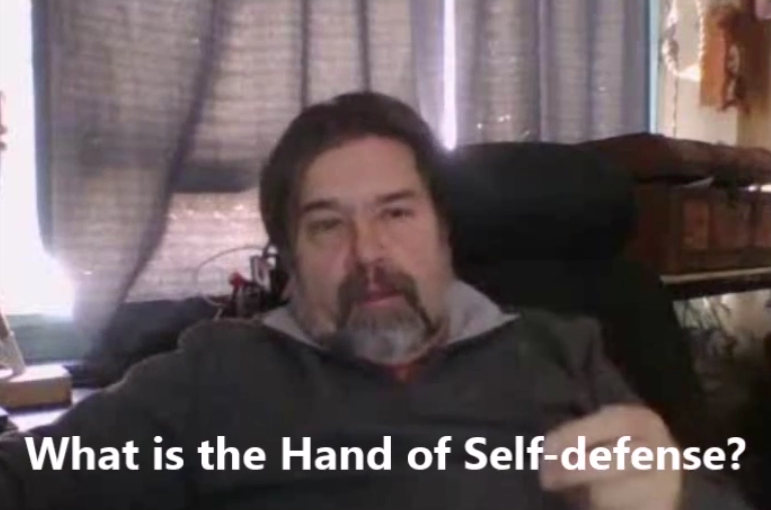
The Hand of Self-defense – Marc MacYoung
In this 5 minute interview. Marc MacYoung summerizes the Hand of Self-defense. The password is “hand”.
Poll #3. Is it ok to punch a Nazi?
[poll id=”7″]
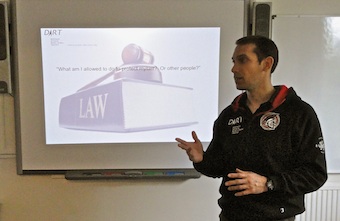
Conflict Management and Practical Karate Part IV – John Titchen
PERSONAL PSYCHOLOGY
This element of de-escalation tactics is perhaps the most important and most neglected area of personal discipline.
To successfully de-escalate a situation you usually
- want to achieve a peaceful resolution,
- need to have the self confidence to believe that avoiding an unnecessary violent or aggressive event is indicative of mental strength not weakness.
For many people the ego is the Achilles heel of successful conflict avoidance. It is not unusual to find individuals who have either set false standards of behaviour for themselves, inappropriate goals, or believe (often incorrectly) that others expect certain types of behaviour from them. Many have a needless value that they put on the (temporary) perception of themselves by others.
Conflict de-escalation is still a form of conflict. In simple terms to prevent force or greater aggression from being used the other party needs to feel that they have either won, or at the very least that they have not lost. In many instances this is about saving face (in front of their peers) and to do this you may need to be seen by them (and perhaps by some bystanders) as having given in. The paradigm shift that a lot of people need to get their heads round is that this does not mean that you have lost, rather you need to understand and appreciate that your victory is in achieving a different aim (lack of violence, criminal damage, injury or prosecution) and one that may not be immediately apparent to the other person.
Do not think that you have to win, think rather that you do not have to lose.
Gichin Funakoshi
If you have good trouble avoidance protocols then the likelihood or frequency of your being involved in a de-escalation event with potentially serious consequences while surrounded or observed by people that know you well should be low. In such instances, acquaintances whose judgement you value should not view you harshly for taking action that avoided any escalation in aggression or violence, even if that means ‘giving way’ or apologising for something that was not your fault.
If a similar instance occurs when you are surrounded by strangers who you are unlikely to ever see again, should you care what they think? If you are in a venue where even saving face for the other person carries a high risk of being attacked for being weak then you are in the wrong place. A location where a level of aggression that risks or inevitably results in physical conflict is the only acceptable response is not one any sensible person should frequent.
Whether strangers or acquaintances, people whose judgement you value should recognise the value of taking steps that avoid risking injury (and property damage) and further repercussions to both yourself or another person.
Pride in your combative skill-set can be a dangerous side effect of martial arts training, one that brings for some a subconscious fantasy promoted by films where the subject uses their skills to beat or humble another person. It doesn’t help that this is the mental picture and expectation that most non-martial artists have of their martial art practicing friends.
You do not need to let your pride go, you just need to change its focus.
For to win one hundred victories in one hundred battles is not the acme of skill. To subdue the enemy without fighting is the acme of skill.
Sun Tzu
Afterword
This four part series has been described as a brief introduction to de-escalation. That is all it is, no more than a starting point. Each of the four umbrella headings that I’ve chosen are arbitrary, and represent summations and generalisations of a vast topic. Since I have generalised while writing this not everything that I have said will be right or applicable all the time.
I do encourage you all to do your own research and training on this topic, but caveat emptor. There are a number of writers and training providers out there who may make you mistakenly feel ignorant or inexperienced because they use ‘specialist’ terminology to refer to most elements of what they are teaching. In my experience this is marketing dross rather than a useful educational tool and it simply creates a false divide between those ‘in the club’ and those outside. In the majority of cases the specialist terminology employed has no basis in the fields of psychology, psychiatry, criminology, medicine or policing – it’s simply an in-house teaching tool.
Historical Warrior Alertness Training – Mark Hatmaker
THE Primary Factor in self-protection/self-defense is situational awareness. Keeping in mind that crime is, more often than not, a product of opportunity, if we take steps to reduce opportunity to as close to nil as we can manage we have gone a long way to rendering our physical tactical training needless [that’s a good thing.]
Yes, having defensive tactical skills in the back-pocket is a great ace to carry day-to-day but all the more useful to saving your life or the lives of loved ones is a honed awareness, a ready alertness to what is occurring around you every single day.
Here’s the problem, maintaining such awareness is a Tough job with a capital T as most of our daily lives are safe and mundane [also a good thing] and this very safety allows us to backslide in good awareness practices. Without daily danger-stressors we easily fall into default comfort mode.
A useful practice to return awareness/alertness to the fore is to gamify your awareness, use a series of specific awareness/alertness drills on a revolving basis that allow you to keep your mind in the day-to-day routine while also making a bit of a game out of what may save your life.
In aid of that I use an extensive series of gamified awareness drills culled from historical warrior traditions across the globe. Where appropriate I have updated the drill to fit the 21st century environment.
Below you will find just three of these many drills that you can take into your day to day life starting NOW.
The 1st Awareness Exercise for Warriors is from “Puewatsi Nemito” (The Wild Walker or Walk of the Wild) a Comanche warrior tradition.
“Tuhoit’u” [The Hunted One]
Today: You are on the Menu.
- Whether in an urban or a natural setting live as if you are a hunted man, a targeted woman, a person on someone’s Kill List.
- Know who or what is behind you.
- Look into the faces of the people around you, are they the one who hunts you?
- Look at the hands of all around you—is the method of your demise in any hand?
- Keep to the edges of trails or sidewalks-only confident or foolhardy animals cross open ground.
- Treat all security cameras as tools to locate you. Avert your face when passing by or beneath them.
- Treat all birds as possible drones.
- In short, live with eyes wide open, mind alert. Live as if you are being stalked.
- At the end of the exercise ask yourself what you learned from this bit of role play.
Warriors must be aware. Aware of what? Everything. A Warrior must be Awake. All detail is interesting, all detail may be important. We do not know what detail will change our lives. We do not know what detail will save our lives.
Here’s another Drill adapted from “Puewatsi Nemito” (The Wild Walker or Walk of the Wild)
This is an inverse exercise of Hukhiap’u Puniti [Shadow Watcher} Drill.
Today: Look for Reflections
- Today find all the reflective surfaces that you can. See what those reflections hold.
- Find the trees in the windows of your home.
- See the glint of the semi-truck in the window of a passing car.
- See the rippled reflection of the sky or yourself in a puddle of water.
- See the surroundings of the restaurant in the beverage glass before you.
- See the reflections of the road in the heat haze on the highway in front of you
- See the distorted you in the corneas of the person you are speaking to.
- The only reflection to pay no attention to—that of any mirror.
- Find any and all reflections-and mark how many surfaces provide mirror images.
I repeat: Warriors must be aware. Aware of what? Everything. A Warrior must be Awake. All detail is interesting, all detail may be important. We do not know what detail will change our lives. We do not know what detail will save our lives.
The next drill is an adaptation of a similar drill found in both Northeast Indian Warrior Traditions and the Viking tradition.
“If you are wise, be wise
Keep what goods the gods gave you
Don’t ignore five good senses
Seeking an unknown sixth.”-The Viking Havamal
“Don’t get caught looking for leaves in the trees in Autumn. Those leaves are on the ground.”-Comanche teaching
Or this short Puha [Medicine Man/Coach/Mentor] to a Ekasahpana [young warrior] exchange.
“Look.”
“At what?”
“Everything then you’ll never have to ask.”
WARRIOR AWARENESS DRILL: Take 3/Find 5
- Select a 15-minute period in your day to execute this drill.
- Take three steps, stop and list [verbally if possible] 5 distinct things in your environment that you can physically sense, These can be things you see, sounds you hear, scents, tastes on the wind, a breeze on the skin.
- Take three more steps, stop and repeat cataloguing 5 more things. Do not repeat anything in any of your prior inventory.
- Continue until the ¼ hour is completed with no repetition of what you noticed.
If you take the time to honestly commit to this exercise you will find there is far more to sense than we normally take in. We gloss over and glide through so much of life that what we miss can be astounding.
I repeat the above exchange:
“Look.”
“At what?”
“Everything then you’ll never have to ask.”
T’zare Tubunit’u Ekasapana! [Be Awake Warriors!]
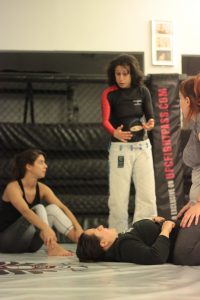
You Are Not Alone – Raquel Lopez
The more I talk about my personal relationships and my experiences the more I realise that harassment, abuse and violence towards women is lamentably more common than I thought!
Speaking from my own experience, physical pain has not been the most difficult thing to get over but reclaiming my own identity. At the age of 14 I used to help out at my friend’s pet shop. The shop was located less than a minute from my parent’s flat so on my spare time I used to visit the shop and hang around with my friend’s parents who run the shop. At the time I truly enjoyed coming in and helping out with the chores. Hours went by watching snakes devore little rodents, cleaning, assisting with customer queries and learning about how to keep little creatures. All creatures fascinated me but reptiles were my obsession.
My friend’s mum was a very gentle, caring and meticulous woman whom I enjoyed being around, learning from and helping when she needed it. My friend’s dad on the contrary spoke to his wife and daughters in a very degrading manner. Unlike his wife, my friend and her siblings had other commitments hence didn’t help around the shop regularly. I had a suspicion that they tolerated his behaviour because they were afraid of him but I was in no position to get involved. My friend’s dad was always nice to me, he was charming, always joked about things and explained the chores with a smile on his face.
They owned a cottage house in the suburbs of my hometown and my friend’s dad suggested to go with him to check out a litter of puppies they were keeping at the cottage.
Naive of me I decided it was ‘safe’ to get in the car with him even though deep down I never really liked the way he treated his wife and his daughters. He drove me to the cottage with his mini van and once we got there he showed me the puppies and around the dwelling.
The way he behaved and talked made me feel very uncomfortable and my ‘gut feeling’ was telling me something was not right. When he offered to get inside the house I politely refused by explaining I was fine hanging around the outside terrace. I sat down at the entrance of the dwelling and I vividly remember his presence standing behind me. With a smile on his face he went on and on requesting I should come inside the house with him, he wanted to ‘show me around’ I kept refusing because my intuition was telling me not to!
What it may have been five minutes (I don’t recall how long) appeared to be hours of back and forth persuasion, propositioning and bragging that I was ‘going to like it’. I can vividly recall how I ‘froze’ not knowing what to do and how he was giggling and propositioning whilst standing behind me.
Luckily his eldest daughter turned up at the cottage, she drove to the dwelling to collect something she had forgotten!
I never shared what happened with anyone because of fear they may not believe me and I may consequently ruin the relationship they had with the man. I never knew how my dad would have reacted to the incident if he had found out!
Unlike many women out there, my case didn’t end up in disaster but three years later I met a man who became my partner and despite enduring a toxic, violent and degrading relationship, I decided to have a child with him. The relationship lasted 10 years and due to the fact that we have a child I still have to deal with the tactics he uses to get what he wants. The characteristics of my friend’s dad and my former partner were very similar, they both appeared charming, sociable and caring to the rest but were manipulative, authoritative and controlling individuals when it came to their partner!
Years later I learned that the ‘gut feeling’ I felt the day I went to the cottage was my intuition communicating and protecting me! I honestly believe that if we could just learn how to listen to our intuition and act upon it many incidences could be prevented.
Talking about how you feel, listening and not ignoring your gut feeling might prevent lots of incidences from happening. Sometimes talking to a professional is better than talking to someone you know and the reason why I believe this to be the case is because sometimes the person you trust might be the person who is trying to manipulate you hence sharing how you feel can even make you more vulnerable!
Living in silence doesn’t sort out the problem and makes it difficult to get support and help.
You are not alone so never forget that!
Of course no one wants to go through such demeaning events and the best remedy is preventing these from happening however, we have to acknowledge we are not always in control of what happens to us. Talking about things can help create awareness, can make the person feel better and communicating can encourage others to feel they are not alone. The most important thing is to get the support you need in order to overcome and deal with such situations.
Benidorm and Social Reproduction Part III – Garry Smith
Failures in communication of one form or another are almost always the start of conflict, failure to establish meaningful communication in a conflict will result in conflict mismanagement. So with different codes operating between different social classes we have massive opportunities for conflict. Now introduce all the other social variables and you can begin multiplying outwards exponentially.
However, remember where this tale started, over in Benidorm back in September 2016. Well it did not start there but going there brought thoughts from my subconscious to the fore. Like many others I associate with people I like, people like me, yes I have family and friends who will happily tell me when they think I am wrong and we can agree to disagree on certain issues. Take the Brexit vote, all our kids wanted to remain in the European Union but my wife and I voted to leave, they expressed their surprise to us but nobody fell out. Yes we discussed it but not in any detail, we all just got on with life, apparently it has split other families asunder….. I like people like me funnily enough but I can see massive dangers as we move towards fractured communities, countries even, where different social groups inhabit their own cosy feeling echo chambers and I know Marc MacYoung is digging deeply into this at the moment. The thing is communicating across barriers is possible and we do not need pretty coloured beads anymore, but only if the barriers can be relaxed.
When we went to Benidorm we actually spent time with members of other tribes around us, it was for me a socio-anthropological experience, it was superb. Being in contact with other tribes helps you to bring your own practises into question. When you can compare how people talk, eat, move around, relate to each other and to others around them you can also compare how you behave as well. This is where I started to rediscover the concept of social reproduction, the way that different social groups are produced and reproduced.
Now putting to one side the whole education Vs environment debate, free will Vs conformism and the whole gamut of isms wrapped up as analysis there are things that go together like say, fish and chips. Because, and here is a controversial one, not only do different social classes, remember where Erik started this, speak different codes, as the continual process of social production and reproduction gathers pace they are beginning to look different.
Two thirds of British adults are overweight or obese and a growing number are becoming severely obese. It was easy to see that most of the people in our hotel who were how much you could get on your plate.
Well each to their own is how I try to see things but I often fail, the thing is when you are interested in eating healthily, not obsessively though, we all like a few chips, then when you see people effectively gorging huge platefuls of fried foods, platefuls of cakes and washing it down with lots of beers and/or cokes then you cannot help but notice it. As somebody who still actively trains and sees a clear link between what I put into my body and what I can then expect it to do, I just do not get how people can do this to themselves.
I try to make good choices most of the time but I am not a food fascist, I watched and listened as our family ate our food, discussed our food and enjoyed our food, lots of good choices, with a few nice naughty bits here and there. I watched our daughter guide our grandsons as we had her and that was fun too. My father has a saying, strength goes in at the mouth, I have always liked it, but weakness goes in at the mouth too is the reverse. Now let us throw a hand grenade into this piece of revelry.
“Severe obesity is associated with lower educational attainment, reduced employment prospects and lower socioeconomic status, although the directionality of this association is not known.” Health Survey for England https://www.noo.org.uk/NOO_about_obesity/severe_obesity#d6908)
BOOM!!! Well life is all about choices, or is it? Well the old free will versus determinism can take us around in circles but as Haidt (2014?) indicates most decisions are made as emotional reactions then we rationalise them afterwards. He uses the analogy of riding an elephant, according to this model; the rider is rational and can plan ahead, while the elephant is irrational and driven by emotion and instinct. This is where the differences emerge between those who choose to control their emotions, as best they can, and make more rational choices and those who’s emotions make the choices and then they rationalise the choices made.
So when we are presented with a huge array of choices at our all inclusive restaurant buffet choices have to be made but there are no rules, you can eat what you want in whatever quantities you like. So as we approach the buffet it will depend who is in charge, the rider or the elephant (no pun intended). So given that most of our behaviour is learned and that the primary agency of socialisation is the family, is it surprising that you could see tables of families and each had similar choices on their tables? Choices are informed by our knowledge and understanding, something Pierre Bourdieu (1986) calls cultural capital.
“Cultural capital: forms of knowledge, skills, education, and advantages that a person has, which give them a higher status in society. Parents provide their children with cultural capital by transmitting the attitudes and knowledge needed to succeed in the current educational system.”
So the restaurant in our holiday hotel in Benidorm brought into the same room social groups with different levels of cultural capital. If severe obesity is associated with lower educational attainment and lower socio economic status, amongst other thing, then it is likely that lower levels of cultural capital will be present too. Conversely as Bourdieu demonstrated those who possessed higher levels of cultural capital had far better levels of educational attainment and socio economic status.
Obesity is present in all social groups but evidence from Public Health England it is much more prevalent in lower income households and socio economic groups. The correlation between levels of cultural capital and its transfer through social reproduction is clear, poorer, less educated families are more likely to be obese. http://www.noo.org.uk/securefiles/161004_1308//AdultSocioeconomic_Aug2014_v2.pdf
Social reproduction refers to the emphasis on the structures and activities that transmit social inequality from one generation to the next. Much of what we know of human behaviour shows that throughout the long evolution of our species learned behaviours are passed from generation to generation.
This includes the social construction of the worlds we inhabit, they differ by ethnicity, class, gender, name your own variable, we all believe, or would like to that our body of knowledge, our culture, the way we do things, is the right way. We belong, as did our ancestors, to tribes, each tribe can have its own shared customs, values and belief system, we operate best in tribes of around 30 to 40 members, just like our ancestors. If we become separated from our tribe we will look for others like them/us and seek their company, like attracts like. We do this because tribes all have their own style of dress, adornments and/or markings. Youth cultures and sub-cultures are the most obvious examples.
Take a moment here to think about your tribal identity, take your time, look at your hair, your clothes and look at yourself as if looking at a stranger, adopt the position of anthropological strangeness. Do you wear jewellery? If so what does it say about you? Then work outwards from the self to the artefacts you possess, what do they say about you and your tribe?
I am concluding this article on yet another holiday this time on the island of Fuerteventura, the Canary Islands. We are in yet another al inclusive hotel but this one cost quite a bit more and this is reflected in the social make up of the guests. However, right back to the march Issue of Conflict Manager and Erik’s article. A person’s social class is rarely chosen, most of us are born to it and inculcated into it before we have any choice. Social class itself is a complex series of interacting variables and influences far too complex for us to do it justice here, in this 3 part article I have merely tried to begin expanding how we think of social class, pardon yet another pun. Social class is worthy of consideration in considering potential causes of conflict, especially as power is distributed unequally in society. The process of social reproduction ensures that the uneven distribution of cultural capital remains relatively constant and self reinforcing. We speak in codes and live in tribes, we are generally physically identifiable by how we speak, act and look.
Erik was correct, social class matters, but understanding the process of how classes are created and recreated over generations matters too. Now is anyone ready for a discussion on social mobility?
Poll #2: “Self-defense is a form of problem solving.”
[poll id=”6″]
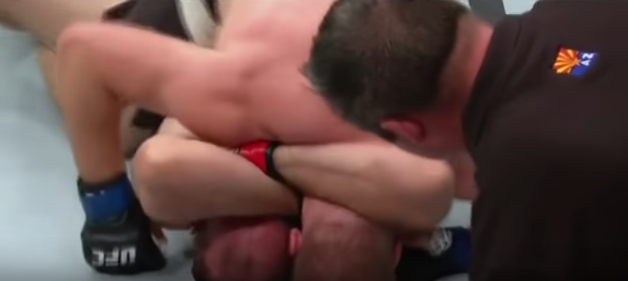
Technique Poll #1 – Choke from the bottom
[poll id=”2″]
[poll id=”4″]
[poll id=”3″]
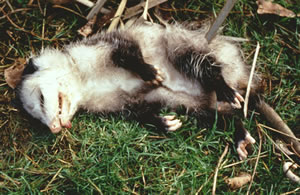
3 Meanings of Freeze by Dr. Russ Harris
https://www.youtube.com/watch?v=z7OkxMOv7uQ