Normalization of Deviance, Turkey Logic and the Insidiousness of Negative Reinforcement – Rory Miller

There is a golden time when any new organization begins. A time when you make your plans, make your contingency plans and try to anticipate and plan for any possible emergency. When a new jail is built (Corrections is my background) senior officers are called in to try to find ways to escape or make weapons. When an ambulance company writes their medical protocols or a hospital writes policy and procedure they set up redundant systems to make sure that medications and dosages are correct.

In most well-planned organizations, disasters rarely come from one person making a mistake or bad decision. When we were called out for a CERT (Corrections Emergency Response Team) operation and we intended to use less lethal weapons, the shooter, team leader and quartermaster would individually check:

  • The weapon to make sure it was a designated less lethal platform
  • The weapon’s chamber to make sure it was not loaded
  • The box of munitions to ensure the right designation (such as rubber bullets)
  • The box of munitions to verify the manufacturer’s approved safe range
  • Each munition to make sure it was actually what the box indicated

That probably seems excessive, but if someone had decided they were short weapons at the range AND had decided to use a designated “less-lethal” 12 ga as a regular weapon AND a shell had been left in the tube AND the weapon had been replaced without being checked, there would be the possibility of an accidental, lethal shooting.

The purpose of our procedures was to prevent this. And as such, it would take no less than seven mistakes for our agency to accidentally shoot someone with 00 buckshot when we intended to use a bean bag.

Normalization of deviance is a very unfortunate name for a very common phenomenon. It does not mean, in this context, behaviors once considered socially deviant moving to the mainstream. Normalization of deviance is when cutting corners becomes normal.

The safety protocols I listed above are onerous. They take time, they’re tedious and generally useless. They would not prevent an accident unless a series of other mistakes had been made to set up that accident, and a series that long is very unlikely. It is very, very easy to stop doing tedious, non-productive work.

Normalization of deviance. You run short of shotguns on range day, so you ignore policy and use one of the yellow-stocked “less lethal” designated weapons. Just this once. Just for the day. It’s a special circumstance. And nothing bad happens. Everything is inspected, no one gets hurt. No harm, no foul. The next time, it’s an easier decision. And soon, the policy is generally ignored. You get one more thing where the training officer says, “That’s what it says in the book, rookie, but this is how it works in the real world.”

Nassim Nicholas Taleb did a better job when he called it, “Turkey Logic.” If a butcher buys a turkey on January 1st, the turkey has almost eleven months of stable data that the butcher cares for the turkey and loves the turkey. Every day, right up until butchering the day before Thanksgiving, is solid evidence of a pattern of care.

The difference is that the turkey can’t reasonably predict slaughter is in the offing. But humans can predict. We know there are potentials for carelessness. We know there are bad people who will try to circumvent the rules to harm others or do bad things. We know the world has a plethora  of natural disasters in the wings. But they are rare enough it is generally safe to think like a turkey. The west coast of the US will suffer a huge earthquake and tsunami. But not in my lifetime. Probably.

This is not simple laziness. It is conditioned behavior.  Behavior is conditioned by reinforcement (reward) and punishment. Reward and punishment each come in two flavors, positive and negative, and normalization of deviance is conditioned by the most insidious— negative reinforcement.

  • Negative reinforcement IS NOT punishment. Let’s define some terms.
  • Reinforcement or reward is anything that increases a given behavior.
  • Punishment is anything that decreases a behavior.
  • Reward and punishment are the value holders.

In math, negative is the opposite of positive, so negative reward would be the opposite of reward. Not so in psychology. In psychology, positive and negative refer to presence and absence. In psychology, a positive reward means you get something good, a positive punishment means you get something bad. A negative reward means you are saved from something bad, a negative punishment means something good was withheld.

An example: A kid does his homework, so you take him to the movies. That’s positive reward. A kid does her homework so you give her a day off from chores. That’s negative reward. A kid ignores his homework and gets a spanking, that’s positive punishment, pain introduced to the system. A kid ignores her homework and loses TV privileges, that’s negative punishment.

The reward and punishment system is natural and very deeply wired. A classical behavioral psychologist will say that all learning, all changes in behavior, follow this model. We do things that hurt (punishment) less than things we enjoy.

Negative punishment is one of the slowest ways to learn. Behavior influenced in this way tends to drift rather than change. One of the questions in self-defense is “To what extent can intuition be trained?” Defensive intuition is hard to train because it relies solely on negative reinforcement. You get a bad feeling and don’t get into a relationship or go down a dark alley and nothing happens. But maybe nothing bad would have happened if you had made a different choice.

Deviance normalizes when nothing bad happens. It is passively and slowly rewarded— with time saved and tedious procedures avoided.

When your policy is set up to prevent a one in a thousand chance, 99.9% of the times you apply that policy are wasted. It feels inefficient, until the one in a thousand occurs. Then it depends on the cost of failure.

There are generally five ways to avoid normalization of deviance.

The first is to work in a highly dangerous environment with very active threat factors. It’s amazing how good people get at doing things right when doing them wrong gets you injured. Realistically, however, you can’t create this. That said, many of our safety protocols do rely on historical knowledge, not fantasy. We have solid data on how bad things happen.

The second is to ritualize the safety protocols. To have the patterns ingrained as part of the tribal identity of the group. It becomes unthinkable, for instance, to pass a weapon to another team member without the action open and the safety on. It’s not perfect. Any ritual can be done mindlessly and ritualistically looking at a dosage label is not the same as reading it.

The third, one notch away from ritualizing is to make the proper process a mark of elite membership. “I can tell you’re an amateur because you did that the wrong way.” This makes people competitive about being consistently competent. All of this, of course, predicates on the process actually being intelligent.

The fourth is to rely on prophets. Traditionally, prophets were not people who saw the future, but people who warned that if the tribe did not follow the laws, the gods would punish them. Almost every large organization has a handful of people constantly warning of the bad things that will eventually happen due to current practice or policy. The trouble is, because the tragedies are so rare, the prophets are wrong almost all the time and become easy to marginalize or even to punish.

The fifth is to administratively punish, through positive punishment, what nature is slowly rewarding through negative reinforcement. This, I would say, is the common practice but runs into its own unique problem. Punishment almost always requires direct confrontation, and direct confrontation is unpleasant. You guessed it. When the supervisor tasked to confront poor behavior avoids his job, that is negatively reinforced. And when nothing bad happens…

When the axe falls and the turkey finds it is butchering day, very rarely do people look at systemic issues and the normalization of deviance. People like simple explanation with simple solutions and are thus likely to view systemic failures as individual failures. Blaming the shooter and not the three people who were supposed to inspect the ammo, nor the one who stored a loaded weapon, nor the one who failed to inspect the weapon after the range, nor the one who used a designated “less-lethal” weapon in a firearms qualification nor the one who decided to use the “less lethal” in the first place. And certainly not the culture that said cutting corners was allowable.

References

Banja J (2010) The normalization of deviance in healthcare delivery. Bus Horiz 53: 139 10.1016/j.bushor.2009.10.006 [doi] [PMC free article] [PubMed]
Gonzales, Laurence. Deep Survival: Who Lives, Who Dies and Why. WW Norton (2005)

Taleb, Nassim Nicholas. Antifragile: Thing that Gain from Disorder Random House (2014)
 

Checkmate! – Clint Overland

When I was a kid and I know this may confuse some of
the younger readers, I didn’t have cable T.V., internet, or computer
games. We had a T.V. that on a good day we could receive 4 channels
and most of the time just 3. Winter was rough because there were many
days that going outside was not an option. The area I grew up in
didn’t receive a lot of snow but we would have long cold spells with
high winds and no sun. So to keep us entertained my father taught us a
lot of different games but one of my favorites was chess.

I watchedhim and my uncle’s play and loved the way they would spend the time
between move busting each-others chops with one liners and jokes. So I
asked my dad to teach me how to play. He said yes and thus began a
lifelong friendship with the game. He showed me each piece and told me
where they went and how they moved. For the first few months I just
tried to survive each game for more than a few moves. Time passed and
I got a little better and after a while I could stay in the game
longer and longer and I still remember the first time I said that
magic word, Checkmate!

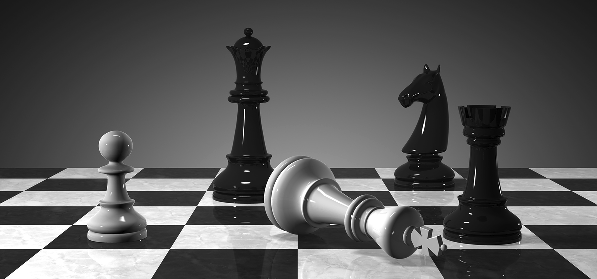
If you look at chess and then look at conflict of any
sort you can see the comparison. After the first move of each player
there are over four hundred possible board positions, after each
player moves again there are something like 197,742 or so. And after
that it just spirals in a mass of confusion and anarchy. Now most
games last somewhere around 40 moves depending on the experience of
the player. Sometime more sometime less. I spent a lot of time getting
mad because I was getting beat in 4 to 5 moves but as I learned the
game I began to last longer and longer. What I wanted to chow you was
that chess is a lot like a conflict between two people, be it an
argument between a married couple to a bar fight. Conflict is conflict
it just varies in degrees of violence and actions.

When a conflict happens it begins with an opening
move. Let’s take an argument between a young married couple. I know in
my first marriage I thought I had to win each fight if I wanted to be
the man of the house. Ha, freaking Ha! What this cause was a tons of
headaches and hard feelings, and finally a nasty divorce.

What I didn’t know was I could say I am sorry and I am wrong and not mean it.
I had a choice I could be right or I could be happy, not always both
at the same time. Now as I have grown older and just a little wiser, I
will apologize first and listen actively as the list of my sins are
read to me. I apologize and move on to a more peaceful time. Why you
asked? Because I play 3 moves ahead due to experience and can see the
outcome is not worth the effort of continuing the argument. I win by
giving in and moving to another game.

Now let’s take this to another level. I am sitting in
a bar and a man I have had problems with has drank enough liquid
courage to step up and try and start a fight. Again here is the
analogy between chess and conflict. He just make an opening move by
letting his ego overrule his better judgement. Now, I don’t know that
he has chosen to make his move, but as he approaches me I will see that
he has.

He comes to me and begins to inform me of what a piece of crap
I am and how he is going to do whatever comes to his drug filled mind.
Now I have a choice of moves. I can throat chop him, reach out and
break his leg, bust a bottle across his chops, or I can call for the
bouncer and let the guy getting paid for it to deal with the
situation. Again, I need to every choice. Do I choose to risk going to
jail or face a lawsuit? Do I let professionals handle it and take the
burden off myself? These are thing I need to decide in a split
instant.

Now each one of these decisions have an outcome that can
work for me or against me. If I do take matters into my own hand and
bang on him, is he going to react the way I want him too? (I had a
young kid one night hit me with a right left right left combo and I
leaned down to tell him to go home, he ran away. Another night I
kicked a guy in the nuts and he smiled at me. (I knew life was going
to suck for a while.)

Same as with chess is a person going to do what
I want him to do as a reaction to my moves. Is he playing 5 moves
ahead to my 3, what’s going to happen if I do A and he responds with a
E instead of a B move. These are things that you need to be able to
deal with and adapt to as the situation progresses. Every conflict
situation you encounter will be this way. If I attack his foundation
will he fall or will he change tactics and attack with a tool or
reposition himself so that my attack will have to change. This is one
of the reasons I teach that there is no one sure fire 100% guaranteed
system or move that will end the situation in your favor short of
destroying the brain function completely and that in itself leads to a
whole new set of problems.

Again as in chess you may not be playing just one
person. With chess people study the moves of the ones that have played
more than them. They learn what moves to make in response to
situations and what not to do. With a conflict situation you may be at
odds with someone that isn’t alone or has been in more of fights than
you have and knows what to do and when to do it, they may also know
just how much that they can take and that in itself is a game changer.

Chess is a great analogy to conflict management in that it is always
changing, and moving, never static and never a given that you will
win. You must remain as fluid as the situation demands. If you need to
apologize to walk away intact then that is what you do. If you need to
throat chop one guy, and then rip another’s eye out to get away safely,
then that is what you do. But as with chess you need to be a student
of the game to play it wisely.


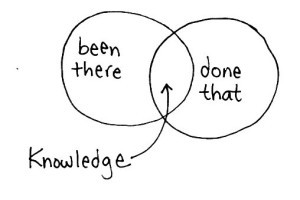
Been There Done That – Garry Smith

A few years ago I attended a two day seminar to train with Mo Teague and Hock Hocheim, I had trained with Mo on a British Combat Association seminar, his style involves no nonsense, an absolute gentleman of the first order and as he will tell you he likes to keep in shape, round is a shape. I had never met Hock but knew of him by reputation and he certainly lived up to it, he too was an absolute gentleman and like Mo his training was cutting edge, especially the military quick kills they both taught, could not resist that pun.

It was a fair turnout, mostly instructors or aspiring instructors from all over the UK, people who trained in different systems as you would expect The training was varied and interesting and more than value for money, if you get a chance to train with either of these two then take it. There was a point in the training where Mo addressed the issue of morality and the use of violence. As I said I have trained with him before and had heard this before, he was about to do exactly what a good self defence trainer should do, in this case with people already in the game not fresh off the street students.

He asked people to raise their hand if they had ever killed anyone. Only Mo raised his hand, he then explained the circumstances as a serving soldier and whether or not he was morally justified in taking those lives. He then asked people to raise their hands if they had ever hurt someone, really hurt them, this time I raised my hand along with Mo, nobody else did. It felt a little weird but Mo acknowledged that he knew me and that we had discussed this subject before.

He then asked a few questions of those present pointing out that this was not a game we were involved in, we taught violence, more importantly we teach people how to use violence to inflict pain and harm on other human beings. We therefore had a moral responsibility to consider this very carefully indeed, especially in the light of the fact that almost everybody in the room had not used violence of any real degree on another person before. Just think about that. No disrespect to those who were there, there were some really great people, but it was like asking a virgin to teach about the joy and ecstasy of sex.

Now this is not some only those who have experienced violence can teach violence, notice I am not using self defence or martial arts as nice epithets, let’s call a spade a spade here. Yes I teach both self defence and Ju Jitsu so I have a foot in both camps but in reality I am teaching the use of violence, that is the plain and simple truth. Now we can make it far more palatable when we are talking about legally justified use of violence whether it is applied as part of an official role we occupy or as a citizen acting within the law. That is nice because it makes us feel cosy and safe. At the end of the day we are the good guys and gals, we wear the white hat, we would only use reasonable force (violence) if we were attacked by the bad guys and gals, the ones in the black hats.

Really? Is that so? Do you know that for sure about yourself AND your students? You and I know violence can be unpredictable and spontaneous, we know some of the lies we inadvertently tell to students and ourselves about how well our training prepares and protects us. It may give us an edge, a better chance, but it does not make us invincible. Those who have had violent encounters and have lived to tell the tale will know the truth in this and we know that in order to overcome violence we need to be better at it than the person/s attacking us, or a damn good runner, either will do. Better still if we become proficient at the softer less tangible skills that help us spot something developing at the earliest possible stage we can negate the need to engage in a violent exchange.

The thing is if we, or our students, end up going hands on we have to be able to break somebody, we have to be prepared to inflict sufficient material damage that we break the attackers will to continue or render them completely incapable of continuing. Now back to my main point, anyone can train this, we are shown how to do it by others, some may have actually been there and done it, most will not have, and we can read all the books and look at the good stuff on YouTube etc. Be very careful with the latter. The thing is up to now its all theory. Or you can do what the smart people on the seminar with Mo and Hoch did, you can seek out and train with the people who have been there and done it. We call this gaining experience by proxy.

Take the teaching of locks for example, we teach people to apply them until their willing partner taps, does not try to escape or punch them in the face, but taps nicely. That is great for early learning, there comes a point though where it is unrealistic, unless you are legally obliged to use as little force as possible then breaking an attacker’s arm, wrist, whatever is the smart thing to do if you are subjected to a committed attack. We are not talking an argumentative uncle Arnold here at your sister’s wedding, not wanting to leave the room, but when it has all gone tits up. If you want to try to control somebody then a lock may just work, circumstances dictating of course, or if it’s time for ending it quickly then it’s snap time.

Be prepared for the screaming and the howling, the accusations you have gone too far. I once headbutted a guy hard in the face to get rid of him, I had already wiped him out in a fight minutes earlier, after the headbutt his nose was smashed his lips burst and there were tears , blood and snot everywhere, he looked a real mess a few years later when I next saw him with one really bent nose. That is one enduring memory I still have of the consequences of using violence. Did I give him the option to tap, to walk away, no I finished it there and then. The fight previously had been the worst and our third, he kept coming back, it had to end, it did, that nasty headbut was the full stop.

There is a whole wider context to that little story but that is for another time, the thing is sometimes we have to use a level of violence that has immediate and lasting consequences, these may be legal too, go read ‘In the Name of Self Defense’ by my friend Marc MacYoung. If someone attacks you with a weapon and you grab the arm and apply a lock is that it game over like on YouTube? Or would breaking that arm be a better idea? Well of course it would all depend on the context and the circumstances, we know that, we also know that training time is finite and the variables of an attack infinite. So is there an answer, well in my opinion the best you can do when training yourself and others is to be honest about the limitations of training and how it will play out in real life violence, now go read ‘Meditations on Violence’ by my other good friend Rory Miller.

Better still be honest with those you teach, never lie, never exaggerate, use the good examples of others to fill in your gaps, that is what I do, explain why experience by proxy is important. As you read in Rory’s July CM article we have a fine mix on the board of CRGI and in our growing family of contributors and affiliates. Some have experienced violence at its worst, they are true violence professionals. . Their insight and experience is beyond that of most of us, make use of this resource, use it to teach your students but first use it to teach yourself. This is Been There Done That self defence.

Filling in the blanks is what a really good instructor will do, helping their students fill in their blanks is what an outstanding instructor will do. The latter will also take their students through the legal, moral and ethical minefields that surround the use of violence. What is fun in the dojo is certainly not fun outside it. Breaking bones and smashing faces to pulp if necessary is the nasty, messy side of what we do, and that is without all the other complications, the screaming, the ranting the full on confusion of an out of hand real life encounter, and the aftermath.

Violence is what it is, let’s not pretend otherwise.

Back To Basics – Toby Cowern

I’ve been travelling a lot over this summer, and it has provided many chances to catch up with old friends, many who I have not seen for the best part of a decade!

During conversations, a similar point kept getting raised no matter where I was. A lot of my circle are ‘old school’ in their training methods and mantras both in Martial and Survival aspects. The point recurring was the continuing retraction of ‘harder’ training. While this was discussed across a broad spectrum I’ll keep my focus here on self-defense and martial training.

To put it simply, we are now seeing such an exclusive focus not only on teaching/learning of technique, but, even more so, complicated and difficult techniques to the detriment of core basics.

I’ll put it more bluntly. If you are not allowing your students to explore levels of pain thresholds, and teaching them to push through pain barriers in training you’re doing a HUGE dis-service.

This isn’t just a case of ‘not sparring hard’, it’s having such levels of safety control that there is no pain experienced in classes at all. It’s all well arguing (or excusing with) it’s about ‘student retention and satisfaction’, the simple fact is, it the teachers job to articulate why this facet of training is necessary.

I’m not saying Instructors need to unleash on students and beat them (that just makes you a massive asshole) but having students that have never undergone discomfort or a level of physical coercion in training is presenting them with a false reality of what a physical altercation will be like.

Times this thought by a hundred if you are doing any training at the lethal force end of the spectrum. While I will give way, to a point, that verbal caveats are used when training sessions are short and introductory, if you are spending any amount of quality time with students the introduction of pain awareness and management must start to be covered physically.

I’ve witnessed on a number of different occasions now, students be exposed to a very minor degree of discomfort, unexpectedly, and their reactions have ranged from a ‘freeze’, to, on at least three separate occasions, instantly bursting into tears… While these reactions are perfectly natural they must be conditioned against and worked through in order to give the students any chance of coping with a real situation.

While it is a physical and emotional uncomfortable part of training it still is essential to cover.

I desperately do not want this article too come over as a rant, but as I look around I feel exceptionally strongly a heavy contingent of the market place need to get back to basics and allow an element of their class time to be given over to realistic hitting and getting hit…