Eye Contact: Your First Signal and More, Part I – Tristan Chermack

Making eye contact is something we do many times each day, and we may not even realize it but we all use it to communicate, consciously or not. Eye contact is a subset of  body language and this article is meant to be an introduction to this language and how it works, with a particular focus on how it pertains to the art of self-protection.

There are excerpts here from my book “What the Bully Doesn’t Want You to Know – A Streetwise Guide to Your Bully Problem”. The book itself is focused on bully problems which children face and is written for kids and their parents. Neither the book nor this article are designed to be comprehensive works on body language, but a beginning. The reason for this article is that virtually all of what is written on body language is extremely broad and most of the material is not pertinent to self-protection or potential conflict situations.

I will expand on the material from the book to include information about adult interactions. The fundamentals are the same as they are for children and have added nuances for adults.

Let’s start with some basics. What we are talking about here is only the first few moments of eye contact. Virtually all adults realize there is far more to extended eye contact and the cues which can be learned from watching someone. Our instincts can indicate whether someone might be lying, in a bad mood, nervous, troubled, or any of a vast number of things. Let’s begin with the first impression we create when we make eye contact.

Eye contact

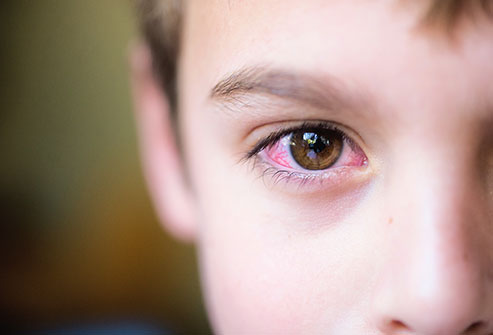
The importance of eye contact is hard to overstate.  It is almost always the first contact we have with someone else.  The eyes really are the window to your soul.  The way you look at people, or don’t, tells them something about you.

Quickly lowering your eyes when you make eye contact with someone is a basic animal signal of submission and fear. This signal indicates to that person that you are weak, or at least that you think you are weaker than them. Animals reflect their ‘pecking order’ by showing signs of submission to those higher on the order than themselves. Lowering the head, and eyes, is a prime signal of submission. It is usually an unconscious response, but with a little practice you can learn to send a signal of confidence to those around you.

First, let’s define what you should and should not do. We have already indicated that quickly lowering your eyes and head down and away from someone is submissive. So, don’t do that. Almost everyone has done this, and it is a very common habit. So what should you do? If you find you have locked eyes with someone who you feel is threatening (or just about anyone else for that matter) it is a good idea to hold their gaze for a second. And we do mean a second literally, as in one-one thousand. Holding a gaze, or staring, for several seconds or longer can be construed as a challenge. It is possible to gather a lot of information about someone in one second. Once you have held their gaze for a second, move your eyes away calmly in a HORIZONTAL direction. This sends the message to someone that you see them, and you are unafraid. In others words, you are not being submissive.

Practicing this is actually rather easy. Simply go out and do it. Here is how:

Try it a few times in the mirror. You don’t have to go overboard here; just try to get the hang of what a confident gaze looks like for you.

Start with your friends to get the hang of it. By the way, they don’t even have to know you are doing it. You might be surprised at how they react.

Next, move on to strangers or anyone else who makes you uncomfortable. This should be a little difficult at first. You want to get used to feeling uncomfortable so that it ceases to be uncomfortable at all anymore. This can be done just about anywhere. A good place to practice is in a car where people are naturally reticent about looking at the person next to them.

Continue practicing this until you have made a habit of it.

You are on the way to controlling the message you send with your eyes.

If there was one thing you should recognize when it comes to reading someone else’s eyes, it is what is called the ‘hard stare’.  The hard stare is a determined look that someone is mentally prepared for a fight.  It is a reflection of what has gone on in their mind, locking out distractions and trivialities, focusing purely on the task at hand which is intently watching the target.

The hard stare is easy to recognize and will probably flip a subconscious mental trigger in you that something is wrong.  The stare itself is identified by the eyes being open slightly wider than usual and lack of blinking.  The eyes will lock on the target and not stray.  The facial muscles and chin will tighten with a stony expression, which looks more like pure determination than anger.  Once you see a hard stare you will recognize it instantly. It means the decision has been made and the eyes are issuing the challenge.  This is a clear sign saying “I am ready to fight you right now.”  You should treat this signal as what it is: a very clear signal of imminent threat.

Along with the stare, usually the aggressive party will usually stand up or already be standing.  You’ll notice the body will go into a fairly prepared stance with the knees bent and the chest will face the target.  Again, this is how the brain subconsciously prepares for battle. The time for sweet talking is over and you should either calmly depart or prepare quickly for a fight.  This means get near an exit, with as many friends as possible, and among cover to keep from being surrounded.

Those first moments of eye contact will leave an impression, we cannot help that. What we can do is make sure we are sending the right message, not one which looks inviting to a potential predator. We wish to send the message that we are not prey by not using the same body language that prey uses.

You could call this the external benefit of eye contact: how others see you from the outside. Next we will cover the internal aspect, which is the benefit you receive when you learn to use your eyes well.

m time to time.  If you are sitting hunched over a book or cell phone and glance up momentarily and down, then you are missing two points: posture and observation.  These two should work together.

Keep good body posture whether you are standing or sitting and scan regularly.  Take your time scanning and don’t rush it.  Anyone looking at you will quickly be able to tell which is more important to you: looking around or not paying attention to surroundings.  It is okay to be absorbed in a book or texting with someone, but go to a place where you are safe to do so and look up and around frequently.

It is very common to watch for people when you know they might be present, and it is almost always someone you already know to be a potential threat.  Kids who are around bullies learn to watch for their bully through pure fear.  They are constantly scanning so they can see them coming and get out early.

One thing to add here, which is something more common to adults than children, is that purposefully not making eye contact is also a signal. Take care not to think that this is imperceptible because it is. If a potential predator looks at you and you are intentionally avoiding eye contact, he will very likely be able to tell. This is a signal of pure fear, which is not the signal you want to send. A confident person does not fear making eye contact.

Once you make eye contact, what you are thinking is pretty easily conveyed through your facial expressions. I’m not talking mind reading here, but simple mood and attitude. What is on your mind will affect the signals you are sending, so take care of what is on your mind. Be smart, not oblivious – confident, not fearful. This type of communication is fascinating, but not within the scope of this article.

What we take in about our surroundings and the people within it is crucial to avoiding trouble. You can think of it this way: your goal is to see trouble before it sees you. A predator decides when and where he will strike, which is powerful. Predators will avoid targets which are aware (hard to approach undetected) and do not look like good opportunities. They will dismiss inviting targets which are not in a good place or time to strike. The first indicator is eye contact or lack thereof. An unobservant target is very inviting. You might never even make direct eye contact with a predator. He may very well dismiss you as a potential target merely because he sees you scanning the area, staying aware, and appearing ready. It is so much better to avoid being targeted early than try to evade a predator who has already chosen you as a target.
 

Conflict Management Literacy, Part II – Erik Kondo

This is a continuing series on the many aspects of Conflict Management Literacy.

Cost vs. Benefit Analysis a/k/a Risk vs. Reward

Let’s start with the problem of crime. Most people (non-criminals) would agree that crime is undesirable. So is anything that decreases crime desirable? Well, actually not. If we eliminate the human population, we have also wipe out crime. Almost all people would find this to be an undesirable solution. The cost is too high. What we want to do is reduce the rate of crime where the crime rate is the number of incidents per unit of population. But we also want to reduce the crime rate in a manner that doesn’t greatly affect our everyday lives. We want a solution that has a low cost to implement, yet provides the benefit of a lower crime rate.

All solutions to existing problems have some sort of cost (risk) vs. benefit (reward) analysis associated with them. If the solution has no associated cost, then it would just get done, and the problem would be eliminated. For example, as a society, we don’t have a significant problem with people punching themselves in the face on a regular basis. This is because the solution is free – just don’t do it. It cost you nothing to not punch yourself and you reap the benefits. The no cost solution translates into no problem.

On the other hand, society does have a problem with people punching other people in the face. The solution to this problem has an associated cost. The higher the cost to solve, the greater and longer term the societal problem. For example, in order to deter people from punching other people, society enforces a cost on the Punchers (fines, prison terms, etc.). This cost is intended to change the cost vs. benefit analysis of the Punchers.

The Punchers are punching as a solution to their particular perceived problem (rational or irrational, strategic or Monkey Brain driven, punching is still intended as a solution to something). Punchers are trying to solve their problems by punching. Thus, punching provides a Benefit at an associated Cost. Raise the Cost and the Benefit may no longer be worth the Cost. The purpose of deterrence is to raise the cost so that the benefit becomes less desirable or not worth the cost.

Society may raise the cost of punching by increasing the penalties given to Punchers. But enforcing these penalties has an associated cost to society. Besides the legal and incarceration costs, putting the household breadwinner in jail creates dependent families, single parent households, etc. If these costs are deemed to be too high, the proposed solution doesn’t get implemented. It is cheaper to deal with the cost of people being punched, than it is to try to eliminate the problem (reap the benefit).

Now take a look at any number of societal problems that don’t seem to get solved over time – sexual assault, police brutality, inner-city violence, domestic violence, mass shootings, racism, sexism, etc. Eliminating or reducing each of the problems would provide a benefit to society. But that result would come at a cost to society. When problems don’t get solved, society (or those that control society) has deemed (rightly or wrongly) that the cost of solving the problem is not worth the benefit. Changing the cost vs. benefit analysis, changes which problems get solved and/or which get priority to be solved.

Correlation vs. Causation

One commonly misunderstood concept is the relationship between Correlation and Causation. One method to eliminate or reduce a problem is to eliminate or reduce the source of the problem. In this case, the Source is a cause of the problem. The Source could be the only cause of the problem or it could be one of many causes of the problem. But there exists a direct causal link between the Source and the Problem. Reducing the Source, reduces the Problem. We can represent this situation by the equation

(Factors)(Source) = Problem    (This is made up equation for illustration purposes only!)

When two entities are correlated it means that they follow the same pattern. Graphically, this pattern could be Crime Rate vs. Time. For example, in the past twenty years in the US, the Crime Rate has decreased as represented by a downward sloping line (where y-axis is the Crime Rate and the x-axis is Time).

Over the past twenty years, Other Things have also decreased with time. When those Other Things are graphed next to the Crime Rate, if the lines look similar on the graph, then the Crime Rate correlates with them. Or if the graph of the Other Things is a mirror image, then those Other Things inversely-correlate with the Crime Rate (Ok, that’s a simplification, but you get the idea).

People who don’t understand correlation will look at graphs of correlating events/incidents/rates/etc. and assume causation between them. The mistaken assumption is that because the graphs look similar there must be a cause and effect relationship. When in fact, there might be one and there might NOT be one. Correlation graphs do not give enough information to make that determination.

Now ask yourself, how many people, politicians, Pro-gun activists, Anti-gun activists, Hard on Crime, Pro-Prison Reform, etc. have claimed that since their Thing/Anti-Thing is correlated or inversely-correlated with the lower crime rate that their Thing/Anti-Thing is actually the cause of the lower crime rate? My answer is – A LOT. They offer correlation as proof when they actually need to prove causation.

Going back to the above equation, the Source becomes the Thing

(Factors)(Thing) = Problem

in the real world ,it looks like (Well, kind of sort of, let’s not quibble on details)

(F1)(F2)(F3)(F4)(Fn)(Thing) = Problem

Where the F’s are the Factors involved and there are N number of Factors. In order to prove causation, ALL the Factors must be accounted for. You can NOT assume that the other Factors remain constant and that only the Thing changes to affect the Problem.

For example, maybe less legal restrictions (F1) on concealed carry weapon holders has caused the lower crime rate. Or maybe, less legal restrictions (F1) on CCW has caused the crime rate to be LESS low than it would have been otherwise (that means that less restrictions causes a higher crime rate). In both examples, less restrictions will correlate with a lower crime rate. We have no idea, since all the factors (F2,F3,F4, Fn…) have not been accounted for.

To summarize, those that claim that because Some Thing correlates or inversely-correlates with Some Other Thing, that it causes or reduces Some Other Thing, and those that don’t take into account the Cost vs. Benefit Analysis in problem solving are effectively illiterate in these aspects of conflict management.

Next time, the Inverted U-Curve and effect of False Positives on Risk Assessments.


Be A Good Witness: Describing People – Toby Cowern

Often, in the ’back room chats’ here in CRGI we find a number of contributory concepts throw up interesting and useful little ’nuggets’ of information. I often find, these ‘nuggets’ come in the form of something one or more of us founding members deeply ‘know’ and are (pleasantly) surprised when we realise that this maybe ‘new’ to people. It’s a balance between ‘how can people not know this?’ and ‘well, we can share this because it’s really good to know’.

I was recently re-reading some of Marc MacYoung’s and Rory Miller’s work as well as back issues of this publication, and while walking with my daughter Christmas shopping this weekend, suddenly a little ‘nugget’ came too mind. Clint talks clearly about the importance of ‘Witness Coaching’ as do Messrs. MacYoung and Miller. In a previous issue of CM Magazine I wrote about the concept of ‘Left and right of Arc’, thinking about the nuance, details and extremes of any given subject.

My youngest daughter is now 10 years old and is insightful and curious about many things. This has seen a great opportunity to increase her observation and awareness skills of late. We previously have been looking at behaviors and ‘things that stand out’, but I wanted to move now to memory and recall.  The game we played, was she had to describe someone nearby and I had to point out who it was. My wife played also and it was interesting to see who picked up on what ‘descriptor’ details. Then a flash of recall…

In many ‘follow ups’ and investigations I’ve conducted both in military and civilian occupations, I have used, with very good effect, the British Military ‘Descriptor’ Template. Anyone who knows anything about the Military, knows they have to have reports in a ‘standardised’ formats. A quandary was reached in the early 80’s when military housewives, while being encouraged to ‘stay vigilant’ and look for suspicious activity in and around military accommodation (due to the escalating terrorism threat) made regular reports to barracks police who then had to try and make the (widely varying quality of) details given, not only ‘fit’ in the reports, but be of any use.

Thus was born the ‘A-H’ system. A simple, easy to remember list of ‘Key headers’ that people could use to identify and remember details (of use) and provide comprehensive and consistent reports. The Key Headers are as follows:

  • A – Age
  • B – Build
  • C – Clothing
  • D – Distinguishing Features
  • E – Elevation
  • F – Facial features
  • G – Gender / Gait
  • H – Habits

We can expand on each of these with a little more detail:

Age – if you can’t be specific then try and ‘bracket’ within (ideally) five years e.g Between 25-30.

Build – Athletic, Obese, Skinny as some examples, but I’ve also had ‘sexy’, ‘curvaceous’ ‘muscly’ and ‘rugged’ used as well. If people struggle to define a build, I’ll often ask ‘Who are they built like?’, sometimes it’s easier for people to give a specific (normally celebrity) example and then get further detail from there. We are trying to build an overall profile and description and build is an important header.

Clothing – I encourage people to be methodical here, either describe head to toe or toe to head. So type/colour of footwear? What clothing items on the lower party of the body? On the Torso? Gloves? Items around the neck? Headwear etc. Here we can also think about ‘presence of the abnormal’. If it’s warm summer weather and the person was wearing a heavy or bulky jacket that is potentially useful information to follow, but then we digress to investigative procedure…

Distinguishing Features – What stood out about this person? Scars? Tattoos? Tribal identifiers (e.g. Uniforms, Use of Gang Signs)? Prosthetics? If you were closer enough to hear or engaged with them, Accent? Use of Slang? Etc etc

Facial Features – Of most use here will be the shape of the face, details on eyes, nose, mouth, ears and skin tone. Distinguishing features also cross over here, along with specifics such as if facial hair is present etc.

Gender / Gait – So here we are squeezing two descriptors into one heading.

Gender, either actual or assumed.

Gait is something people very rarely think about. To clarify ‘Gait’ is referring to ‘locomotion achieved through the movement of human limbs’, or to put it simpler ‘how people move’. While appearances can be masked, clothing can be discarded, even facial features to a point can be changed it is very, VERY hard to change the way you move. In fact, many of us could pick out a spouse or loved one from a distance on this alone, so this shows how useful a header this is… Ambling, unco-ordinated, uneven, lop sided, powerful, swaggering, are just some of the many ‘Gait’ descriptors I’ve heard, but there are many more.

Habits – There is a very wide range here. Do they smoke or similar? Any facial ticks or twitches in the limbs? Use of certain actions or phraseology (Rory mentions recognizing ex-cons by how they interact face to face, to give just one example)? These would be some of the ‘broad headers’, all the way down to the detail, what brand of cigarette? They drink, what were they drinking? Presence of religious symbols also fit nicely into this category.

We are, by nature, creatures of habit and many a person has been caught because of a habit they could not break.  

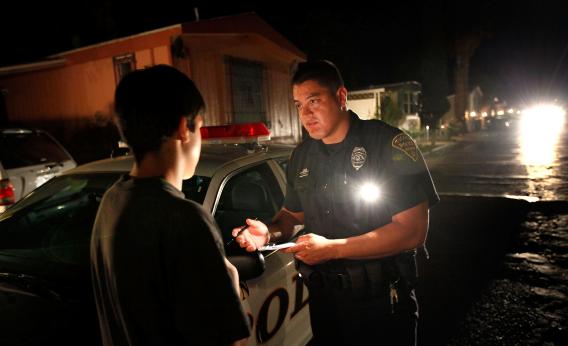
Ultimately, all of these descriptor details present the authorities the greatest opportunity in being able to identify people that may have had involvement or been witness to an altercation or incident you were involved in. Imagine being involved in a situation or even a ‘near miss’ and the frustration you would feel in not being able to give a clear concise description of those involved. Being a good witness is about not only observation, but remembering relevant details. It is hard to know what may be relevant at the time, but we can safely say accurate descriptions of people involved will always be useful information.

A central tenant here in CRGI is helping ‘make people better’. I particularly enjoy writing on subjects that may be of use to students and instructors alike. So, Instructors, consider for your next class having your students spend a few minutes trying to describe someone in the room and see how well others can guess who they are referring to. If you are finding a low success rate, consider introducing your students to the ‘A-H’ system and see if it helps. I know I have benefited from it greatly not only as an investigator but also as a witness.

Active Shooter – Dave Ashworth

Those of you who don’t know me I’ll give you a quick introduction. 

My name is David Ashworth and I served in the British Army for 9 years. I spent the last half of my military service with a Covert Counter Terrorist Unit, in both an operational and training role. After leaving the Army. I then worked as a Private Security Contractor and did this constantly for 8 years, spending 5 years in Iraq and 3 in Afghanistan. I’ve provided security to Various UK/US and Foreign Government Departments, as well as high-ranking military officers and Other Government Agencies (OGAs). I have also trained teams and individuals to operate in Hostile Environments. After leaving the contracting world I went into Law Enforcement, which I continue to do now.

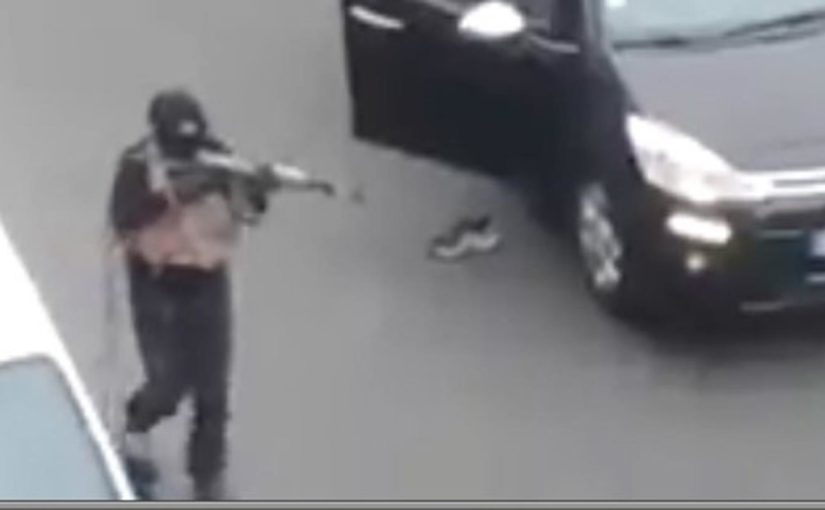
With the latest events in the San Bernardino, California and also in Paris, France it’s worth us revisiting the Active Shooter(s) Scenario. Which as a civilian is one of the most dangerous situations you will find yourself in. A worrying trend in the Terrorist Modus Operandi is the multiple shooter and location tactic.

Now how does that affect you as a civilian? You will either be armed or unarmed in these situations and you will have to decide what your priority is. Is it escape? Is it locating your family? Is it neutralizing the threat i.e. the active shooter(s), or is it to protect your loved ones and get them to safety. It may be to leave the scene and brief law enforcement agencies. There are so many options and it will depend on you, your mindset, your training, your will to fight or your will to survive. 

So let’s look at what we need to try to survive an active shooter(s) situation. I say ‘try’ and survive because you could do everything right and still get killed by a lone gunmen because you went left instead of right. It happens! Better men than me have been killed by an act of fate, rather than by skill. It is worth noting a guy out of it on drugs can kill a Special Operations warrior just as easily as anyone else. Think about that for a minute.

I hope that’s taken a moment to sink in. Because I want to make something clear; too many people are looking for quick fix self defence techniques; “What do I do if I’m attacked like this?” People want an answer that is like, If A happens, do B, If C happens do D. Violence whether in a war zone or in the street outside the grocery store is dynamic, it changes, its a problem. The best way to deal with it is to have a problem solving attitude and train for those problems. You can drill everyday on the range and do a thousand scenarios, but when the time comes to draw down, odds are it will be none of the 1000 scenarios you went through on the range, but you can bet money, it’s close to 1 or 2 of them. So adapt to the situation and own it. 

So you’ve trained in some self defence techniques and you’ve been to the range, do you think you are ready to deal with an active shooter? 

Let me put it in another context: you’ve gone to the gym and done a few boxercise classes and then you’ve hit the punching bag a few times, for the last 6 months. Are you ready to step into a professional boxing match with Mike Tyson? I didn’t think so. If you do think you’re ready, we need to have a chat.  

As someone who has been down range, and on the receiving end of some “almost” well-placed shots, I don’t think you can ever train enough. After those rounds have come at you, you will be wishing you’d gone to the gym more, you’d fired more rounds on the range and carried out more drills so you were quicker.  

So what skills do you need to survive? Those of you who have attended any of my courses know that I push Situation Awareness; it’s my religion. You need to be aware of what’s going on around you. Anytime you step out of the house, bad things have the potential to happen. If I go anywhere outside of my home I’m aware a long shooter might decide today is his day, or some terrorist group decided its Zero hour. Sadly; it’s the World in which we live in. If I’m aware of people and how they act, their body language will give me an indicator to what they are doing and what their intentions maybe. So your head has to be on a swivel, and you will be looking for any combat indicators that something maybe about to go down.  

The modern terror threat we face is multiple shooters hitting multiple target locations. So lets look at it, odds are you won’t see the shooter, you’ll have an audio cue, the shots or the screams. A visual cue, people running from the shooting, Police or security directing people. Now the next question you have to ask yourself is “How ready for this are you?”

This is really going to boil down to the training you’ve conducted prior to it going loud made you ready. Picture it, sat in the food court with your family at the mall. Bang! Screams, Bang! Bang! Bang! Are you still sat there? Are you grabbing your kids? There isn’t any point in spending thousands of dollars on range time, only for your spouse to get hit in the gun fight and you not know what to do medically. You need to train in all aspects of tactical life. The guys and gals, I’ve trained know my mantra: shoot, move, communicate, medical. They are the four factors that make a good operator, whether that be a Tier one dude, or a well-trained civilian. 

Let’s say you aren’t carrying a weapon. What’s your priority? Escape right? So you noted the exits when you came into the mall, where the nearest cover was in the park. Where the elevated positions are that a shooter might use and the best place to move to if it happened. These are things that have become part of my lifestyle. I do them without really thinking about it. My students have learned that it’s not a mindset, it’s a lifestyle. 

If you are armed, what are you going to do? Are you going to move to the sound of the gunfire? Are you going to draw your weapon? What will your posture be if the police see you? Are you ready to deal with this situation? What if someone mistakes you for the shooter? What if the police are given your description? What if you find injured people, do you stop and help, or move on? Do you have any medical equipment on you? Do you know how to use it? Do you have a flashlight? Do you know how to enter a room? How do you clear an open/closed door? Can you move tactically down a hallway? Can you move outside the building? Are you ready to take someone’s life to save others; this isn’t a Hollywood movie where you are going to be the hero. This is real life; if you fire a shot and it misses and hits someone it’s not aimed at, then you’ve just blown it. There are no second chances; miss the target and they might not miss you. I could spend hour’s war-gaming with you, but I just want people to start thinking about this issue. As sadly; it’s becoming a part of our every day lives. The threats are out there.

As you can see here, there are a lot of factors. I’ve only glossed over them here.  I just want you to think about the situation you may find yourself in and how you plan to problem solve it. 

Train hard and Stay safe, 

Dave