Every Day Carry (EDC) Foundation Concepts – Toby Cowern


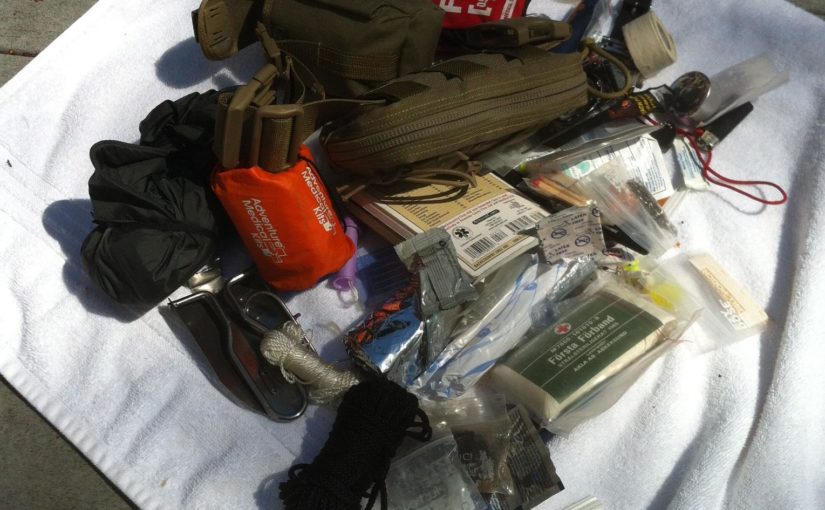
We all routinely carry certain items with us, either out of necessity and/or habit. Even the shortest journey out of home or work place triggers an instinctive check of pockets and bags: do I have my phone? keys? wallet? By logical extension, those of us who analyze and assess external influences on our lifestyle, normally have additional items in our routine carry checklist, and it is these objects that tend to be classified as EDC items. The concept is far from new and should not be intimidating, although some zealots of particular EDC items can come across a little strong in their discussions and guidance.

An identifiable generalized trend in Urban Preparedness, Wilderness Survival and even EDC, is the obsession with and reliance on ‘lists’. I get the distinct impression that for most people purchasing items from a recommended list of “things to carry”, is far easier and  less time consuming and gives a quick ‘sense of peace’. With this in mind, why would I have a concern over the ‘list trend’? My issue is this: if we look to the founding concepts of EDC, we realize that arbitrarily following a list does not necessarily give us the protection and peace of mind we desire, in fact, in some circumstances, it may put us at more risk depending on what and how we carry.

The aim of this article is to run through what I regard as the foundation concepts and therefore key considerations on items we carry. This fits exceptionally well with the theme of violence dynamics and conflict management due to the fact that many of us are relying on ‘tools’ to prevent or solve problems we may encounter. Where, why and how we carry these tools should be given exceptional consideration.

I’ve identified three key category headers to consider:

Stowage – Where/How are we carrying

  1. What items are we carrying
  2. What should be the demands and expectation of our equipment

Let’s expand on these:

  1. Stowage – Whatever we decide to carry, must be carried in a manner that does not excessively confine or restrict our movement, ensures the items are held securely, but allows them to be accessed as needed (and this may be exceptionally time sensitive, especially in regard to any defensive items).

Most militaries will define individual equipment scales (also known as ‘loadouts’) right from basic training. The concept is simple; there are 4 scale/load levels:

Level 1 – Items carried on your person AT ALL times. In the military these would be items carried in your pockets, affixed to your belt or worn on your person e.g morphine syrettes worn on a neck chain. This translates directly to civilian standards. Our level 1 items would be keys, phone, wallet, personal defensive items etc.

Level 2 – These are items that are always within arm’s reach, but maybe removed from the body. In military terms, this would be your weapons system and ‘fighting order’, (Body Armour, Assault Vest or equivalent). Fighting orders revolve around the necessity to carry ammunition, water, emergency medical equipment and some key survival items.

This again can be easily translated for civilian application with the exception being the method for carrying items, since a military style webbing system may not be an appropriate choice in most cases. More likely, essential items are going to be stowed in a fanny pack, small shoulder bag (e.g laptop bag) or purse/manbag. Consideration also needs to be given to the type of clothes we are wearing and what stowage options are afforded to us by these.

Level 3 – These are items needed for extended operations (>12hrs), but maybe stowed during attack/assault phases of operations. Normally this larger pack (Ruck or Bergen) will contain additional supplies (ammunition, batteries), food, sleeping system, field equipment (shelter, wash kit, stove, additional clothing items etc).

For those who have given consideration to larger scale preparedness, level 3 is the equivalent of a ‘Bug Out’ bag. The intention here is to carry the essential items to sustain the individual for a period of up to 72hrs. This bag is normally stowed in a vehicle or at home/in the office, as opposed to being constantly carried.

There is a lot written about what constitutes the ‘ultimate’ Bug Out Bag, but often, in my mind, there is WAY too much equipment advised to be carried at this level, and this is where the dangers of ‘the list’ really begin to manifest themselves. That doesn’t mean there aren’t advocates of burdensome carry at level 1 and 2 also! We will look to avoid the ‘over burden’ problem in the next section.

Level 4 – These are typically ‘on base’ level items, which can be kept in a trunk, locker, in barracks or equivalent.

In EDC terms, level 4 will be items we potentially have stored at home for replacement or supplementation of regular EDC items if needed.  

  1. What Items are We Carrying:

Remember we are addressing at a conceptual level here, so what must be considered with regard to our item choices? I believe there are 4 essential considerations:

  1. Individual – Who are you, what do you do, what’s your build, what’s your fitness level, are you carrying long term injuries or mobility problems, are you carrying for you individually or also on behalf of other family members? Answers to all these questions are going to significantly influence what you carry and how.
  2. Competencies – What is your skill set, what is your level of training (especially in regard to any defensive items you are carrying), what is your experience in dealing with unexpected situations? The adage ‘the more you know the less you carry’ is often quite true. The greater your training, skill and experience level, the less likely you are going to carry equipment to ‘substitute’ your knowledge.
  3. Concerns – This is one of the most critical, but also, in my mind, one of the most overlooked. What are you actually concerned in terms of personal safety? Or more pointedly, what are you preparing for? If we can’t specify our goal it is incredibly difficult to work back from that point to identify our equipment needs. Equally if we can clearly identify our goal(s) it is far easier to select our EDC items.
  4. Environment – How is your physical environment (hot, cold, urban, rural), what potential threats or hazards are contained in your environment? Again clear assessment and identification of which hazards we want to avoid and/or mitigate is going to be influential on EDC selection.
  1. The final part of our Foundation Concepts is to address what demands we have from our equipment. I have identified 5 key considerations in this regard. Before I begin I just want to clarify, it is very rare you will find an item that fulfills all 5 of these considerations. Think of it as ‘ticking the boxes’, an item that scores 4 out of 5 of these points will have a greater chance of making it on to my EDC than carrying an item that scores say 2 out of 5:
  1. Fulfills an Essential Function – It is VERY easy to get loaded down with superfluous or overly specialized gear. In the first instance, EDC is about carrying small items that make a BIG difference. Investigate every piece of equipment and make sure you are carrying it because it’s essential.
  2. Difficult to Replicate In Your Environment – This is coming from my ‘wilderness rules’. Being in a town or city means, in theory, everything is available to us if we are willing to purchase it, but that is not always a financially viable or stable approach. What I mean here is be careful not to load yourself down with items that can easily be scavenged if you needed to.

I expand on this more in the video here.

  1. Multifunctional – Some items may clearly have more than one use (e.g. Multitool), however with some creative thinking, we may come up with multiple uses for even the most banal items we carry. This is a great mental exercise and also a good way of really pairing down your gear if you feel you are currently carrying too much.
  2. Legal – Given the increasing level of ‘stop and search’ powers afforded to the police throughout western nations, as well as enhanced security screening in many public locations, the chances of being ‘caught’ and prosecuted for carrying illegal items, plus the fact it’s erm, y’know illegal, means we should not be so foolish as to carry anything that is not legally allowed. Ignorance of the law is no excuse here. Get informed. Also understand, there are many, many, legal alternatives to items that maybe banned. This takes us back to our ‘training and competence’ development.
  3. Discreet – I am a firm believer in the ‘Grey Man’ theory. You may want to walk around primed for imminent apocalyptic action, just don’t look like you are. Blending with your environment is something you want to and should be able to do. EDC item selection and carry methods can greatly help or hinder this process.

With a clear understanding and grasp of these foundation concepts, it should be easier to carry EDC items more suited to us and our situation, rather than carrying generic items from a different individual´s list. This makes us not only more prepared, but more informed and therefore confident in the equipment we are carrying.

In subsequent articles I will be going through some of my personal carry items and going into more detail on how these foundation concepts relate. All of this said, the final note is to know and understand EDC needs to be fluid and dynamic, making it easy for us to change, amend, add or remove items as we see necessary in changing circumstances. This will also be covered in more detail soon.


Tony Somers Interview – Josha Matthewman

Tony Somers, 5th Dan with the British Combat Association, ex-firefighter, author, renowned counsellor and pioneer of self-empowerment, was kind enough to impart some of his knowledge regarding conflict management and its surrounding areas. 

Tony, you have been involved in martial arts for many years and have studied many disciplines, such as Shotokan Karate, Combat Ju-Jitsu, and Western Boxing to name a few. Now you are moving towards scenario training at the Somers Self Defence Academy. How relevant are the techniques you learnt in those styles in what you are teaching now?

Those techniques are very relevant on so many different levels. Basic skills are vital. My friend Glenn Smith is a professional boxing coach and he spends hour after hour teaching people basic footwork. 

 Going back to my early Shotokan days, the first few grades, which took a couple of years to complete, were all about stance and posture and good techniques. I still emphasise this in my teaching today, get your stances footwork and posture right. I’ve noticed that these things are the first things to disappear when people are put under pressure and the reason for this is that they are not practiced enough, they need to become second nature and everything else will follow from these basic principles. Even in a real life situation these things are vital, you can’t get your strikes off if your stance and posture are not right.

 You need to learn the rules to break the rules but spend a lot of time learning the basics first, everyone wants to hit pads and do the more interesting things and sadly the basics are often overlooked and it shows. Even in the grappling arts it’s much easier to get a throw or complete a technique if you can break the others persons posture and maintain your own. Every style has something to offer and we are all teachers and students, I try to learn something from everyone I meet, even if it’s not to be like them. Those early days were the foundation for so many things in my life.

 The Somers Self Defence Academy is striving towards simulating real combat. In September, Gary Anderson, a very experienced bullet man will feature in your seminar. Could you briefly explain what a bullet man is, and how he will feature in your training?

 I’ve never used the bullet man before but I’ve always been interested in what it has to offer. I set up a training session with Gary who is a good friend and a really nice guy. He took me through some of the scenarios he does with the bullet man suit and to be honest I was surprised at how good it was.

 It’s hard to explain what the bullet man actually is, I guess it’s like a padded suit that can be used to recreate realistic scenarios, and you can hit him in any area without doing too much damage.

When I was in the fire service the training officers used to set up fire houses which were specially designed buildings that represented real fires. They could set up kitchen fires or bedroom fires to different levels of intensity. Although nothing is like the reality of adrenalin fuelled real fire these scenarios did get the heart pumping and were good ways of practicing for reality. Unlike a real fire there were safety procedures in place such as people standing by to step in if needed and the fires could only be set to specific temperatures (unlike a real fire). The bullet man is similar to this in that the scenarios we use will get your heart pumping but we have safety measures in place for both the bullet man and the participants. I am really looking forward to working with Gary and his suit.

 Will your seminar focus on non-physical aspects of confrontation, such as verbally de-escalating a situation, the fence, or spotting when an opponent is about to attack? Are these concepts more important than physical training in conflict management?

 The seminar we are doing will be more about the physical aspects of self defence and also fear control and mindset. However for me conflict management is really where it is at. How can I diffuse a situation? What are my communications skills like? Do I understand body language and attack rituals and the importance of awareness? Do I understand my own triggers as well as other people’s triggers? 

 Geoff Thompson developed the fence as a way of controlling the final few seconds before a fight starts and he is right, it’s a critical time in any confrontation. But I would argue that often we can go way back before that time to what actually triggered the altercation and quite often it could have been avoided with a lack of ego and the appropriate skills. I teach conflict management to NHS staff and it’s all about communication skills, building rapport and making people feel valued and respected and by doing this you drastically reduce the chances of conflict.

 How do you practice these non-physical elements in a dojo?

I talk people through different scenarios and communication models. I have a saying that it’s nice to be nice and nice people don’t tend to have conflict. Nice doesn’t mean non assertive or a push over it means quietly confident, respectful and empathic towards others. I hope I demonstrate this in the Dojo. I’ve noticed over the years that confident people don’t get bullied.

 Before MMA and the UFC there was Animal Day with Geoff Thompson. Do you feel this enhanced your training and do you consider it necessary to go to those fringes of reality in order to become truly competent in self-defence?

 The animal days definitely enhanced my training in that they helped me to overcome my fear of confrontation. They were very physical days and I was always scared but then again I was scared in lots of areas of my life. Scared that I couldn’t defend my kids, scared that my wife might leave me, scared that I would lose my job or my house, scared to speak out and say what I really believed for fear of being laughed at.

 The animal days helped me to face my fears head on and learn to live with them and to a large extent to control them. I still have them from time to time but to a much lesser extent. Animal days were a very physical medium in which to face and overcome my fears but I don’t think that everyone has to choose this way of doing things, it worked for me but it might not work for everyone. Self defence is a massive area which covers conflict management and much more I truly believe that if we could raise the levels of peoples self confidence we would have a far better society. Insecure people often get bullied or become bullies so by working on our self worth we could go a long way towards eliminating a lot of the problems in our society.

 During your 17 years as a firefighter, what was your experience of controlling adrenal response? Was it similar to that of confrontation, and do the two cross over?

 Being a fire fighter is slightly different because you have a role or a job to do and you are expected to do that role, for example running into a burning building while everyone else is running out.

The adrenalin is still there but the fact that you are in a role helps you to go forward, the training is also vital there were times especially early on in my career (I have mentioned this in my book Fighter Rescuer Healer) that because I was so scared I operated on auto pilot but because the training was so good my auto pilot was good enough. It’s the same with self defence, some people call it muscle memory but you will react in the same way that you have trained under pressure.

So good training is vital as well as exposure to pressure situations, which also goes back to my answer to your first question, master the basics.

 What first led you to pursue fear control and what elements of controlling fear transcend into your normal life?

 Fear has been with me for as long as I care to remember and it’s held me back in so many ways but like I have already said I got so sick of it that I decided to fight back. I still experience fear but I refuse to let it hold me back anymore in fact I now like the challenges that fear brings and if I feel scared I know I am on the right track. Fear will keep you small in its attempts to keep you safe. I realized that most of my fears came from my parents so that meant that they didn’t belong to me and I refuse to have other people’s fears, I’ve got enough of my own. I love helping people to overcome their fears and reach their full potential, it’s very rewarding.

 You founded the Self Empowerment Academy and have been heavily involved in counselling in a diverse number of areas. How important do you consider mastering your own ego and temperament in avoiding conflict?

 I would say controlling our own ego is the biggest part of self defence. When I was younger if someone looked at me I assumed that they thought they were better than me and so then I wanted to fight them. When I realized it was me who thought I was an idiot or a twat and not them I realized that I had to work on myself. The ego will try and protect you but if you learn to like and even love yourself then there is very little to protect.

 You have worked closely with the NHS and firefighting services teaching conflict resolution.  With your experiences of real fear and real conflict, do you believe people can utilise the techniques learned in such classes while under adrenal stress?

 Again it’s down to practice and training. Of course it’s harder under stress but I believe it’s better to have some type of a plan rather than no plan. I know in the NHS where they have introduced improved levels of communication amongst staff, incidents of conflict have been reduced. 

 The Liverpool Echo recently reported that a paramedic was sacked for pre-emptively attacking an aggressive drunk male, who was behaving threateningly towards his elderly patient. Do you think that NHS staff should be taught to pre-emptively strike if under threat?

 Every human being has the right to defend themselves and that includes using a pre emptive strike. The law states that if the attacker is aggressive and moving forward and you fear for your safety you can pre-emptively strike the first blow in self defence. Your defence must be necessary and proportionate to make it reasonable but you are allowed to defend yourself in any walk of life.

The European Human Rights Act Article 3 talks about a right to life.

 I don’t know what happened with the paramedic you mentioned but it sounds strange to me that he got sacked because you are allowed to defend yourself and others but maybe there was more to the story, I’m always a bit dubious about our media coverage.

 Tony’s new seminar takes place on 27th September. Find out more at http://www.realcombatsystem.co.uk


Matrix Download Syndrome, Part III – Marc MacYoung

Part I

Let’s go back to the two college rape scenarios, drunken frat rats and walking alone. The mouse—who accepts moving in groups, not walking alone at night, doesn’t incapacitate herself through booze, or who at a party doesn’t go off into isolation with a frat rat to score more free alcohol—is in far less danger from either threat than her ‘more confident’ equals. I have known many party girls who have gotten themselves raped engaging in those listed high-risk behavior. As horrible as you might find this, they were still safer than Krav Chick. While I didn’t know her, her response, “But that could kill me,” tells me a lot. As in I can tell you that with the risks she was taking, she was the one who was most likely to get killed. And she didn’t even know it.

Conversely—like the mouse—someone who is willing to gouge someone’s eyeball out of his head while trying to tear out his throat with her teeth is at much lower risk. Why? Because both know there are circumstances they don’t want to be in. Therefore, they’re not going to put themselves into them. And if they find themselves there, they’ll do what it takes to get the hell out. (One, run fiercely; the other, whatever level of violence is necessary.)


It’s the person who thinks they can do what they want and nobody has the right to touch them who is in the most danger. That’s because they’re too slow to get out of the situation. Maybe they’re not at risk of dying, but they leave themselves open to all kinds of other nastiness especially if because of a little training, they think they aren’t afraid to hit. Ineffective violence only encourages a higher level of attack. Unfortunately, training these types in physical technique just encourages this attitude. Like deciding walking alone late at night is okay because she knows Krav Maga. (That is if this training isn’t empowering dysfunction—which is another problem [if not article] altogether.) Such a person will walk right into trouble—without the resources to get out of it. And odds are good she walked into it because nobody gave her nuts-and-bolts information on how to avoid it.

One of the major problems about teaching people who have always had the ability to walk away is their willingness to hit (or stab or shoot) is often a one-way street. News flash: Violence hurts (even if you win). If you aren’t willing to pay that price, odds are you’re going to try to fold when it starts hurting. That’s trying to fold in a situation where you can’t leave—because it’s too late.

Inherent in most modern day people’s thinking is, “If I don’t like it, I’ll leave.” Stop and think about this. How many people do you know who have left marriages, jobs, families, changed careers, relocated, etc.? How about yourself? These are the people who are asking, “But what if I can’t leave?” They have no idea what that really means.

Now mind you, this ‘leaving’ attitude has become far more rampant now that belonging to a group is more of a hobby than a survival requirement. But are they willing to bite off ears, gouge out eyes, break bones, much less kill someone to come out the other side? Again, if not, why are you teaching them physical techniques, especially ineffective levels of violence—like strikes?

That’s why it’s important to ask yourself, what does the ability to leave a situation do to our levels of commitment? To our development of coping mechanisms? Mental resiliency (find a way to deal with it versus running away)? To our willingness to do whatever we have to? And most importantly, our ability to recognize when we actually can’t leave a situation?

That last one is a really subtle, but important, question. In most situations, people can safely withdraw (but if you escalate just a little bit, you’ll ‘win’). That’s wildly different from a situation where—if it develops fully—the only way to not be victimized is to tear someone’s throat out with your teeth. Recognizing such a situation is critical to draw up the commitment necessary to do horrible things in order to survive.

Do your students (or you for that matter) even know what such situations look like while developing? Do they know how to tell when one has stepped into your life already fully formed? Do you expect your students to recognize such a situation if all you do is give it a hand wave? And that brings us to: Do they (or you) have the commitment to do it? If the answer to the last four questions is no—all the techniques in the world are useless.

With this in mind, would they not be better served being taught things they can do right then—much less be willing to do? How about telling when it’s time to go berserk (like when someone tries to take you to a secondary location)? Or when it’s time to let it go and walk away? (With a subcategory of: Is that guy who is threatening you physically walking away? Hint, don’t pull the trigger.)

Because people who for all their lives have had the ability to leave (and chose to do so) aren’t likely to be able to magically muster the ability and commitment to do what is necessary. Nor do they tend to come up with good use of force decisions. They will have found themselves in circumstances where they can’t leave, but they have no idea of the resources required to survive. Often, they will attempt to halfheartedly use techniques they vaguely remember. That seldom works out well.

Recently, I commented that gouging someone’s eye out was easy. The hard part was to know when it was time to do that and teaching people the commitment to do so. The responses were … interesting.

First, there were numerous stories about eye pokes failing. Now mind you, there’s a difference between an eye poke and gouging somebody’s eyeball out of his skull. Kind of like the difference between a domesticated dog and a wolverine.

Second, there was much pontificating about how difficult eye gouges were in a fur-ball situation. Oh really? Is it difficult or was it because you just weren’t committed to ripping his eyeball out and throwing it on the ground? Because with commitment, it’s really effective and pretty easy to do.

Third, to support these contentions, people referred a big name MMA fighter who said eye gouges weren’t effective against a committed opponent. Funny . . . while I don’t have as much ring experience as he does, I’ve found going in as if it’s foreplay for attempting to skullf**k the guy to death has a really impressive track record—at least in the streets. That and twisting the ocular nerve really makes ’em squeak. Most folks really just don’t have the commitment to keep on playing when it’s happening to them.

Fourth, there were people who immediately started quoting maiming laws to me. I can only assume it was to scare me. Didn’t I at least imply knowing when to do it was kind of important? (“Why did you maim him?” “Because he was trying to kill or inflict grievous bodily injury on me at the time.”) In other words, we’re talking lethal force would be justified, but you lack the means. So you maim to stop an attack that would maim or kill you.

Fifth—and perhaps most fascinating—was the automatic scaling back of the idea to their comfort zone. Notice that I very specifically stated gouging out someone’s eyeball. Not poke, not stick your finger into it, not spit, not throw sand in their eyes. Nothing half-committed, I’m talking a level of commitment where someone’s eyeball is going to be left swinging past their nose because the alternative is you being left lying there, unable to get up and walk away. Yet those reduced versions were the only things the commentators could imagine. They weren’t talking survival; they were framing things in terms of fighting.

Here’s a problem with what they were imagining. They’re right. Half committed moves tend to fail. In plain old fights, I’ve seen eye pokes and even attempted gouges fail—because pain alone often isn’t enough. But what works is entirely beyond their comfort zones.

As someone who has been in various degrees of self-defense situations (from punched to shot at) I found these reactions somewhat disturbing, especially in light of many of the commentator’s promoted themselves as self-defense instructors—who had no idea how savage things can get in violence.

Are you beginning to see a potential problem with trying to teach physical self-defense to people with neither the commitment nor mental fortitude to do whatever is necessary? Sure, teaching weak physical techniques that students—hopefully—will never use may boost their self-confidence that in a day-to-day, social interaction, job, and relationship context is a good thing. But it’s not self-defense. In fact—like it did with Krav Chick—it can result in overconfidence and an increase in high-risk behavior.

So my question is: Why aren’t you teaching people—who all their lives have been able to leave—how to safely withdraw from a situation? Why are you trying to teach them to stay there and shoot or use martial art punches and kicks? Instead of trying to boost their confidence, why aren’t you teaching people simple, real life, safety measures they can use right then?

Enough hand waving. People’s lives are depending on what you’re teaching them. And that must be effective information for whom—and where—they are now. So make what you teach closer to what they can do, not what they fantasize they can do.

Would this “Move” Work on the Street? – Erik Kondo

This innocent sounding question followed by a short video clip that highlights the “Move” in question is common in groups and forums related to self-defense and/or the martial arts. What follows usually a multitude of back and forth comments aimed at “proving” that the answer to the question is either YES, or NO.

BEWARE! The question is effectively a TRAP. It is a trick question designed to see who will take the bait and run with it. In fact, the more detailed explanation someone provides to “prove” his or her case, the more he shows he has been duped.

It seems like a simple YES, or NO question. But let’s deconstruct the question.

Would this Move work on the street for WHO against WHOM?

Using the MMA as an example there are 14 weight classes. Which means given two opponents, this question actually contains 91 different combinations based on weight class alone.

For the sake of discussion, each of the two people involved in the conflict have a different level of psychological motivation on a scale of 1 to 5 from low motivation to very high motivation. Similarly, each person has a different level of previous experience with dealing with these types of “Moves” from low experience to very high experience (1-5). And a different level of natural ability for accomplishing or defending against these “Moves” from low to very high (1-5).

That creates 91 x (2×5) x (2×5) x (2×5) = 91,000 variations to consider.

The Street represents the particular environment where this Move takes place. Streets vary in type of surface from hard dry pavement to soft wet and slippery. Sometimes, there are companions/friends on the Street who may become involved. There are improvised weapons on the Street such as bricks, rocks, bottles, sticks, sand, and more. Either party could bring weapons to the Street such as knives, guns, impact weapons, and more. The lighting is varies on different Streets. The weather is different. Clearly, there are many different types/varieties of “Streets” possible for each person. If we limit both people to a total of only 25 variations. We now have:

Would this Move work on a wide variety of Streets/Environments/Situations for WHO against WHOM?

91,000 x 25 = 2,275,000 possible variations of whether the Move works.

Now we have the question of what does “Works” actually mean? In some cases, “Works” could mean your opponent is dead, in other cases, you opponent is momentarily distracted. What is considered to “Work” is dependent on the desired outcome of the particular situation. Therefore, there could be easily be another 10 variations of what is deemed to “Work”.

2,275,000 x 10 = 22,750,000 possible variations.

If your answer is: YES, it works – You are saying that it works in all 22.75 million variations.

If your answer is: NO, it doesn’t work. – You are saying it doesn’t work in any of the 22.75 million variations.

Those people in forums and groups who tried to definitely answer this question without taking into consideration or acknowledging these many variations have been duped. And if those people don’t understand the question, should they really be answering it with such certainty?

NOTE: When calculating combinations and permutations the numbers get quite large and the formulas get tricky. In the event my math is off, the concept still applies. The concept is that there is a huge amount of variation involved in determining the viability of any particular “move”. So much so, that it is not possible to come to a definite determination of either “YES, it works” or “NO, it doesn’t”.


Where Do We Go From Here? – Toby Cowern


Let’s do a quick, ‘broad strokes’ trend analysis…

The martial arts ‘world’ has been going through a fairly steady ten year cycle of ‘dominant art’. The 70’s saw everyone focusing on Jeet Kune Do with the dominant cinematic releases of Bruce Lee films being the height of attention for many. The 80’s saw many a packed dojo, with Karate being the ‘go to’ art, most epitomized by the trilogy of ‘Karate Kid’ films of that decade. The ‘Ninjitsu’ nineties saw a fascination with the ‘mystical’ warriors of this stealthy art, and as we progressed to the new millennium the emergence of MMA took us across the threshold to the ‘naughties’ and from there everything had to be ‘street tested’, ‘combat proven’ and ‘operator approved’ as we looked towards more ‘combative’ arts and applications from 2010 onwards.

We see a comparative and equivalent trend in the fitness industry. From the spandex clad ‘aerobic’ eighties, to the ‘revolutionary’ concept of cross training in the 90’s, the millennium needed more motivation so ‘boot camps’ and intense group training took us through the early part of 2000, and so far in this decade ‘wearable technology’ has seen us obsess over ‘results formulae’ for our each and every workout.

Tied into the above we see each trend having not only a dominant ‘figurehead’ or company, think Joe Weider, Jane Fonda, Crossfit, Livestrong, Bruce Lee, Daniel ‘San’, but also it’s own ‘theme’ and or ‘catchphrase’. “Go for the burn”, “in it too win it”, “embrace the suck”, “stand and bang” etc etc.

With the addition of increased global communication and notably reduced attention spans, these trends will not only continue, but intensify and most likely (significantly) shorten. As each trend vies for attention and seeks to be the latest ‘viral’ product, competitions for the ‘top spot’ has and will increasingly so, intensify and rely on more and more sensationalist claims/themes. We also already see many ‘fusions’ occurring, where in order to ‘keep up’ businesses package their art/style/product to offer the most benefits in the most condensed format…

Now, I appreciate that running a business shackles you to certain actions by necessity, so I am in no way criticizing business owners for having to market, but it does beg the question how far down this route do we go?

A ‘course flyer’ appeared in my FaceBook feed just this week advertising a ‘Boot Warrior Tactical Shooting Camp’. Once things get to this stage, all you need to ensure is the course venue is ‘Valhalla’ and all course attendees will be issued a ‘Sheepdog Operator Zombie Killer’ certificate and complimentary packet of Tactical Pocket Sand for the complete ‘experience’.

I know, many people already recognize the ridiculousness of the current and developing situation, but apathy or mockery in this matter does not progress the discussion or stave off the problem. We within the industry can and need to influence the emerging trends. Martial arts, Self defense, Fitness and Survival all overlap heavily and leech off each other’s trends. By recognizing and acknowledging this fact it should encourage and enable many more to actively become part of the solution instead of ‘complaining about the problem’. The current trend does little to reinforce credibility, leads to wildly exaggerated claims and often promotes dangerous training practices (e.g. Shooting Range WOD)

CRGI identifies ‘Truth Before Tribalism’ and indeed the ‘tribal nature’ of many of these trends makes them difficult to counteract. But difficult is not impossible, and most of us are training ourselves and others to deal with ‘difficult’ situations anyway. Allowing this current situation to worsen should not be an option to credible instructors, so it is for us to promote far more healthy, positive and measured trends than we currently see. The intensifying and shortening of the trend cycle is notable in its effects, and the continued development and reach of social and alternative media means this situation is going to be here for some time…

So going back to the original question, Where do we go from here? Well, that’s all down to us… Where do we go with our training and skills? Credible, concise and competent? Or Short Term Circus and Paltry Pantomime? I hope, aspire and actively work for the former and, quite simply, the more of us that do so, the more likely it is to trend in that direction. That is the key. This is an ACTIVE process; we need to be the trend we want to see. This is something requiring consistent and persistent action towards.  So maybe the better question is; Where Are You Heading?

Pine Wave Energy by Robert Norton – Reviewed by Garry Smith

This is a short review for a short book. I read Pine Wave Energy in just a few hours as I found myself beginning to coast over lots of very familiar material, which is hardly surprising given the vast amount of reading I have done as part of my studies and personal development. Personally I finished the book having learned very little that was new to me, but not disappointingly so, this is still a really nice find.

The great thing about this book is its accessibility, it really requires no prior knowledge of the field of conflict management, it does not go into great depths  of subject specific bodies of knowledge either, it is a smooth read and sensibly organised. This is exactly the book I want o offer to my students who want an introduction to the topic, it is not a manual of how to do things, it is a guide to how things can be done. I covers most of the key points in a logically ordered format.

I teach students Ju Jitsu, I also teach students self defence, in both cases I think they should understand the dynamics of conflict situations beyond their own personal experience, often this is all they have, that and a million messages from TV, film and other media. Sometimes they need to move beyond their own perception and popular myths and take a bit of a rain check. This is what Pine Wave energy offers, a quick, easily digestible collation of benchmark information that does not require a degree to understand or a couple of weeks of your life to get through.

Most o my students are not professional conflict managers, they have businesses, jobs, families and whole lives of which their training is a part. Those in the trade may need and want more detail and depth but not everyone does, so read this book(let), find out if you agree if it is of use to your students and if so put it their way. Sometimes bite size s the right size.

Availabe for purchase at the CRGI Bookstore.

WHAT YOU DON’T KNOW ABOUT WOMEN’S SELF DEFENSE COULD HURT YOU, PART I – By Teja Van Wicklen

Let’s admit it, women’s self defense is old and tired, it can’t take care of itself, let alone anyone else. What ails it? A dependence on ancient techniques? A blind spot in society? A disconnect between teacher and student? Reluctance to go back to the drawing board?  Or all of the above and more.

Two thousand years ago women’s empowerment, self-actualization and freedom of movement weren’t high on the agenda. That doesn’t explain why we are still stuck. Why aren’t female instructors doing more? And why isn’t there more of a demand? Many women are still guilty of thinking that self defense is the same as kickboxing, or that if the police would just do their job, we wouldn’t need all this crazy violent self defense talk and we could just live our lives.

With a modern overhaul women’s self defense could be a grand tool of autonomy. With kids learning from their parents, or early on in school, we could see a drastic decrease in violence against women, epidemic the world over. If we thought of self defense as a series of mental and physical tools that directly addressed the realities of crime today, we might see things change for the better.

I see a class where, through roll play, women, mothers and daughters learn the simple tells and tricks of emotionally unstable people and hardened criminals, so they can identify behavior before it becomes a problem. Students would learn that a man who insists on helping and won’t give in is disregarding their authority and that any self-respecting person responds to the word “no”. Girls would know the many ploys a criminal might use to begin a conversation, get her to share a ride, or borrow her cell so he can call himself and capture her number for a rainy day. A freshman letting loose her first weeks in college would know that no matter how good-looking a man is he may still be a predator and that although he says he knows her friend he may just be a good listener. A woman would know how to fight like a pitbull using every object in reach as a weapon should anyone ever pull a knife and try to coerce her into a car. She would know the statistics are loud and clear that once she’s in that car she’s going to a place of the criminal’s choosing and there’s very likely no coming back.

Unfortunately those who really need self defense training aren’t getting it. Women only look for answers once they’ve been attacked and need to regain a sense of autonomy as part of the healing process. Or they go to a kickboxing class for exercise and a quick infusion of empowerment. For the record, kickboxing isn’t self defense. Kicking in the air is nothing at all like kicking a man who’s fighting back. Most guys barely notice it when I kick them and I have 30 years of training and break six inches of pine with my side kick.

The study of physical movements without an understanding of context, can be dangerous. False empowerment can cause us to jump into situations we aren’t ready to handle, and a lack of understanding about the before, during and after of an emergency, can mean we get in too deep before realizing we had other options. There is so much more women can do to protect themselves and their loved ones than kick and punch. We need a four-dimensional view of self defense – the mental, emotional, temporal and then finally, pointed physical options as a last resort.

Many instructors will talk about self-defense being ninety percent mental, but that’s not what you get in class. That’s because learning to listen to your own brain whizzing away and cultivating the self awareness the enables you to fix things about yourself that get you into trouble, are much more time consuming and complex than any physical technique could ever be. And because this kind of thinking is difficult to teach, it isn’t being taught. Some of this kind of knowledge is available in sports and military endeavors – a team mentality, watching each other’s backs, understanding aggression, quick decision making in which injury or death is at stake. As such, mostly men have had access to it.

There are an infinite number of possible crime scenarios. No number of physical techniques will answer all the variations. Chess players know there are more combinations of chess pieces on a board than atoms in the universe. Crime is an ever-changing game of strategy that requires constant adaptation. And, life is even more complex. We have to learn to think, to see and to make quick, constructive decisions sometimes under intense pressure.

Women are not only smaller and weaker than their attackers, they are conditioned to react to asocial behavior, like threats, with social behavior, like kindness or self deprecation. A woman might be pregnant or responsible for multiple children. Gangs and fraternities work in teams against unsuspecting and weaker individuals. For all of these reasons women’s self defense can’t just be a different version of men’s self defense, it needs to be a different species.


Walking the Walk – Bob Davis

I have written a short article on the back of a Facebook post I made a while ago based on the idea of a MA/Self Protection instructor having had to have “walked the walk” to have anything valid to offer. To be honest I was only trying to rattle a few cages and see what popped out at the time but here goes.

Firstly (as no one will have any idea who I am) just a brief intro’ to myself, it is not just to talk about me  but is to clarify the position I’m coming at this from.

I have been involved in MA since 1978 (with some breaks), mainly via Karate but with some short forays into traditional Jiu Jitsu and more recently the Gracie style JJ. Over the last 5 years or so I have also spent a significant part of my training time searching out instructors who have “Walked the walk” to expand my knowledge of the “real” world. Having said that I have succeeded in reaching the age of 57 (in my adult life, at least) without ever having been involved in a conflict that has turned physical. I am your typical bog standard karate instructor that you’ll find in any town with no pretentions to be anything more (I just happen to have an interest in the more pragmatic side of self-protection).

There seems to have been a move (at least in the UK) over the last 5-10 years towards practical martial arts, or perhaps I have just become more aware of it, and on the back of that there has been a big growth in schools offering “street lethal” martial arts. As a part of this there has been a lot of talk about having to have “been there” or “walked the walk” in order to be able to teach anything worthwhile. The general statements being that if you haven’t regularly faced violent confrontation then nothing you say can be in anyway valid and this is used as a stick to beat us (the non-fighters) with if we dare to teach martial arts with any sort of self-protection element. The upshot is that the picture that is being painted is that we are a complete waste of time and only they (the fighters) are worth training with.

Now I am not trying to be disparaging with the “fighter” label, I do understand that a lot of people have to face violence, or the threat of it at least, on a virtually daily basis as part of their work and I have a great deal of respect for those willing to do that. It is just a differentiator for the two classes of instructor.

It is commonly stated that “If you’ve never faced real violence you don’t know how you will react” which I fully appreciate, pressure testing (not matter how hard) will never fully replicate real violence, you always know that apart from a few bumps and bruises and maybe a few cracks and breaks (now I have been there and done that 🙂 ) you are basically safe. You can go a long way towards replicating the physical but the mental side never really approaches the real thing (and if it did I very much suspect that students wouldn’t train for more than 5 minutes and that you’d never see them again).

We are also told that “everyone is different” in these situations which again I fully appreciate.

This, however, is where I start to struggle with the logic of the argument, if you “don’t know how you’ll react” and “everyone is different” then how can the experience of the fighter  tell them anything other than how THEY THEMSELVES will react.

The logic appear to indicate that they can’t really pass on this knowledge and so are no better able to transmit this understanding than the rest of us. It also, if you follow the logic, means that training with them is of no value to the instructor who wants to pass on this knowledge to his own students as, even if he teaches exactly what he has learned in the same way as he (or she) has learned it, their lack of real world understanding makes it a “waste of time”. I don’t really believe this to be the case, if I did then I wouldn’t spend so much of my time seeking out these people and training with them, I’d much rather piggy back off of their experience and learn as much of the theory at least as I can. I’m quite happy to spend the rest of my life without ever having any real world experience if that is at all possible.

I am well aware that there are many schools, including those who profess to teach self-protection, who teach fanciful fairy tale self-defense (10 minutes on YouTube will provide all the evidence you need, in fact they seem to be in the majority there) but there are also many of us who take the subject seriously enough to do proper research so we can avoid passing on bad advice and comic book techniques.

I think it’s more a question of honesty (on either side of the argument) and just being open about who you are and what you teach. My promotional line on my website is:

“Does this mean I can turn anyone into a “lean, mean, fighting machine”? No, obviously not. The unfortunate truth (or fortunate, depending on your world view) is that not everybody has the nature or potential. Can I give you a set of physical skills which will much improve your chances in a physical confrontation? Almost certainly.”

Not the snappiest tag line and probably not really what potential students want to hear but it is what I do.


My final word (in as much as I’ll ever stop talking 🙂 ) would be to question that, given that 90% of self-protection is in avoiding physical conflict and that a physical response is what you fall back on when all else has failed you, then would you rather learn your self-protection from someone who’s had hundreds of fights or from the guy who’s had none?

Just a thought 😉


Training Students with Trauma – Jeffrey Johnson

The body is the armature of the self, the physical self around which the psychological self is constructed.” -Psychologist Nicholas Hobbs

Trauma can alter the relationship between the psychological self and the physical self. A violent event can turn the body into a foreign place, with all human interaction becoming somewhat distant and strange. Martial arts training, traditionally conceived as a mind-body practice, has helped many people to bridge the gap between their psychological selves and their physical selves. As a professional with experience counseling survivors of trauma and teaching self defense, I am proposing a method for self-defense instructors to approach their students who may have experienced trauma, as well as a subject for therapists and counselors to explore as a means of helping their clients to reclaim their bodies and heal.

This is intended as a brief introduction to the topic and the proposed approaches. Understanding fully that self-defense instructors are not clinical therapists, I am not suggesting that a person attempt to take on more responsibility than they are professionally qualified to handle. I am hoping to help instructors to empower their students and avoid re-traumatizing vulnerable individuals.

Trauma

How trauma impacts people can vary from person to person. What can prove to be a debilitating emotional experience for one person can easily be shrugged off by another.  Everyone is composed differently, so professionals should be careful not to rush to judgment over how a person has internalized the event(s) they have experienced. We don’t get to qualify or disqualify the magnitude of a troubling event or series of events in the life of another person. We don’t get to tell them to “get over it.” Not if we are trying to help them.

I have had to develop a thick skin when hearing the stories. Vicarious trauma can occur when we internalize the stories of trauma survivors, but it can be a bigger problem if those survivors’ residual behaviors cause distress for us. We begin to emulate the psychology of those we have been tasked to help. Know what your limits are with regard to how much help you can give and where it ends and the help from other professionals (domestic violence centres, rape crisis centres, etc.) begins. Know when to step back from situations beyond your expertise and abilities.

Trauma can affect the brain in similar fashion to a blunt force injury. The brain will often re-wire itself in an attempt to cope with the injury and the “new reality” of danger and fear. Trauma survivors (note that I avoid the term “victim.” How we frame events and our definitions of ourselves has a lot to do with how we cope and heal) may experience a range of emotions connected with the trauma, such as depression, anger, feelings of hopelessness/helplessness, hyper-vigilance, and any other emotion or combination of emotions. Again, most self-defense instructors are not clinical professionals, so know the limits of the assistance you can effectively offer.

Triggers and reenactments are things that a person with no personal trauma history will not easily understand. A smell, a spoken phrase, a noise, or any other seemingly random and unrelated stimulus or bundle of stimuli can cause (or trigger) an emotional response that acts like an echo of the original traumatic event. One might assume that the males in the room are planning to physically harm him. Or one might tighten her fists and breathe rapidly anticipating an attack. The first response is a paranoid hypervigilance while the other is a physiological response. I have seen re-enactments run the whole gamut of wild possibilities at work, but thankfully nothing overly dramatic at the dojo. Having a sense of what may trigger a student is important, because we don’t want to re-traumatize (essentially recreating the traumatic event, causing even more emotional damage) anyone. For instance, a person who was robbed at gunpoint may not be immediately ready to do gun defense techniques. I am not saying that a trigger is always reason to avoid necessary training. I am saying that it may take some time and finesse to help a student reach that level of trust with you and comfort in their own readiness to deal with body language, object reference, and maybe even phrases that replicate a very bad experience.

Teaching Method

The challenge for all self-defense instructors is to help students become stronger, more competent, and more confident people with each class. To succeed at this, we have to do a lot of listening and observing our students, cross-referencing what we see and hear with what we know and have experienced. We mustn’t make anything up to fill gaps; we are obligated to give the best of what we know to our students because someone’s life and person may depend on what we have taught. A trauma survivor may come to us with “pieces” of their narrative missing or damaged due to physical, emotional, or sexual assault/abuse. We are trying to help them to fill in their own gaps on their own terms.

We are dealing with disturbing behaviors of a criminal element. This means I have had to explain to very young children that they have to establish safe boundaries, always tell trusted adults when these boundaries have been crossed, and what to do if someone makes them feel uncomfortable or unsafe. This means discussing even what to do if someone attempts to touch private parts or other such disturbing and inappropriate behavior. I can’t pull answers out of thin air. I have had to read books by professionals who work with children dealing with this same disturbing subject matter. I have had to discuss with professionals what the best practices are for dealing with what children report. All of this applies to adults, whose stories have been, in my experience overall, more terrifying and disturbing and more psychologically damaging. Knowing something about the best practices regarding what your students might report to you (i.e. A child reports that a cousin has kissed him on the lips and made him feel embarrassed or a woman reports that her ex-boyfriend has been showing up unannounced at her home. These are stereotypical examples, I have heard far more bizarre and disturbing stories and I advise instructors to learn what they can to help their students) is key and aids students and their loved ones tremendously since very few people have any idea how to handle these situations. In other words, I know where my role ends and where a rape crisis worker’s, or police, or a lawyer’s begins.

Training methods can be very fun, very rewarding, and very empowering for students and instructors alike. Survivors are pretty brave already if they are coming to your dojo/gym to learn how to overcome the events that they are struggling with, and we have an opportunity to help add strength to that bravery. There are some major keys to remember when developing your training methods for these and all students:

  1. DO NOT EVER give someone the “you should have” lecture. In my experience, survivors have said “I should have…” and I listen first, but I always encourage them not to beat themselves up over how the events occurred. Sometimes my advice-my good, tried and true advice, like don’t hang out with people known for unsafe, reckless behaviours, or don’t continue dating someone who has little respect for your boundaries and tends to be controlling-is grounds for my students to feel guilty and ashamed. They replay events and can see and hear what I am describing in vivid clarity. I might say, “you did the best you could given what you knew then. Let’s plan for the future and use what you know now to help you make the best choices for you and your family.” Trauma can steal a person’s faith in the future. I try to get them thinking ahead, using the past as a learning tool only.
  2. Know your students. I try to anticipate their feelings when we run a new or difficult drill. I try to use some emotional intelligence to get a sense for how relaxed, stressed, tired, etc., my student is. All of this can impact how they feel about their own ability to perform, which of course alters performance. If they are having trouble, I slow down. If they apologize, I encourage them to forget the need to apologize and focus on being here NOW. If they are survivors of trauma, they may be experiencing strong feelings of insecurity, defeat, embarrassment, and their self-consciousness can cause them to pack their things and leave in the middle of a class (I have seen this happen). We instructors like to yell to get the energy up in a group. Some students don’t need yelling, but instead our confidence in them to improve with every class. In my experience as a behavioral counsellor, I used a “10 to 1 ratio” rule for encouraging statements to corrective statements. Most people don’t need 10, but some people do. Know who needs some more attention and encouragement.
  3. Breathe-I incorporate breathing from Qigong and Tai Chi for my more nervous students (I also use this for my hyper kids. It helps them to focus in the same way.). When I run a drill where they have to close their eyes and wait for me to attack them with the pad, they practice the breathing I taught them so that they can get some control over their adrenal and fear response. It worked for me in a lot of situations as well. It didn’t mean I had no fear or that the adrenaline stopped pumping. It just took the edge off enough for me to still be able to think and observe during a crisis. A student may experience a reenactment during intense drills and not tell you. I had that happen with a woman whose ex-husband used to turn the lights off and beat her. This I learned after running the “close your eyes” drill I mentioned above. I would not have run that drill if I had known that at the time, but thankfully she reported feelings of empowerment since this was the first time she’d ever confronted that memory. In getting to know her, I always knew when she was getting nervous, filling up with disturbing memories. We would take some time to breathe together, every class if we had to. It helped to get her focused on pushing through the drill.
  4. Push students to a level just above their competency. My intention isn’t to make it too easy, because then they don’t feel challenged. I also don’t intend to make it too difficult, because that is defeating. Defeat for some trauma survivors is so familiar that it can be a default emotional space, entered in to upon the mere scent of impending failure. If I know they can give me 10 palm strikes, I might have them give me 2 more at the end. If I know they can give me 5 strong knee strikes, I ask for 2 more at the end. If they say they can’t, I respond that they can, it will just take some time and effort. Most people get it during class, some might take one more class to get the mechanics of a technique or drill. I assure them that I look and feel just as foolish when first learning something new. I have to relate my own power to them as something they can attain to.
  5. Ask for permission. You don’t have to literally say, “can I grab your wrist for this technique?” as obviously they have given you an automatic degree of permission just by signing the waiver for class. What I mean is making sure you are checking in with them when it is appropriate to make sure you aren’t pushing them so far in to their discomfort that it is harmful. Some people will quietly suffer, assuming your word is law because you are the authority and they want to be respectful. Encourage them to speak up about their boundaries. I used to tell the kids I taught that not even I had permission to make them feel unsafe or uncomfortable with themselves.

I hope this serves as a good starting point for many instructors who will certainly have some students coming to them seeking help in regaining their wholeness. Reiterating that we can only do so much in our roles as self defense instructors, I encourage the counsellors among us to explore the potential therapeutic benefits of realistic self defense training from quality instructors.


Russian Chavs – Mikhail Didenko

Editors note.

Whilst it all depends on a situation Russian chavs (white trash) are very aggressive, but they are usually bluffing. When encountering a really tough guy they will usually back off once they realise they have bitten off more than they can chew. They differ from real gangsters who are serious people – chavs are not wolves, they are jackals. At the same time they are the most frequent opponent the person in the street will come up against.

They are like an Bollywood movie fight – a lot of blah-blah-blah, and minimum of action. Chavs try to impress you telling you scary stories about themselves and trying to look cool, it is certainly a case of style above substance and the style is debatable too. They want to suppress you, to break your spirit, thus winning without a fight. However, most of it just an imitation.

When dealing with them it is important to stay cold-blooded and don’t listen to their bedtime stories, which would make Martin Scorsese envious, most of them are just hoodlums, street punks, so if you beat them it wouldn’t have any consequences as long as you do not get caught that is but let’s try to avoid that. Strangely though, were you to take ‘direct action’ they would just respect you, because you proved yourself, stood your ground, such is the world of the chav. But you never know – some of these bad boys can go to a police station and snitch, trying to squeeze some cash from you, it is never all over until it is over as they say.

According to their pseudo-criminal mentality, Russian chavs cannot beat or rob you right away. Usually they need a formal reason to do, they will try to set you up and reel you in like a fish. For example, you talk the wrong way and they just want to have a little ‘compensation’, you have failed to show them respect and need to pay the fine for this crime, once they ‘explain’ the error of your ways and you are frightened enough you give them your watches or purse by your own hands, in their minds this is then a gift from you to them, not a robbery. They think that would make them more innocent if questioned  by the police and even in the court, because you gave it of your own free will!!

Knowing how they operate, like jackals, is the good news because when you understand the situation goes like this, you have some time to make a decision – to fight, to counter-bluff, to run or something else. Whilst the urge to give them a beating may be strong most of Russians are not that cruel and you can turn a conflict into a handshaking conversation. Just tell them that you respect Russia, and you respect your opponents, you know their game and see the funny side (even if there is not one). Maybe they would invite you to drink with them and you would become ‘best friends’ in a minute, remember Vodka is a great equaliser. Treat them as equals and don’t show your fear. Bluff works for you too.

While an average tourist will not come into much contact with our Russian chavs, they are best avoided with a polite ‘spasibo ne nado’ (thanks I don’t need it) as they can easily switch to your friend to your enemy, a chav can put on the friendly approach, but when you shake hands, he would grab your hand starting to punch you with another fist, most likely with assistance from his sidekicks. So don’t let them to touch you, especially not to embrace, to put their hand on your shoulder, because you cannot control distance in this way, and if they start fight you cannot move or run away. Be calm and careful and don’t relax until your opponents disappeared around the corner, then you can change your diapers.

When you encounter a Russian person in a street conflict, forget all that tolerant pacifistic stuff. Unfortunately, due to GULAG and anarchy in 90-ies after the collapse of the Soviet Union, most of Russians follow the pseudo-criminal codes of behavior and they have the corresponding mentality. Only two variants are possible: 1. A victim 2. A predator. If you prove you are a predator, it’s OK. It is not necessary to fight, just show you have guts and the intenton to follow it through.

Of course, it depends again and a Russian chess or a violin player is not like that, but we are not talking about average people, poverty has created an underclass here and they need to feed off somebody, like a jackal they choose the easiest mark. Also, remember that these chavs can be in their 30’s or 40’s, but they are still behave on a teenager bullies level, their lack of sophistication both a strength and a weakness for them.

Due to this criminal mentality Russian people always have to be alert, they don’t feel safe and tourists to Russia need to be on their guard too if they stray into the wrong areas. Often ordinary Russian people may seem to be unfriendly and unsmiling but they are warm people once you get to know them, it is just an inbuilt defence system learned over many generations and helps prevent becoming the  victim of any occasional chav. In the Russian society, one cannot show weakness, anywhere, in a street or in an office.   

So if you come to Russia, and please do, but you meet a Russian chav, stand your ground, treat them as equals and remember they can easily turn to be your friends from your enemies and drink some vodka together, PRIVET!! (Cheers).