Principle Based Teaching, Part III – Rory Miller

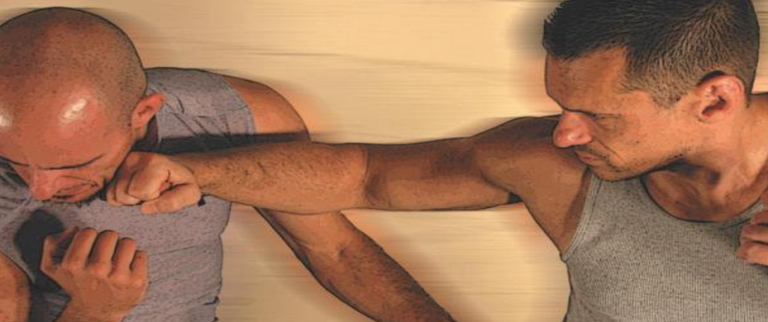
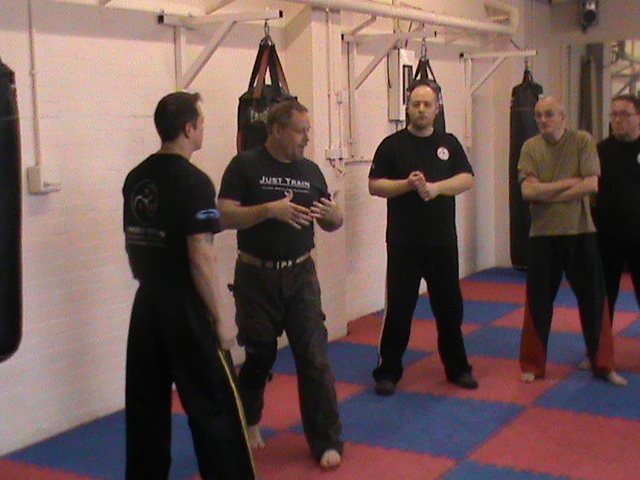
Paul McRedmond describes his approach as “Awareness Based Teaching,” or ABT. Mechanically, breaking people is not difficult. The human body is not a mystery, or, at least, it shouldn’t be for any reasonably active adult. We all know what hurts. We all know which functions can’t be disrupted (breathing, circulation). And we all know how to move, whether it is pushing a car or swinging a hammer. The mechanics of breaking people are no different than any other mechanics. Physics doesn’t change in a fight.

Once you understand this, self-defense is mostly a matter of learning to see. Learning to recognize opportunities and available tools quickly enough and exploit them ruthlessly enough. Hence, ABT.

Training awareness is broad and deep. “Situational awareness” gets thrown around a lot as a phrase, but it is useless unless you have the training and experience to know what to be aware of. Seeing things is not and never has been the problem. It has always been noticing the important things and recognizing the unimportant so that they can be disregarded. So, breadth: Awareness spans from understanding the uses of terrain to working in the social milieu and down to the nuances of targeting and power generation.

And depth: Each piece of awareness can be studied at many levels. Group dynamics can be a life time study and so can body mechanics and communication.

Principles-Based Training is dependent on awareness, in both the student and the instructor. Honing that awareness will be a lifetime endeavor.

The next aspect works on a more micro scale. You will be teaching physical skills. We know that teaching an endless series of technique is an incredibly inefficient way to teach. We also know that memorizing technique is almost worthless in a fight. Attempting to process information consciously is far too slow.

Caveat, though. There is one potential problem with this teaching method: If your measures of success (grading) is based on what your students can parrot back, students trained this way will not test well. They will be able (for example) to improvise jointlocks under pressure, but they won’t be able to name a single lock or demonstrate a named lock.

Whatever you teach, there is a way to break it down to make it easy for the student to grasp intuitively. Breaking it down to the right chunks, combined with the right training methodology, make for much faster gains in applicable physical and interactive skills. I call the classes of technique broken down to the sweet spot for fast learning “Building Blocks.”

This will be idiosyncratic. No two people will break down what they teach in the same way. All practitioners who have gotten to the unconscious competence level of skill will have slightly different intuitive understanding of what they do and why it works. In other words, there is no perfect list. This is about what works, not about what looks pretty.

For instance, “striking” is not one of my Building Blocks. I teach striking in three parts– “Power Generation” + “Targets” + “Conformation.” Conformation is just a fancy way of saying “How to use the right weapon so you don’t hurt yourself.” And Power Generation is a combination of three things as well– Conservation (structure) Stealing (using gravity, the environment and the threat’s motion) and Generation (the things you do with your own muscles to hit hard.)  Broken down in this way, the student gets comfortable (and decent power) with a variety of handstrikes in about three hours.

But remember it is a deep study as well. Three hours to good, solid hits. But years to get the nuances of each piece and a lifetime to explore all the other ways to hit hard.

That’s my breakdown, my building block. It would be perfectly valid and work just as well to break it down as Hand, Forearm and Elbow; Power Generation and Targeting.

Homework. Breakdown whatever you teach into chunks that make sense to you. Try breaking them down in different ways. For instance, I teach takedowns as Momentum Ploys; Sweeps (Static and Moving, moving broken down into draw, cross, or stop); true throws (full entry, half entry, and reverse); Leverage; Locks (up and down); Base destruction and; Combinations of the above. But it is perfectly valid and would work just as well to break them down based on balance principles as simply “Getting the Center of Gravity off the Base”. Move the center of gravity, change the base, combine those two. If I had a class full of physicists, I’d probably go with that as the chunk. Again, there are many ways to be right.

I’m going to go a little meta on you for the next set of things to understand. You must understand what you are doing. For physical skills, when you go hands on, there are only three valid reasons.

You are either:

Trying to escape

Trying to get the threat under control

Trying to disable the threat

You must understand these because these are three very different things. The body mechanics are different. Grappling and locking arts are incompatible with a strategy of escaping. Doing damage to the threat involves kinetic energy going towards his core, which is the absolute wrong direction for your kinetic energy to be moving if you are trying to escape.

The physics of these three reasons are different, thus the body mechanics will be different.

The goals of these three reasons are different, thus the best strategies and tactics will be different.

Evaluate your system as it stands and evaluate what you teach as you teach. Are you teaching your students how to escape, disable or control? And be very, very careful, because fighting is nowhere on that list and the goals, strategy, physics and body mechanics of fighting are just as unrelated.

And the last. You need to understand the strategy of your system. Your priorities. The biggest weakness in modern RBSD (Reality Based Self Defense) systems is that they collect a variety of real cool techniques but usually have no strategic thread that ties them into a useable package. The human animal organizes information. Organized information, organized skills are far easier to use. Especially under pressure.

 

Managing Discrepancy – Schalk Holloway

My parents stayed in a small town on the Gold Coast of Queensland Australia for a couple of years. As is customary when visiting another country one quickly gets around to chatting about everything that’s different and strange from what you are used to. One of the first things they told me was about how different pedestrian crossings were to South Africa (where I reside and where we all come from). Apparently vehicle drivers in their own and the surrounding towns always give way to pedestrians. As in always. This sounded unbelievable as in South Africa you really have to watch your ass when crossing roads. Being my usual sceptical self I decided to check it out for the six weeks that I visited.

First thing I noticed was that the pedestrians there don’t even look before crossing. Initially it freaked me out. Every time I saw a pedestrian just going for it I would imagine them getting ploughed down by oncoming traffic. Never happened though. Vehicles just magically stop for pedestrians. It was crazy. They just assume all vehicles are going to stop. And they do. Interesting thing is that it is law that vehicles should give way for pedestrians in both countries. So technically – that’s what it should be like in South Africa as well. But it isn’t.

There’s a discrepancy between what is and what we believe should be.

I got into a tangle with a couple of ladies a while ago for sharing an article from Mashable where Mashable responded to a statement made by Dr. Ruth Westheimer. She was quoted saying the following on a radio show

I know it’s controversial, but for your program, I’m going to stand up and be counted and, like I do in the book, be very honest. I am very worried about college campuses saying that a woman and a man or two men or two women, but I talk right now about woman and man, can be in bed together, Diane, and at one time, naked, and at one time, he or she — most of the time they think she can say, I changed my mind. No such thing is possible. ¹

I thought “wow, that’s good advice.” Got riled big time though by the girls. They felt that this idea is oppressive by nature. Their argument is that they should be able to do pretty much what they want to with their bodies without any fear of any type abuse. I agree.

But there is currently a discrepancy between what is and what we believe should be.

That discrepancy is conflicting by nature. In both the anecdotes that I have shared I am presupposing that what we believe should be is truth. Coming to this position is also a necessary process but it is not the focus of this article. This article is focused on the discrepancy and managing that discrepancy.

The first principle of managing the discrepancy is mutual acceptance of both positions.

Those on the side of what is needs to be honest about whether change or movement is necessary. Is what should be honestly and objectively healthier for all involved? If so, are we willing to accept that? If not why not? Those on the side of what we believe should be should at least acknowledge, if not accept, the reality of what currently is. If what is really is then we need to work from there to here.

I shared the first anecdote with the ladies from the second anecdote. Why? My argument is the following: If I, as a loving father, have to teach my children about pedestrian crossings, what do I teach? Do I just teach what is (South African experience)? Do I just teach what should be (Australian experience)? Or do I teach both? Which approach is best equated with my position as a loving father?

For me, it would obviously be to teach both. Advocates of what should be say that I should just teach my child that YOU SHOULD BE ABLE TO CROSS THE ROAD WHENEVER YOU WANT TO WITHOUT FEAR OF MOVING VEHICLES. THEY ARE SUPPOSED TO STOP FOR YOU! But that would be silly because the current reality of what is is that they don’t always stop. So I teach both. I teach something along the lines of “remember, vehicles are supposed to stop, and when you drive try to be aware and always stop. But still, before crossing, check, because they don’t always stop.”

So why not teach my daughter that yes, her body is hers and she should be able to do with it what she wants, but also, that yes, the world DOES NOT CURRENTLY WORK LIKE THAT, so maybe it’s not the wisest thing to jump naked into bed if you’re not planning on having sex (and yes, I, as her father, would talk to my daughter about that).

The ladies agreed to this line of thinking. If they did not, I would seriously have wondered why.

The second principle of managing the discrepancy is accepting that it is a process.

Getting from there to here will have to be a process.

If we have to put should be as position 10 on a line of 1 to 10 and is as position 1 as follows

IS SHOULD BE

0 1 2 3 4 5 6 7 8 9 10

and we are serious about getting from what is to what should be then we need to acknowledge that is is a distance away. There has to be a process. If you are not willing to acknowledge this principle of process – why not?

The third principle of managing the discrepancy is allowing the two positions to compliment each other.

This principle should actually be the first principle.

However, in highly polarized or aggressive environments it’s not possible to see the complimentary potential until the first two principles have been established. Thinking about different words to describe the two groups we can possibly go with realists for the what is camp and visionaries for the should be camp.

My wife and I fall broadly into these two categories. I’m the realist. She’s the visionary. She essentially creates a lot of energy for movement by consistently helping us to see where we should be going. I get us moving effectively because I’ve got a good handle on where we are and what would be good first steps. This is great. Energy and effectivity. We compliment each other. And I think it serves as a good (albeit simplistic) analogy for what can be possible once we start to see the worth that each of the groups bring to the situation.

¹ http://mashable.com/2015/06/02/dr-ruth-rape-consent/

Maintaining Balance – Ashtad Rustomji

In almost every field of study or work, there are various areas with focus on different aspects of that subject. These areas are meant to achieve a specific purpose in a specific aspect of that subject.

For example, what comes to your mind when I say ‘Fitness’? Now when I say ‘Self-Defense‘ ‘Self-Protection‘ ’Conflict Management‘ etc. what areas of studies come to your mind? Does one specific thing come to your mind or more than one? There are many other similar fields of study like physics and engineering that focus on various areas of those subjects.

Now, let’s take fitness for example, it’s not just about lifting weights or “just”  running or “just” yoga, stretching, etc. No, in biological terms, Fitness is an organism‘s ability to survive in a particular environment. Of course it can also be described as being competent enough to fulfill a particular task. It also can be described as a condition of being physically strong, athletic and healthy.

There is no one aspect of fitness, it consists of combining different areas that focus on improving your physical abilities. The main areas include Cardio, Calisthenics, Weight training and along with them an equally important aspect would be; Diet and Nutrition. Of course there are sub-categories of the above mentioned areas that focus on and specialize in different aspects like Endurance, Stamina, Dexterity, Reflexes and Flexibility, Strength, Speed, Durability, Conditioning, but doing only one of these, won‘t mean that you have achieved physical fitness, it would only mean that you‘re not totally out of shape. Only by training every aspect, understanding it as a whole and applying the knowledge practically will you achieve a certain level of fitness and you will progress further from there. The thing is, fitness doesn’t end on the physical level, but extends to a psychological level too, there are exercises that help you be more focused, improve concentration, etc. When you train on both levels with dedication and persistence, you achieve total fitness.

Same goes with Conflict Management, Self Protection, Self Defense, etc. They’re not just one thing, they’re composed of many different aspects that address all the necessary requirements to survive violence. Focusing on just one of those aspects will not help you prepare for what you think you are preparing for, instead it‘ll just give you a false sense of security that will be destroyed when you face something you weren’t even aware was a part of it.

There are many who tend to focus on just one aspect of those subjects, resulting in an incomplete analysis of what they truly consist of, therefore not achieving effective solutions to the problems they‘re claiming to solve.

Same goes for the training balance between SD and Martial Arts. They’re not the same. Simply put, SD doesn’t take a lifetime to learn, it’s a legal term used when you need to justify your violent actions during an attack in the court of law. You simply cannot pile them together, there has to be a balance between what you train for violence and what you train as an art or as part of a skill development routine.

When learning and training in subjects like CM, SD, SP, a lot of different areas need to be focused on. They are;

-Legal.

-Societal.

-Environmental.

-Consequential.-

-Moral.

-Psychological.

-Biological.

-Physical.

-Strategic.

-Tactical.

These areas give an overall understanding of violence dynamics. While it is a broad subject, the physical aspects are given the most preference than any other by most. There is no balance in training for violence, it’s all about fighting for many.

But without the balance in training, the knowledge and preparation required to face and survive violence is not gained resulting in an incomplete understanding of the subject matter. When that happens the individuals involved in the violent incident have to face harsh Consequences of their actions. They don’t know when to avoid and back-off (Strategic) and they don’t know how to prevent it (Tactical), they’re not aware of the Legal, Moral or Societal Consequences of their actions, so they resort directly to (what is supposed to be) the last option, I.e. the Physical part of the subject without considering the Environment they‘re in, which either leads to them landing in more trouble than they imagined and more damaged than they expected (or didn‘t expect), not to mention the Psychological issues that occur in the aftermath of violence.

Same goes for Martial Arts too. Too many get too focused on the punching and kicking rather than focus on the responsibilities that come with being a Martial Artist and the in-depth knowledge required to actually be competent enough to utilize the techniques taught as practically as possible in the appropriate environment and to know when and how to translate them to various situations.

I’ve heard Martial Artists say that Martial Arts is a journey and yes, they’re absolutely correct, it’s just that sometimes, some Martial Artists forget where their journey is supposed to lead them, there is no destination for their journey, and a journey without a destination is just wandering around aimlessly.

Most of them just follow “What their instructors once told them“, rather than think for themselves and try to understand what the instructor meant by what they said or even question whether what they said made any sense at all in the first place. All the while forgetting to maintain the required balance between the physical aspect of Martial Arts and the non-physical ones, which in MA’s case, includes an unique aspect of; Philosophy. Many know it as ‘Budo’. Of course, it’s a Japanese term, but the philosophy itself is applied in virtually all of traditional and classical Martial Arts. It encompasses much more than physical techniques and violence, it includes self-control, self-discipline, respecting others, understanding your art in not just width, but in depth. These things, the principles, they transcend the physical aspect of Martial Arts. They’re what help a Martial Artist maintain the balance in their training.

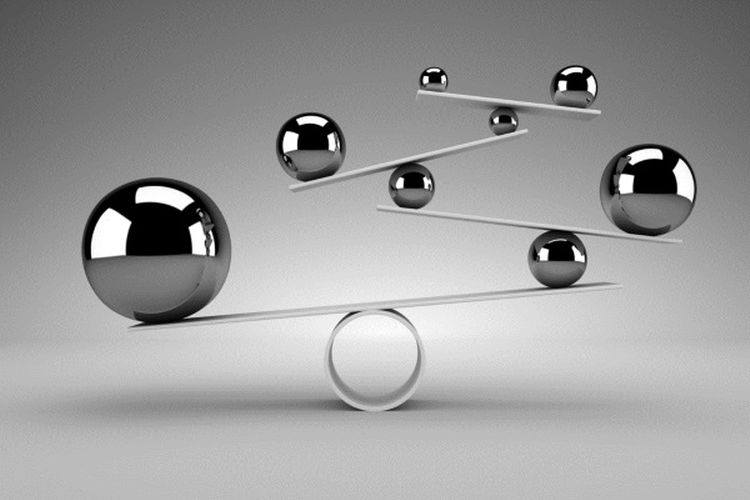
In conclusion, Balance is a simple principle that applies to just about everything. Without balance, the desired results will not only be difficult to achieve, but almost impossible.

It doesn‘t matter how hard you train in one area of the subject, not unlike a machine, without all of the components, the knowledge will not be fully functional and effective.

Of course, I’ll add this, I’m obviously no “expert” on any of the subjects above. What I wrote, are just my opinions based on my experiences and research, you (the reader) will have to test things out for yourself to check and see if I’m b.s’ing or if these things are indeed true. After all, what good is information if you don’t test it and put it into action, right?

Well, that’s all. Thank you for reading.


Garden Club Ladies – Kathy Jackson

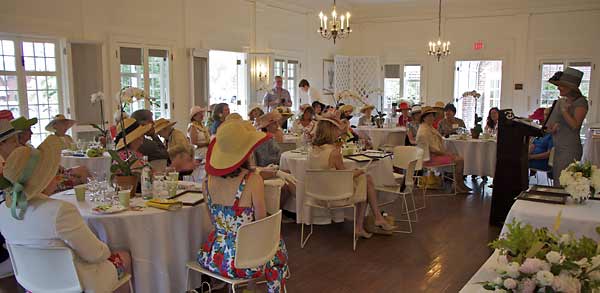
This article is about and for Garden Club Ladies. You almost certainly know one; perhaps she’s your mother, your aunt, your sister, your grandmother. Perhaps she’s even yourself.

When I described this demographic to a friend and asked if they were a part of her culture too, she instantly responded: “Oh, yes. The matriarchy is alive and well here.” As my friend understands, Garden Club Ladies run the world. Oh, not unassisted, of course: it also takes farmers and carpenters and plumbers and shopkeepers and investors and more, to keep the wheels of our modern culture spinning along at pace. But Garden Club Ladies run their communities, and no doubt about it.

A Garden Club Lady in America drives a luxury SUV – a four wheel drive Lexus or BMW, perhaps even a Mercedes. She’s a retired professional woman, or a lifelong housewife married to an executive or successful business owner. She uses the SUV to haul her pedigreed pup to dog shows and agility trials, or to haul hay for her horses and other pasture pets. She likes her vehicle because it has enough room to conveniently carry her golf bag to her country club, where she plays once a week with a friend before their committee meeting for the charity pro-am golf tournament. She also uses it to collect boxes of clothing for the back-to-school donation drive she organizes every fall, and of course she enjoys having enough room in the back to keep a pair of weeding gloves and a few trowels for her volunteer work at the senior center. In the spring, you’ll find her busy helping the local parks get spruced up before the first big wave of tourism hits, and summer finds her watching over several of the exhibits at the county fair.

She’s a key member of the local Friends of the Public Library and other service organizations like the Elks or Kiwanis or Rotary Club. If her town has a Farmers’ Market, she was among the first to help get it organized and you’ll find her there every Tuesday morning helping to set up. One of her pets is a certified therapy dog, so on Wednesdays she’s busy at the nursing home visiting the old folks, and she spends Saturday afternoons at the public library so hesitant young learners can read out loud to her dog. She and her friends also organize meals for anyone they know who might be in trouble or in need, and they provide the endless succession of casseroles and three-bean salads that grace every potluck from one end of the country to the other.

The details might change. The Garden Club Ladies never do. They might be as young as 45 or as old as 85, but however old or young they are, they share several key characteristics:

  • They are wealthy by the standards of their communities.
  • They look wealthy: they drive luxury cars, wear expensive clothes, and like to be seen sporting the diamond tennis bracelets and other fancy jewelry they’ve amassed over the years.
  • They spend most of their waking hours in public. They are the first to arrive to set up local festivals, and the last to leave after dark when the event is over.
  • They are not young (except in their thinking).
  • They are female.

What do the Garden Club Ladies have to do with us, you wonder? I’m glad you asked! This demographic – female, older, wealthy and community-involved – is a prime victim group for muggers and home invasion robberies. They’re attractive targets for this type of crime because of their obvious wealth, their public visibility, and their age and gender.  

Despite these factors, we don’t find many Garden Club Ladies working out in crossfit gyms. The very idea of one of these women joining an MMA or Krav Maga class brings a wry smile. They’re not going to show up for a Critically Dynamic Tactical Operators Carbine class or a training evolution of Extreme Close Quarters Handgun Battle Concepts. So it’s easy to write them off as defensive students. Since Garden Club Ladies won’t take “serious” classes, we think, they can’t possibly be serious about self-defense.

It’s a rare self-defense trainer who spends a moment’s thought about getting Garden Club Ladies into class, or who works at providing any classes that might meet their needs. After all, there’s no glory in teaching 60-year-old women how to defend themselves. There’s no glory in it because no matter what you teach these women or how well you do it, they are not going to make you look good by being a beast in the MMA cage, slaughtering the opposition on the competition mat, or dominating all the USPSA events at the shooting club for the next ten years. At best, they’ll still have the bodies and minds of 60-year-old women, though they may stand a little taller and look a little more alert as they carry cookies and juice into the building where the Red Cross blood drive is being held. Where’s the glory in that?

Let’s bring this home to where I live in the firearms training world. If you’re not into firearms, or if they’re prohibited in your neck of the woods, you’ll have to translate this stuff into your own terms. All I can do is tell you a little bit about my own experiences within my own style, and let you take it from there.

The conventional wisdom is that Garden Club Ladies don’t take classes because they aren’t interested in protecting themselves, or because they don’t realize that their lifestyles put them at risk for some types of violent crime. This is not true. Garden Club Ladies experience the same low-level, back of the mind fear of violent crime that nearly all women share, and they cope with it in a variety of ways.

When Garden Club Ladies purchase handguns, their stated purpose is more often self defense than any other reason. But they’re still unlikely to take a class focused on self defense. That’s outside their culture.

Fortunately, that’s changing. Slowly, but it’s changing. It happens sometimes that a group of Garden Club Ladies decides to take a class together. As an instructor, I’ve found myself fascinated by the group dynamics that drive such classes.

For instance, Garden Club Ladies love to feed each other and those around them. Food provides a shared human experience, and it’s often how these women share their love for others. They’re sometimes uncomfortable in venues where people eat together without sharing the burden of providing at least some elements of the meal for each other. I’ve found that whenever I teach a class that includes a lot of women and I tell students to bring a sack lunch, the first GCL who hears the plan will immediately offer to organize either a potluck or a catered lunch for the class. If the plan is to provide a catered meal, that woman and several of her friends will bring homemade cookies or another dessert to share. It’s almost the first thing they want to know about a weekend class: what’s the plan for meals?

When we hear something like this, it’s tempting to believe that these women – focused on frivolities like food! – therefore cannot possibly be serious about learning the skills offered in the class. That’s not actually the dynamic at work here. What these women are doing is helping to create an event that fits into their lifestyles, that meshes with their existing values and personal images rather than clashing with them. They’re not interested in changing their entire lifestyles to accommodate self-defense, but this doesn’t mean they’re uninterested in self defense. It simply means that they’re looking for ways to make learning about self defense fit into the lifestyle they already live and love.

When we reject these efforts to make the learning experience more closely match our students’ lived experiences, we’re actually rejecting the students themselves. We’re saying that it’s not enough for Garden Club Ladies to learn how to defend themselves as the people they are; they have to instead become someone else entirely. That’s not an attractive proposition, so it’s hardly surprising when potential students aren’t much attracted to it. Instead of fighting the Garden Club Ladies’ social expectations, how much better it would be to leverage their existing culture into a powerful force to drive these students to attend good training and practice together after class.

What else helps and hinders Garden Club Ladies and their willingness to attend serious training classes? Of course, one thing that keeps these students away is the usual excuse common to all students: money and time. Let’s examine those more closely.

Garden Club Ladies have a great deal of disposable income, and they spend it freely on products and events that are important to them. We can see by the clothes they wear that they’re as willing to spend their money on themselves as on other people. These women like to feel good about their purchases, and they feel good when they buy things praised by their peer group. This is true whether those things are tangible goods they can show off, or intangibles such as donations to charity events with public recognition. When the local GCL culture decides that training in self-defense is a socially laudable endeavor, Garden Club Ladies cheerfully invest in it.

Time is a paradox for Garden Club Ladies. Retired or working part-time volunteer jobs, they usually have plenty of opportunity to arrange their schedules around important events. But because they are so involved in their communities and charity work, finding time to attend a firearms training class can be a big deal. Plans have to be made a long time in advance, and should not conflict with the Garden Club’s annual tour of homes that raises funds for cancer research or with any other big local fundraiser. (Alternatively, the class should be scheduled on a weekend that coincides with the charity event, and donate a percentage of proceeds to it. Ask a Garden Club Lady to figure out the logistics that will make that work, then stand back as she mobilizes the matriarchal army to make it so.)

When a GCL says she doesn’t have enough time or money for a training class, it means she doesn’t believe she’ll receive enough value from the event to offset her investment. This demographic does understand the worth of both money and time. They won’t waste either one on anything that doesn’t provide an equal amount of value. “Value” here is measured in social status as well as in more tangible factors such as transportation or nutrition. Keep that in mind; when someone in this demographic suggests something you might consider frivolous as an addition to the class, they’re often trying to provide more value as measured by their culture’s standard of value.

When we do get these women into classes, we’re often tempted not to take them as seriously as other students. They’re usually more social and more chatty than fits into the regimented teaching style of most defensive handgun classes. We see them talking with the students around them, visiting with each other and paying attention to each other’s needs rather than grimly focusing on their own targets. We hear them talking and laughing on the breaks, and we think maybe they aren’t taking it as seriously as they ought. Again, this isn’t quite the dynamic that’s happening here.

Some time ago, I was working with students in a women’s shooting class that had around fifteen or twenty students in it. The students were each partnered with another student who would coach them as they fired. Another instructor and I were behind the line along with other trained instructors, all of us ready to help where needed. As we watched the students work together, the other instructor turned to me and gestured toward one particularly animated pair of students. “Those girls aren’t serious!” she hissed. “They’ve been laughing this whole time. Maybe we should break them up so they’ll learn something here.” And indeed, those two students were chatty and laughing, joking about their ability to hit the target and giggling about their errors together. But what my fellow instructor didn’t know was that one of those two women had been violently assaulted just a few weeks before class. She hadn’t come to class to trade jokes with her friend; she had come for the deadly serious purpose of learning how to save her own life, as she had tearfully explained in a heart wrenching conversation we’d had a few days before class started. She and her compassionate friend were doing everything in their power to make it possible for her to learn the material without falling apart.

Instead of fighting the social dynamic, it helps to move with it and use it. By pairing the students, we improved the instructor/student ratio and had the ability to leverage the students’ social instincts to help each other. When the class becomes too chatty or too loud for some students to focus, we can use the same social dynamic in a different way by challenging students to reach a specific goal. Garden Club Ladies want reasons to root for each other and cheer each other on. Setting competitive goals often helps achieve this, and works best with partners or teams competing together. Individual competitions often fall flat because they work against the social dynamic rather than with it, but shared competitions often do the trick.

That brings us to one common accusation leveled at women’s classes in general, which may be even more tempting to apply to classes where Garden Club Ladies attend: they’re too comfortable, with standards too low and no real bar of achievement to earn. Of course, that depends more on the instructor than on any one of the students. If a class full of GCLs fails to bring out each students’ full potential, that’s a failure of instruction and not the fault of the students.

As students, Garden Club Ladies don’t want to be treated like children, don’t want anything dumbed down, don’t want to be condescended to or laughed at (who does?). They do want standards. They do want the standards to be tough and fair and achievable. They want everyone around them to experience success so that they can celebrate their success together, but they want to celebrate it as an earned success – not a sinecure, not a pat on the head of a child, not a participants’ ribbon. They want to earn recognition for skills they’ve worked hard to achieve.

Personally, I believe that if a student has invested the time and money to come to class, they’re serious students no matter what demographic they belong to. Whether they remain so … well, that’s almost entirely up to me as their instructor, and what I do to help keep them engaged with the material and learning more.

Garden Club Ladies aren’t the easiest demographic to teach. Although they aren’t couch potatoes (far from it!), they also aren’t trained athletes or experienced martial artists who understand how to move their bodies for good results in class. They’re sometimes confused by the mechanics of manipulating the gun, and they’ll talk everything over – endlessly! – if you let them. They can be frustrating students and there’s very little glory in teaching them within the macho culture of the self-defense community as it stands today.

But if you’re teaching because you want to help real people learn to protect themselves from violent crime, there’s nothing like the satisfaction that comes from working with this demographic.

And the food is usually excellent.


Reading the Signs, Part III – Garry Smith

No, it is not advice on washing your latest new shirt, skirt or other piece of clothing. The cry, ‘These colours do not run’, beloved of the English football hooligan abroad. ‘Colours’ are large brocade and embroidery flags which were originally carried into battle so that soldiers of a particular unit could see where the rest of their unit was located at all times and used as a rallying point during the course of the battle. The infantry units of the British army each have two Colours: the Queen’s Colour, which is a union flag and symbolises the regiment’s loyalty to the Crown, and a regimental Colour which has all the unit’s battle honours inscribed on it. (http://www.royal.gov.uk).

Loss of the colours was not acceptable, indeed it would be a disgrace to the regiment so they must be defended at all times. The colours are not carried in modern warfare and are now used for ceremonial purposes, nevertheless, brave men died protecting a piece of cloth.

The thing is they were not protecting the piece of cloth but the meaning imbued in it. Every country has its flag, separate regions, states and counties have theirs, Vexillology is the “scientific study of the history, symbolism and usage of flags, flags are popular things.

We wave them to celebrate, we burn them to protest. One persons symbol of freedom is another persons symbol of oppression. For most nations the flag represents us, it is what we rally around when we get together, in September (12th) my brother is hosting a Last Night of the Proms (http://www.bbc.co.uk/proms/features/last-night) party and I expect there to be flags and bunting as we engage in this particularly British tradition. The Union Jack will be the main flag as it represents  Britain. It is so called because it combines the crosses of the three countries united under one Sovereign. The Union flag consists of three heraldic crosses, the cross of St George is a red cross on a white ground, the cross saltire of St Andrew is a diagonal white cross on a blue ground and the cross saltire of St Patrick is a diagonal red cross on a white ground.

And here comes a teaser, the Union flag is the flag of the Monarchy but has come to represent Britain, the flag of St George represents England, as I am English which is my flag? Well I prefer the flag of St George over the Union flag as I am not a monarchist. The problem is that some of us English do not see why St George should be the patron saint (if we need one at all let it be St Edmund) and why share him and his flag, why do we need a possibly Palestinian born Roman soldier as an English icon? It does not make sense. We English have our own identity and source of pride, our Anglo Saxon origins.

So for me, the flag I will be taking to the last night of the proms party will be the flag of the White Dragon of our Anglo Saxon ancestors. OK, the origins of the White Dragon as the battle flag of the nascent English, the Englisc as they first called themselves, is shrouded in mystery, mythology and numerous pieces of archaeological evidence. But for me it represents my roots, my identity as English better than some 19th century political coming together of separate nations or a foreign saint.

For me you pay your money and you make your choice. Fly your flag, I will fly mine. The flag you fly will say a lot about you, it will not say everything, but it may just reflect your core values and who you identify as. Flags are made to wave, they are made to show the world who we are, which tribe we belong to. My flag, the White Dragon, represents who I am, the tribe I identify with. That is it. I am lucky enough to have friends of many nationalities and I welcome them all and their flags.

I spent a week in a hotel in Greece a few years back whilst the European Football Championships were on, at night the place came alive with the supporters from Holland, France, Germany, Italy and England all donning their respective football shirts and colours and bringing out their flags, rallying around their colours. It was a mini celebration and the vibe was fantastic. Members of different tribes hoisting their colours in an air of mutual respect. Not as opposing camps about to go to war but as fellow travellers differing with each other but respecting the others beliefs and traditions, a healthy form of patriotism. These were not the hooligans for whom football is a vehicle for violence which is like the false patriotism referred to be Samuel Johnson when he said “patriotism is the last refuge of the scoundrel”.

I do not have time for flag burners. For me it is a sign in itself when that point is reached, a sign that the burner cannot articulate and so resorts to desecrate. Flags as icons really do come to represent the sacred and the profane and polarise peoples. That star spangled banner represents freedom to many in the world but is the shadow of repression for some. Recent events in the USA over the Confederate flag and the Star and Stripes highlight the increasing political divisions in American society as highlighted in Jonathan Heidt’s excellent book ‘Righteous Minds’.  

The rainbow flag of the gay pride movement and the black flag of Islamic State both arouse passions that cross boundaries of nation, religion and morality in a multitude of ways. Both proclaim to the world the identities of those who gather under them and their allies who attach themselves, to me they are almost diametric opposites in both visual representations and values presented.

Stark contrast? You bet. Often it is the starkness of the contrast that helps us to see. So reading the signs is pretty easy with flags, they are obvious symbols who’s principle use is to express the identity of the group. Now earlier I said I was English, of Anglo Saxon descent, but I am also a Yorkshireman, hailing from gods own county itself…… So for me, alongside the  White Dragon I also will hoist the White Rose of Yorkshire. Does this mean that I must never tread foot in that hell hole that is Lancashire? Of course not, I love a good hotpot and a pint of Boddies, but I do love some of the banter and long may it last, raise your banners, if you feel the need proclaim to the world who you are, there is nothing wrong with that but do not get ants in your pants when somebody else does the same, especially somebody different, with a different flag, of different colours with a different identity, because that, as we English will tell you, is bad form.

So reading the signs is important, some are obvious like flags waving in the breeze, bright and brazen, others are less so and require a more practised eye to spot them. The thing is we humans fill our world with signs and symbols, letters and numbers being just that though they take on a life of their own when we use them so often. These are more or less universal symbols but every tribe has its own symbols with which it interacts and identifies itself and sets its boundaries. Know them, learn to read them, respect them and you will stay that much safer.


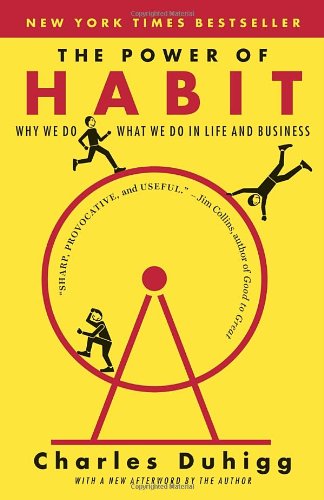
‘The Power of Habit: Why we do what we do and how to change’ by Charles Duhigg – Reviewed by Garry Smith

This is an incredibly interesting book. It combines scientific research into human behaviour and psychology with great story telling to unravel how we for habits and how they run our lives. I was particularly fascinated with the incredible amount of research done by marketing companies and the big corporations and not that surprised to find that they often know more about us than we do.

If you train yourself and more importantly if you train others in anything at all, no matter how much you already know, this book will deepen your understanding on how we develop skills by building complex neural networks. Not only that, but what is involved when we try to rewire the brain, how it can go wrong and how to do it successfully.

This is as good an introduction to the architecture and functioning of the brain as most people  will need in an incredibly easy to access format. Whilst focusing in p[art one on the individual, part two looks in depth at organisations and part three at societies.

The scope of this book is enormous but it is so well written you are both informed and entertained throughout, and every now and then up pops a dinky little diagram to reward the reader (oops, is that me revealing something). You will learn about camouflaging kidneys, placing sticky tunes on radio playlists and how the shops know a woman is pregnant before she does. In fact this is the kind of book that will have you annoying your significant other as you keep reading bits out to them.

It is also full of really useful anecdotes that will help you understand your training and your teaching better and I have used a few of them times over to explain otherwise technical concepts to students. People love stories more than jargon.

Treat yourself, by it, read it, read it more than once and keep it handy as a reference, I do.

Available for purchase at the CRGI Bookstore.

Tripod – Clint Overland

A buddy of mine asked me to fill in for him at the bar that he works at. No biggie, we cover each other whenever there is a need. It’s a part of being Brothers. I should have turned him down. The night is almost over and everything has gone smooth. No fights, no puking, no blood. It’s all good. The guy that’s playing on stage is a midget, long haired little cat, plays a hell of a guitar and has a great blues voice. What I don’t know is that all night several patrons have been buying him shots of Jaeger. I talked to the bartender later and she said he drank almost an entire bottle by himself.

It’s about that time and I am hollering out LAST CALL. When all of the sudden, this little naked long haired midget runs right by me.

Now let me pause here and say I froze in my tracks. There are times when you can’t move because you are not sure what the hell it is that you saw and you are not sure you know how to deal with it. In my mind, I pull up everything I can remember from every Marc MacYoung and Peyton Quinn book I can remember. Nada, nothing. I look into the old memory file inside my head and, nope, not one thing about dealing with drunken naked midgets. Fifteen years of the violence trade and not one idea of how to deal with a naked hairy midget! Have I got my point across? I was frozen in my tracks. Now back to the story.

He runs right up to a table full of middle aged biker mamas and starts gyrating wildly while they start screaming and laughing hysterically. There I come, like some twisted leather clad version of Frankenstein’s monster, “STOP IT! COMMME HERREEEE YOUUU!!! He zips away from me and runs up to a table of Mexicans. Then does the same thing and everyone is applauding and laughing.  I get close enough this time to grab his arm, and he starts flailing away trying to twist out of my grasp. At this point, his gigantic penis slaps me across the shin. Second freeze in less than 2 minutes.

Let me try to put this into perspective for you. He would have needed a blood transfusion to get a full blown hard on or he might have passed out from lack of blood to his brain. It was a trip hazard. He could stand on a pool table and play golf with no hands. Crawl across the desert sands on all fours and leave five tracks. Do you have the picture? It is fucking HUGE!!  Gary Lawson, in his Far Side Cartoons, drew one of a guy that worked in the Herpetarium for 20 years and all of a sudden had a cumulative case of the HEEBIE JEEBIES! That is exactly how I felt at that moment. GWAAAA get away get away now!!!

He runs off and after I unfreeze, I start chasing him again.  Finally I got close enough to grab a handful of his hair with a straight arm, didn’t want that thing to hit me again. I lead him back to the manager’s office where they bring his clothes to him. It was then I learned that this was not the first time it had happened and that his nickname was TRIPOD.

So folks, don’t think that you won’t freeze just because you have dealt with things in the past. Trust me, it can get weirder than you would ever imagine and if you’re in the violence trades you had better damn sure be able to change gears on the run.

This is something I do not even consider to be one of my worst nights at work. In a Dallas dive bar I watched a man get gutted by a broken beer bottle and had to fight my way through a brawl to get on my knees and hold his intestines in while a fight is going on around me and kick people away so he didn’t die. It took almost 15 minutes for the ambulance to show up all the while the cops are breaking up the fight and I sat there just thankful that someone hadn’t decided to bust a chair over my head or slit my throat while my hands were full.    This is a reality check folks, life is a precious commodity and if you want to save yours you need to learn to adapt and adjust to whatever comes your way.  How you react as well as respond to a situation can very well mean whether you and others live or die.  In my opinion one of the first things a person has to learn to do to be a good Conflict Manager is the ability to think while acting. If you can’t do this find another line of work, it’s a simple as that. One of the best lessons I ever learned from twenty seven years of dealing with drunken, chemically enhanced primates is to read situations not from what was actually happening but from what should be happening and wasn’t .

I would position myself where I could view most of the bar, and what I was looking for was people not having fun, individuals that were drinking alone and acting sad or frustrated. For groups backing away from an area, or moving into tactical position. I would watch for people that might be either blocking the flow of traffic or entrance into bathrooms. Go out some night to a local bar and look for what is happening and what disrupts that flow or what should be happening and isn’t. Then go to a nightclub and sit away from everyone and watch as the same things occur but in a different speed. This gives you a position of experience to draw from. Do the same at a mall or in a crowed venue, each situation has many similarities and will flow the same way if you know what to look for and what not to look for. You should then begin to look into yourself to see how you will or could respond to anything that happens. Remember that the first goal of a good conflict manager is not to outfight people but to outthink them. This is the difference between a Professional and an Amateur, a pro wants to end it as easily as possible a fool wants to fight.  It took me 10 years of broken noses and missing teeth to get this point driven into my thick head. The next 17 I spent learning not to fight but to win no matter what it took.

Let me give you another example. Middle aged man walks in one night with a hot 20 something year old woman. I recognize him from another bar across town I used to work at, real asshole that likes to make a fool of himself and show everyone how much of a badass he is. But what I know that he doesn’t is that two days before I saw him with his wife at a local Walmart. I waited a bit and sure enough he starts acting the way I knew he was prone too. I walked up and leaned over and told him “I know your wife.” He stopped everything and left a little later without causing a scene.  I won and kept the peace by simple outthinking the person without the use of violence.

I teach young people that want to go into the bouncing trade a list of rules that if they follow to the best of their ability they will be able to survive. My number one rule and this one is as sacred as anything you will ever read or learn and all the other rules lead right back to rule number one.

1.NO MATTER WHAT WE GO HOME TONIGHT!

If that means we have to apologize to someone we hate, we apologize. If we have to act as a priest and hear a confession from someone that disgust us, then we listen. If we have to bust someone in the mouth with a chair then that’s what we have to do but we go home tonight. We will take the easiest win that we can get and by win I mean we live. To be a conflict manager doesn’t meant to be the best fighter or martial artist. It means to use the best tool for the job and the ability to adapt is one of the most important.


The Never Complain Dictum – Mark Hatmaker  

In the world of street-response to potential violent conflict one often encounters the word “de-escalation.” I want to define that term, not to insult intelligence but to make sure we’re on the same page about a tactic I find of nominal value as it applies to the everyday citizen. De-escalation is, in short, a micro-version of hostage negotiation. I keep you talking with this or that bargaining chip or appeasement patter in hope of you not engaging in violence (or any more violence).

Now, law enforcement and security professionals (LE here on out) have a serious need for de-escalation tactics and strategies as LE, by the very definition of their job, must deal with the violent or potentially violent. Their professional contract, their sense of duty says that the LE professional must deal with what is in front of them and not walk away. Whereas, we the non-LE citizen do not have that professional onus to stand pat and work our way through a potentially dangerous situation with some possibly dubious advice. (We’ll get to why I regard de-escalation advice being of dubious merit for the citizen in a bit).

First, we would be wise to think of confrontation in the physical realm and the non-physical in the exact same way, with the exact same response continuum. That is, as non-LE professionals we have no duty or burden to respond to or restrain an offender. At the first sign of trouble if the exits are clear we would be wise to exercise the most important F of the Fight or Flight dichotomy and choose Flight. Training/Drilling/Accepting a de-escalation strategy is choosing to prolong a confrontation by default-when phrased that way, does prolonging contact with the violent or potentially violent seem wise? If assault looms imminent, you should get out of Dodge. If it’s too late to get out of Dodge when the violence is upon us, we should respond only long enough to create our flight opportunity. It is not our job to “see it through to the end” as, again, that is not our job as non-LE citizens. To move laterally into de-escalation where a simple exit is available is less than wise. It may feel “cowardly” in some circumstances and not as easy as our combative simian natures will allow, but it is wiser than engaging in wordplay with another simian in an agitated state.

[In regard to cowardly vs. “knightly honor” I can do no better de-bunk of this notion than the masterful distinction between honor and responsibility delivered in Schopenhauer’s “The Wisdom of Life.” In short, not everything is “fightin’ words.”]

Let’s look at how well de-escalation works in non-violent scenarios for a moment. I want you to picture the “ambush” seat on a cable news show. That is the seat or guest spot reserved for the partisan enemy; the guest spot where a single representative is supposed to stand-in for all of the “other side” while a bombastic anchor or table of the “enemy” goes to town on you.

For this example, picture a conservative guest on an MSNBC show and a liberal guest on a Fox News show. There should be something here for you no matter where you are on the political spectrum. Now, how often have you seen the “ambush” guest use de-escalation/appeasement/justification conversational tactics and win? The answer is never, if/when it happens that will be front page news: “Noted [Insert Conservative or Liberal of choice] says, “You’re absolutely right.”

Let’s take another example home. If you are already familiar with de-escalation ask yourself how often you use it in a debate/argument with your spouse/boss/co-worker (insert your personal arguer of choice)? How often do you really, really keep your eyes on the appeasement prize? If we are honest with ourselves, we often (before we move to resolution) realize “Hmm, am I actually a wee bit of the problem here? If so, why do I keep on opening my big mouth?” Appeasement/de-escalation doesn’t happen because, we simians dig in on contentious matters, we seldom shift our opinions in the heat of the moment-we must calm before (if even then) we can see the other point of view. In short, we’re an aggressive species whether that aggression is violence, threat of violence, finger pointing political argument, or passive-aggressive gossip.

Now keep in mind these examples where we don’t exercise our de-escalation skills occur with no threat of violence. Imagine how much more heated a scenario we are talking about when we suggest “How about some de-escalation talk?” If we don’t see it manifest in less-threatening situations (i.e., we don’t drill it in daily life) what makes us think we will be calm and cool enough to utilize it and utilize it well when it hits the fan?

OK, let’s pretend you see my “If it doesn’t manifest in low-stress situations it ain’t gonna rear its head in high-stress” point. Is there something that we can do in its stead, something that gets closer to the true intent of the Flight F, and also actually allows us to drill in day-to-day scenarios to get the gist of the thing down? Yeah, I think so.

I’m going to reference a strategy used by comic/magician Penn Jillette of the Penn & Teller duo. It’s called “Never Complain.” He uses it in a cost-to-benefit, return-on-investment (ROI,) don’t waste your time in matters of free market choice. We’ll explore how he intends it being used and then we’ll add some “You can complain here” allowances, and then move it to the world of potential violence.

Penn means for the “never complain” axiom to apply to low-key disagreements in everyday life. For example, poor service in a restaurant-there is often a strong inclination to make your dissatisfaction known (I was formerly that guy). But let’s ponder the strategy of letting it be known you were not served how you expected to be served. In essence we are telling the server or the manager “Go back into the past and fix what has already occurred,” “Here’s how I would run your business/do your job,” or at most we complain in hopes of “getting something” for being the squeaky wheel which allows you the privilege to return to the environment that you did not enjoy and potentially risk a bit of extra-ingredient comeuppance introduced into your meal.

The “Never Complain” dictum states that instead of putting the time in, raising your own “fighting ire” you consider the poor service or meal as market information, you simply move on and try different establishments. In most matters domestic we have plenty of choices, plenty of outlets where we will be offered good meals, good service, good prices, what have you. I wager that this strategy will be tough for some of us out there where the urge to stick to your guns and “go to the top because nobody treats me this way” will be hard to overcome.

Enjoy your victory, enjoy your fight.

For others who are piqued by the strategy and might be asking yourselves, “but what if money is involved?” Well, then sure you may have a reason to fight that fight, but only if the amount in question will warrant the time and effort involved. For example, if upon arriving home from a department store you discover that you have been shortchanged a hundred bucks, you might wanna drive back out. If the amount is $1.75, you might want to ponder the gas and lost time and do some math.

The “never complain” strategy once fully embraced frees up a lot of time if you are a “get your due” sort. It also allows you to find businesses, environments, and folks that dovetail with your tastes better than trying to re-make the world into your own personal whim. It also supplies real world training for conflict management-in that in situations that do not warrant your time and attention you simply walk away. That’s mighty freeing, and perversely satisfying to see the person who wanted to argue over a parking space not sure how to process your shrug and walk on to the next good thing in your life.

Never complain” in small matters trains us in flight from trivia in a way that bargaining, negotiating, and “winning” with poor service-providers never does.

Never complain” also allows us to get our nervous systems, our egos a little used to the practice of “If it ain’t worth it, and I’ve got options I’m taking a hike.” I wager that this trivial real-world practice may serve us better than hypothetical classroom encounters where we all behave as if we’re amateur hostage negotiators.

In short: Treat violence like a fire-get low, get out, and leave it to the firefighters.


Reading the Signs, Part II – Garry Smith

Welcome back dear reader, remember how in the June issue I asked you to pretend you were a visitor from another planet, with no experience of human behaviour of any kind. I asked you to suspend ALL your values and beliefs for a few minutes and take a look around you and at you. To reflect upon what you saw. The idea was to adopt the position of anthropological strangeness,  so that you could try to see how you look to others you look, how others look, how they interact, what appears to govern those interactions, I hope you tried it.

It is a kind of out of body experience and if we try it we can begin to see our day to day behaviour, the vast majority of which we go through on a form of autopilot, from a whole new perspective. Let us go back to our Goths, either type, the symbolism in their dress, jewellery and artefacts tell us who they are, what tribe they belong to, we do not need to ask them, the symbols they display scream out the message loud and clear. Spike Milligan’s ‘Cockanees’ in his spoof anthropological expedition had their own artefacts and culture too, I share their love for the fish and chips.

We all belong to tribes, we all display our membership. The rituals of tribes are important for their identities too as are their belief system. Our intertwining biological and cultural evolution are the two key forces that have shaped our identities and the identities of the tribes we belong to. Our very languages separate us, within the same language groups regional differences and dialects do the same. In the UK, one small island, there are people who all speak English but who’s dialects make them uterley incomprehensible to one another. Received pronunciation, (the posh BBC voice), is uncommon, dialects are not. I love them, I like the different sounds, the different things they tell me about a person.

In the same way I love the different uniforms different tribes adopt, their badges, hairstyles, preferred music etc. It helps me read them like I read books. People very often do wear their heart on their sleeves so to speak. The express their personality, beliefs and even their sexualities through what they wear and how they wear it. Graffiti marks out a gangs turf,  a tattoo can mark out many things, piercings, flags and all manner of iconography blast out the message, here we are, this place is our place, I have a tribe, I belong, I am in the group and you are outside the group.

I am not sure what this says about me but I love a bit of crazy and Jayne, formerly, Wayne County and the Electric Chairs do it for me, musical break.

https://www.youtube.com/watch?v=U_ZzPSjdQhI

Yes I went punk in the late 70’s and that hit the anarchic spirit in me that added to the skinhead defiance already in me helped shape the me I am now. Throughout life we leave behind old tribes and join new ones, we migrate alone and sometimes with friends, its a complex life and we do it largely without effort. Of course there are those who are raised to a kind of cultural certainty for religious/ideological reasons who’s tribes erect such effective barriers that it is possible to remain insulated from outside influences from cradle to grave. I will return to a discussion on the sacred and the profane later. For now it is enough that we begin to recognise that we do live in the time of the tribes, The diversification of most societies that we see reflected most in the western world has brought with it a conservative fundamentalist backlash from societies far away and from sections of our own societies (I refer here principally to the USA and UK).

I read Left of Bang a while ago, iconography was rightly recognised as a key source of information. We process vast amounts of information daily, hourly, we are quite expert at sifting that information for the key pieces.  If we buy products they often come complete with universally understandable warning signs and symbols often accompanied by explanatory texts. When Mo Teague writes about the cowboy code we all understand the symbolism that was imbued in the white hat black hat movies of old. Now we will have different visual clues as to who is good and who is bad, politically correct clues probably, but clues nonetheless.

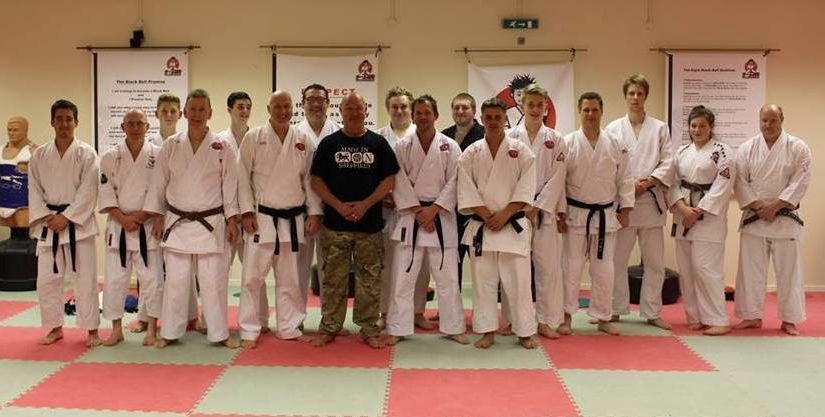
Last month I mentioned the symbolic importance of the black belt to many martial arts. Last Saturday one of my students pointed out I had the wrong belt on as I had a plain black belt, no red tabs to represent my dan grades (lets not go there yet), I pointed out that it was a nice new one and not faded like my old one. In the last week or so we have graded a number of students who have all now got new coloured belts as they edge towards the desired black one. We all know, whether we have trained in a martial art or not, that there is a mystique attached to the coveted black belt, a kudos that many aspire to and few achieve…….. Or am I just believing my own bullshit?

Well that debate aside the point of this article is to explore the central importance of the use of symbols to all of us, that and the fact that we all belong to multiple tribes, hold multiple identities and ranks and nearly always we actually know this, we just do not think about it consciously in the hurly burly noise of everyday life. Conscious reflection often gets drowned out in the increasing pace we live our lives, I think that is why I like to walk and cycle, to escape into the green that surrounds the city I live on the edge of. To find a space where the brain can switch off from doing all those things and in the pleasant tempo of exercise let it wander where it will. As this issue goes to publication I will be in Austria, up in the clean air of the Tyrol, recharging my batteries for a whole week. No martial arts, no self defence classes, no Gi and no black belt, no bag full of equipment and other props. I will be wearing the uniform of the walking class, the shorts, the boots and strolling around with my knapsack firmly on my back. I will meet others of this tribe and share pleasantries, we may not speak each others languages but we will recognise one another easily enough, the signs are all there if you care to read them.

Next month I will conclude this piece by examining the use of symbols in conflict, nothing raises passions like a good flag waving parade or a flag burning protest. Flags are pieces of coloured material imbued with incredible amounts of meaning, they go beyond expressing our membership of nation or state and deep into the personal identity of individuals, love them or hate them, flags are the most used and abused of our symbols, so until next month, Auf Wiedersehen.

Secrets of the Elite – Karl Thornton

The Intentional & Unintentional Murderer.

I am an undercover operative as well as trained in, and a trainer of, the physiology and psychology of violence. As well as trained in human behaviour and operational areas of the anti-human trafficking profession.

The information in this article is sensitive yet supplied to give the general public an idea of some of the training that goes into working undercover in the world of special operations personnel, in the area of Anti-Human trafficking. It is only a taste of what is involved. But I hope it sparks interest.

My specialist field is training personnel for high risk environments dealing in child trafficking. I have, and am still involved in intelligence and surveillance operations, as well as undertaking rescue operations globally. I also have the unique opportunity of training other operatives in this specialised field. Not to mention also training law enforcement officers in Anti-Human Trafficking.

Much of an undercover operatives work in our field is unarmed, so there is a high importance on unarmed self-preservation and self-protection skills.

Unarmed, we face the need to deal with individuals whom are armed as well as unarmed, and one of the main things we need to understand is the enemy. So when training in our type of undercover work, we need to be trained in many different areas. One area we need to be highly trained in, is RPD (Rapid Prime Decision) making, we need to minimise information in relation to how we asses a threat as quickly as possible, and how a threat sees us as a confirmed target for assassination or whatever their purpose, or mission is.

This article is about the process of training, where we deal with the possibility of dealing with, or applying lethal force. And part of the RPD making process.

So when we talk about “kill or be killed” in a real life situation, we train operatives in the physical hand to hand combat skills of undercover tactics including dealing with blown surveillance and blown intelligence missions, as well as physical response units where things go wrong. But equally important is training in the psychological side of understanding the possible enemy.

Part of our specialised training, looks at what we call “The Intentional & Unintentional Murderer”.

The following will explain the classifications, not the training process on how we identify the classifications.

First, we will look at what we call, the Intentional Murderer.

The Intentional Murderer, is the hardest to deal with. In this classification we look at individuals like assassins, hitmen, gang members (from criminal syndicates) and those who are intent on murder.

For this article we will use the term attacker.

In the majority of cases here, you won’t see the attacker coming, you will be ambushed and before you know it, its lights out permanently. This includes attacks with knives, firearms, blunt objects or even their bare hands, single and possible multiple attackers. Basically, this classification is taught to our operatives, where you won’t know it is coming, but still train in hand to hand combat for survival. If you can, as you cannot fight off a bullet to the back of the head. However, where there is still that slight opportunity for survival, we train in a system of combative tactics where there is no prior warning. Working on the physiological and psychological aspects of survival under ambush conditions. Even under conditions of what we classify “deceptive engagement” where one deceptive attacker will distract the operative, while his associate completes the physical attack. Basically where you are blindsided.

As this article could go on to become a novel, I am keeping it as brief as I can.

In an operatives’ world, all the OSA (Optimal Situational Awareness) in the world cannot protect you from a professional individual that has intentional murder on his agenda. I am not saying you cannot survive the Intentional Murdered, what I am stating, is even when the likelyhood of survival is next to zero, we still train for survival.

Now let’s look at the Unintentional Murderer.

The Unintentional Murderer is easier, if you can use that word, to train to survive against.

The Unintentional Murderer is classified under 4 subcategories. Remember in the world of special operations personnel, we need to train in OSA, RPD (Rapid Prime Decision) making, as well as other physiological and psychological skills for high risk environments. And keeping in mind, that the vast majority of missions require the operative to go into environments unarmed, with only his training and improvised weapons as his self-preservation and self-protection tools.

So in the area of RPD making and OSA, we teach behaviour analysis, and clusters of behaviour to assess a possible threat. But we also train in what we call “Forced human responses”, Natural defensive responses and deceptive tactics to deal with the Unintentional Murderer.

So why the term Unintentional Murderer?

The 4 subcategories are set to allow RPD making, and to respond. As the unintentional murderer is not intent on killing you. Not to say that isn’t the case all the time, as we can never give a 100% guarantee of an attacker’s intent, or what we call their outcome. However, we still have the 4 classifications to help identify the attacker’s objective, and how we can deal with them, as in this category murder is not considered the intent.

The 4 classifications are:

  1. Evade
  2. Escape
  3. Maim
  4. Gain

Once again, as this is an article and not a book, the following are brief descriptions of the 4 classifications.

Evade.
This classification is based on the attacker that the operative may face, due to interrupting the attackers assignment or objective. Say for example, the operative finds himself in a situation where he has cornered the attacker and the attacker is going to try to evade capture, and is going to physically respond to evade capture. If they are armed, then they may use this weapon to evade capture. There may be a verbal situation where you have a chance to deceptively negotiate to gain control in a tactical manner, to physically defend yourself when possible.

So the reason it is still classified as “Unintentional Murderer”, is that in any physical and violent encounter with a weapon (or even without a weapon) there is still the possibility of you being killed during the process. The attacker (especially if not well trained) may use the weapon, let’s say in this case a knife, to lash out and slash or stab you to evade capture. Their intention may not be to kill, but simply to evade capture. Yet we know that any trauma caused by a knife or any weapon, could lead to death. We need to train the operative to know that, if a weapon is involved, you are most likely going to sustain trauma, train for the worst outcome, and fight for the best outcome.

There are so many examples that I could give, to cover the “Evade” classification, but the above example should give you an idea.

So now we look at the next classification, Escape.

Escape, is similar to evade, except we use this classification to look at if an individual has been captured, and will use whatever they have at their disposal to escape. Once again the individual trying to escape may be armed, and will use whatever weapon they are carrying to escape. If for example it is a knife, they will produce, and or use the knife to escape. Now, in this article I am not going into all the physical techniques and tactics used. I am simply giving you information on how we classify for, RPD making, how we assess intent based on behaviour and what we call clusters of behaviour. And how we use physiological and psychological training to deal with these potential killers. So similar to the evade classification. The individual’s intention may not be to kill, but simply escape. Yet we know that any physical encounter, in these high risk environments, could lead to death.

Now we will look at the classification, Maim.

Maim, is where the operative is faced with an attacker that is trying to warn the individual off. Simular to say, gang violence, or a turf war, where an individual will maim, as a warning to the rival gang member. Keeping in mind that the “Intentional and Unintentional Murderer” also relates to general street situations as well. But we will go into that in another article.

So as an example here. If the operatives cover has been blown, and the attacker has found out who the operative is, they may inflict harm, be it a beating or weapon related attack. For example, a gunshot wound to the leg as a warning and as a deterrent. There is still a possibility of dying from any related trauma. It may be minimal, but where any trauma is caused, there is always the possibility of death. There have been cases where an operative has been slashed as a warning, and still bled out and died. It was meant to be a warning, but turned out to be a fatality. Many of us have heard of what could be seen as basic and superficial wounds, which have led to death. We need to train, that any trauma could be fatal, so your survival on a psychological and physical level needs to be trained to deal with all levels of aggression, violence and the related trauma. Once again simular to the other classifications. The attackers’ intention may not be to kill, but simply inflicting trauma as a warning, could still end in death.

Finally we will look at the classification, Gain.

Gain is basically situations like armed robbery etc. The attacker will utilize what it is they have, be it a weapon or not, to gain what it is they require. So in an operatives’ world for example, where we deal in anti-child trafficking. The operative may have gained some valuable Intel, or in the case of a rescue operation, where say a child is involved. The attacker may use what is necessary to regain their asset (the child that makes them money). Or regain the Intel the operative has. So the attacker will use the weapon to achieve the result they require. Once again, they may use that weapon as a tool to gain what they need and once again the attackers’ intention may not be to kill, but simply inflicting trauma while regaining their asset. Can once again, still end in a fatality.

The above are a few examples. However, it gives you a brief understanding, of how we train our operatives to make decisions in high risk environments, and with minimal time to make those decisions. How they need to be trained in specific physiological and psychological areas to achieve their objectives.

Combative hand to hand combat skills are no less important. Our operatives, as am I, are trained in unarmed hand to hand combat, as well as the use of weapons from sharp edge weapons, firearms through to improvised weapons. Yet the world of covert operations and undercover work, is a world where the physical is only one aspect. There is much to learn about human behaviour, but not just what we call normal human behaviour. But learning about criminal intent, sociopathic and psychopathic behaviour, as well as instinctive and learnt behaviours. We need to train to be deceptive and yet objective.

I hope this article has sparked interest in the world of undercover operations in the area of anti-child trafficking…


….In the next issue, I will delve into another Secret of the Elite.

“Covertly engaging the enemy.” Looking at manipulating the proxemic push and forcing proxemic pull. Learning to deceptively manipulate behaviour.